This article is taken from the December-January 2026 issue of The Critic. To get the full magazine why not subscribe? Get five issues for just £25.
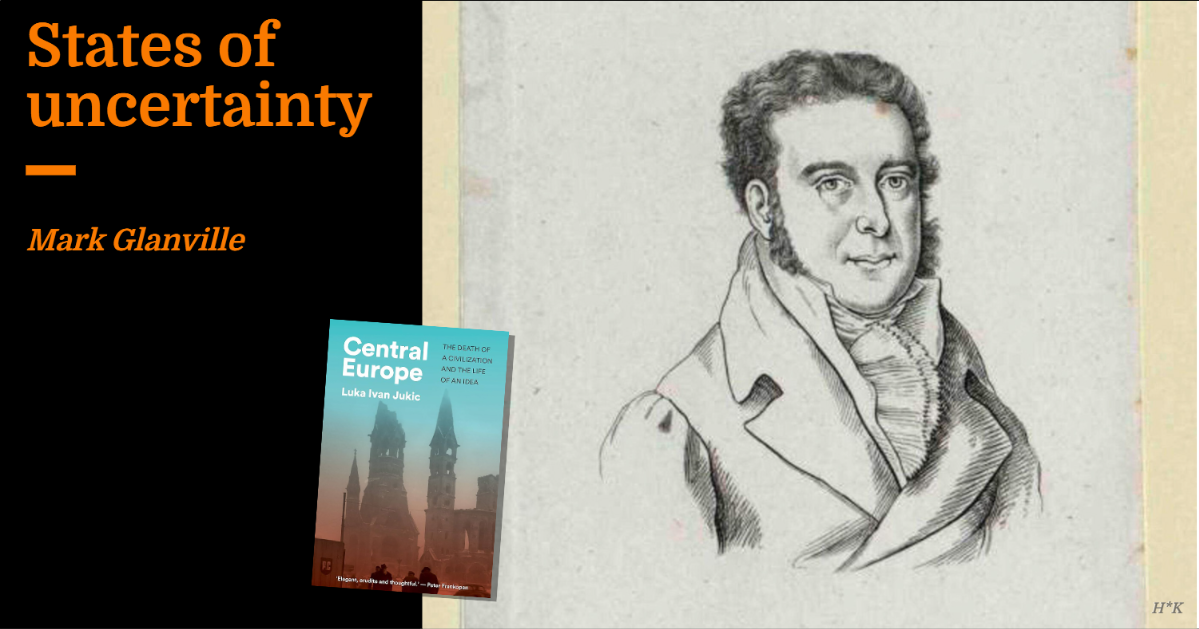
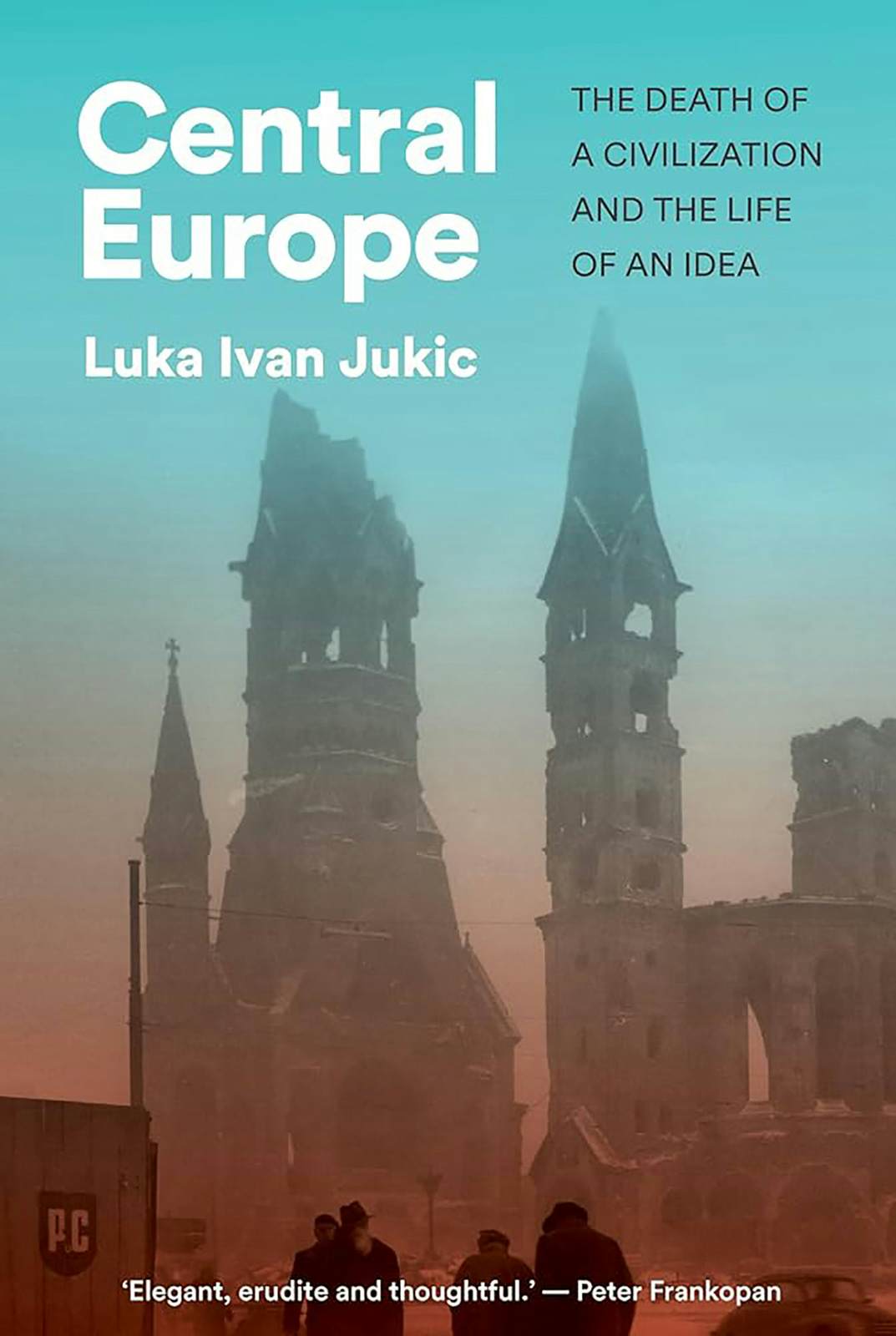
Luka Ivan Jukic’s history of Central Europe, first termed as such by the German geographer Georg Hassel in 1805, recounts its politics, culture and history from the election of the Habsburg Emperor Leopold II in 1790 through to Russia’s invasion of Ukraine in 2022. Though Ukraine was not commonly considered part of Central Europe, that Jukic should conclude his history as he does is indicative of the uncertainty surrounding how Central Europe should be defined.
His book is as much about the concept of the region as its history. For Hassel, as for others, it was a bulwark between Napoleonic France and tsarist Russia — with the Habsburg Empire and Hohenzollern Prussia (rarely a united front) standing in their way. The term remained in use until 1918, “reflecting a unique historical situation that had been created in the eighteenth century”.
Jukic bookends his history with debates between 20th century literary giants. The Czech writer Milan Kundera argued in his 1983-4 essay “The Tragedy of Central Europe” that countries such as his own, imprisoned behind the Iron Curtain, were in fact part of the Western European cultural tradition. Opposed to Kundera’s position stood the Russian writer Joseph Brodsky, who claimed that there was no such thing as Central Europe: “There is Polish literature, Czech literature, Slovak literature, Serbo-Croatian literature, Hungarian and so forth.”
The Polish writer Czesław Miłosz, aligning himself with Kundera, wrote, “The word Europe does not represent a phenomenon of geography but a spiritual notion synonymous with the word West. The moment Hungary is no longer European — that is, no longer Western — it is driven from its own destiny, beyond its own history: it loses the essence of its identity.” Miłosz’s notion is pure fantasy. Until the 18th century Hungary was ruled by the Ottoman Turks; its Magyar language originated in Central Asia.
It is easy to see why Miłosz and Kundera would want to conceive of a unified liberal European community opposed to Soviet Russia, given their experience of communist Poland and Czechoslovakia. But Brodsky’s heterogeneous analysis is closer to the truth of a collection of countries comprising different nationalities, languages and traditions. Even within these countries there was vast cultural and linguistic diversity.
Language plays a significant role in Jukic’s account. In Hungary, Latin survived as a living language longer than anywhere else in Europe. It was not until the 1770s that books were published in Magyar. Jukic describes “foreign travellers shocked to find innkeepers, coachmen, and shepherds speaking the supposedly dead Roman tongue well into the nineteenth century”.
He misquotes Frederick III’s famous 1493 motto as Austriae est imperare orbi universe (“it falls to Austria to rule over the whole globe”). The final word should be “universo”, though one suspects a 19th century Hungarian innkeeper might have made a similar error, and at least understood.
Ten per cent of Hungary’s population was German. At the start of the 18th century their tongue was bracketed alongside Magyar, Czech and other languages as incapable of expressing philosophical concepts and poetic sentiments. Following the defeat of the Habsburg Empire in the Austro-Prussian War initiated by Frederick II (the Great), Empress Maria Theresa began to overhaul her Empire, centralising administration along Prussian lines.
Taking her cue from Joseph von Sonnenfels, who promoted the use of High German in Vienna and believed the language to be crucial for developing the empire along enlightened lines, Maria Theresa encouraged the use of German amongst her subordinates. By the time Joseph II became Habsburg Emperor in 1780, German had become the language of state administration.
Language was not alone in determining nationality. In the winter of 1807–8, with Napoleonic troops surrounding Berlin, Johann Gottlieb Fichte gave birth to the concept of “Bildung”, an abstract term intended to define a German cultural sensibility that was opposed to French “culture”. “Bildung” became a way for people to identify with a notion of Germanness that ultimately fed into racial stereotypes, at first distinguishing Germans from Slavs but ending in the separation between “pure” Aryan Germans and Jews that fuelled the ideology of the Holocaust.
“Central Europe,” writes Jukic, “was not a predestined fate, but the result of a number of historically contingent events and decisions in the eighteenth and early nineteenth centuries; a novel historical situation whose existence was tied to specific circumstances whose disappearance it did not survive.” Though Jukic’s clumsy repetition of the relative pronoun is indicative of an inelegant prose style, his clear, succinct summary is also typical of a book which leaves its reader enlightened and provoked.