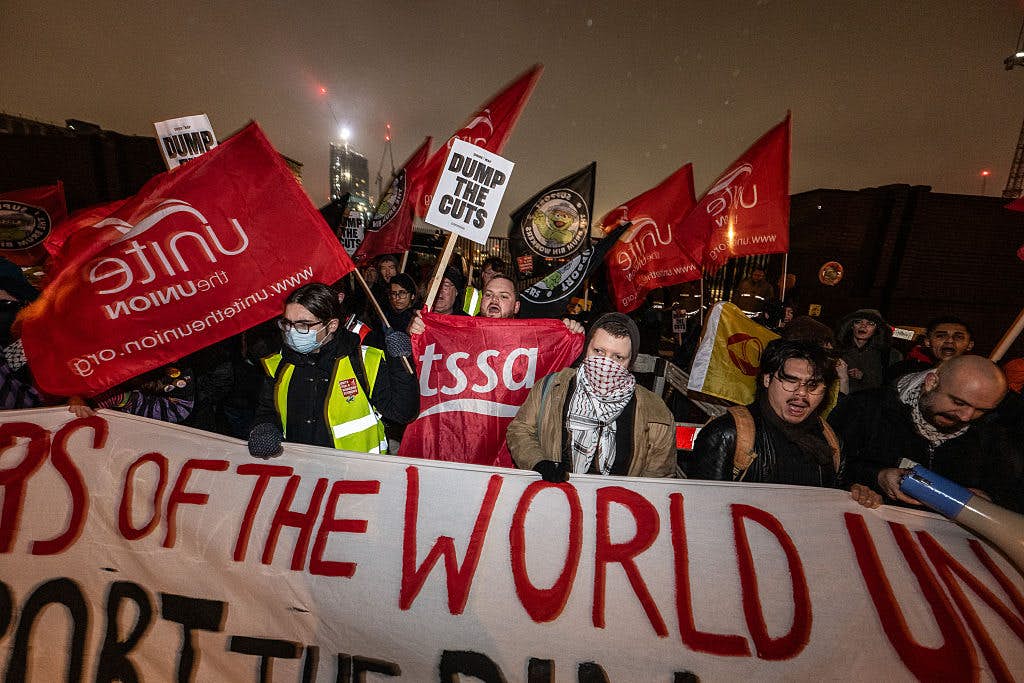
Labour has handed power back to the unions, and is now discovering the cost of obedience
Trade union support has been a steady fixture of most Labour governments since they founded the party. The two are virtually inseparable, so it came as no surprise that the minute Labour came into power, so did the trade unions. Suddenly, public sector workers are getting pay rises and cushy workplace benefits. Nearly every month, there is a new headline barking demands at Downing Street: “Union Leaders Demand Starmer Reinstates Suspended MPs”, “Unions demand ‘oven ready’ workers’ rights laws in Starmer’s first King’s Speech”, “Unions demand Starmer repeal Palestine Action ban”. The message is always the same: jump, or else.
So “Unions threaten Starmer over workers’ rights law” and out pops Rayner’s Employment Rights Act. Signed, sealed and – for the most part – conspicuously uncosted. When the bill was first conceived, its annual cost was estimated at £5 billion. That was before concerns were raised about “day one” rights and the cumulative burden on employers. Then concessions were made, and the figure was later revised down to £1 billion a year, a steep drop that raised eyebrows everywhere.
Those raised eyebrows were justified. One policy, largely unnoticed, grants unions guaranteed access to businesses — and the government has completely failed to estimate its cost. Perhaps an oversight.
Mandatory trade union access alone could cost businesses over £1 billion, dwarfing the government’s own estimate of £18 million, according to the Adam Smith Institute. Ministers arrived at their figure by counting only the cost of “familiarisation” with the new rules, as though the entire exercise amounted to HR teams leafing through a picture-heavy document over lunch.
In reality, for UK businesses, familiarisation will cost around £5.5 million. Negotiation and arbitration over access: £113 million. Disruption caused by union visits: £66 million. Increased staff unionisation: £894 million. These are not abstract figures. They translate into lost time, delayed decisions, higher legal costs, and fewer jobs created.
Worse still, small and medium-sized businesses will shoulder 63 per cent of the burden. The very people Labour claims to champion, the “little guys” – high street retailers, hospitality, manufacturers, start-ups, will now think twice before expanding payrolls or taking on risk. In an economy already struggling with low productivity, weak growth, and soaring unemployment rates this can only be categorised as a form of self harm.
The consequences are already visible. Hiring freezes, delayed expansion plans, rising compliance costs, and a move away from permanent employment towards contractors and automation. Britain does not become fairer or richer by making employment harder; it makes more businesses more cautious, labour less attractive, and ultimately more people unemployed, reliant on the state.
But none of this is new. Labour governments have been here before. In 1969, Harold Wilson attempted to rein in the unions after admitting that wildcat strikes were damaging the national economy. His White Paper, In Place of Strife, triggered a ferocious backlash. The result was an internal civil war that broke the government’s authority long before the 1970 election.
The lesson Labour learned was a brutal one: never cross the unions unless you are prepared to lose. Behind Rayner’s Employment Rights Act, the same forces are once again at work. Just as Wilson was eventually forced to accept a face-saving compromise to survive, Starmer has pushed through legislation that already has warnings to be hardly worth the paper it is written on, generous to unions and punishing to employers.
By prioritising union demands over Britain’s high streets, Starmer is quietly digging his own grave. And the cruellest twist is that even after the pay rises, legislative concessions and a workers’ rights act more radical than anything since the 1970s, organised labour has not warmed to him. Unite, one of the most powerful and disruptive unions, pointedly refused to endorse Labour’s manifesto. Its leadership remains openly hostile to much of what Starmer represents. The government has embraced the unions’ agenda and the favour has not been returned. They still, despite her defenestration, want Rayner.
Modern trade unionism is no longer revolves around loyalty to Labour governments, but is geared towards leverage over them. Influence is exerted through pressure, rather than gratitude. Appropriately, given their political leanings, they rely heavily on momentum, meaning each victory merely resets expectations for the next demand. Public sector pay rises, a flagship Employment Rights Bill, and open lines of communication has only whetted the Union’s appetites.
Unfortunately, it seems as though even if Starmer can correctly diagnose the problems, he is figuratively deadlocked from doing anything about them. We were all promised seriousness, discipline and adults back in the room. What he has delivered instead is a government perpetually negotiating with its own base, constrained by its allies more than its opponents. If he can’t grow a backbone to resist demands that Britain cannot afford, he might as well sign his resignation.