This article is taken from the December-January 2026 issue of The Critic. To get the full magazine why not subscribe? Get five issues for just £25.
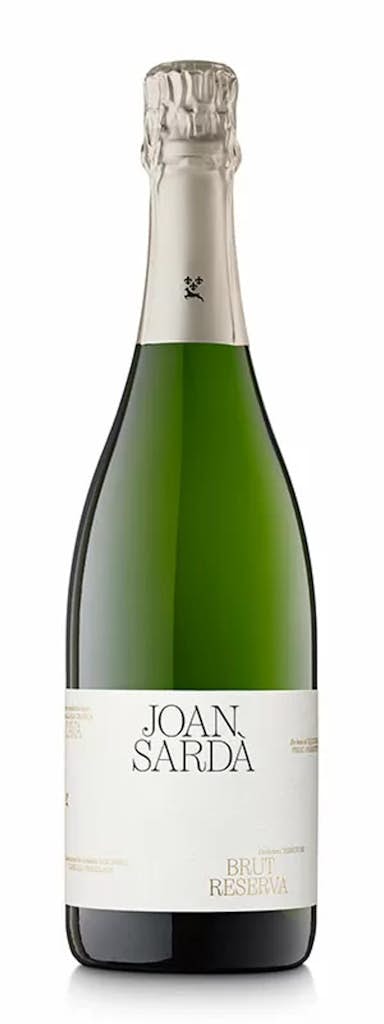
Last month Jo Bartosch of this parish asked my advice for a good sparkling wine that wouldn’t break the bank to serve at the launch of her new book Pornocracy, written with Robert Jessel. After consulting my extensive notes from all of this year’s wine merchant tastings, I was slightly surprised that the clear winner was a Cava: Joan Sarda Reserva Brut 2021, which Corney & Barrow is selling for £14.25 a bottle.
Cava, Spain’s answer to Champagne, used to be awful. I spent six months in Barcelona in the 1990s trying without much success to learn Spanish. No occasion was too small for someone to crack out the Cava. I knocked back gallons of the stuff in special bars called xampanyeries, literally Champagne shops (“x” makes a “ch” sound in Catalan), though they didn’t sell any real Champagne.
If you were lucky, your fizz would taste of nothing at all. If you weren’t, it would have a strange earthy floral flavour. Worse still, it might be sweet. At least it was cheap, probably cheaper than mineral water or beer. This for a wine produced by the expensive, time-consuming Champagne method. You can imagine what the quality of the grapes was like.
Even the premium stuff was pretty poor, lacking the fruitiness of decent Champagne. When I worked at Oddbins, we always used to recommend Segura Viudas but in truth it wasn’t a patch on New World sparklers.
I assumed the Cava grapes, Macabeo, Parellada and Xarel-lo, were simply not up to the job compared with Chardonnay and Pinot Noir that are the basis for most sparkling wines.
Today you can pick up Cava for about £6 a bottle in Britain. In Spain it’s even cheaper: Catalan wine expert Miquel Hudin told me that under two euros a bottle is not unheard of. Spend a bit more, and you’ll find that Cava is now infinitely better than it was. Something like Morrisons the Best will cost you about £10, and it has a fruity, biscuity quality that you could, after a glass or two, mistake for something French.
Even Freixenet, the stuff in the matt black bottle with blingy gold trim that was once a byword for blandness, is quite nice these days. Nevertheless, in 2018 some of the best producers who felt dragged down by Cava’s dowdy reputation formed a breakaway appellation, Corpinnat, which sounds like a rebranded building society.
I’d buy it by the caseload if I were having a big party this Christmas
My top tip, Joan Sarda, is still in the Cava camp — but it’s a reserva, meaning it’s aged for much longer than most, giving it a croissant and toasted almond flavour, and there’s no shortage of fruit. I’d buy it by the caseload if I were having a big party this Christmas.
I think a lot of people will be trading down this year with all the current economic woes. Britain is still the second largest export market for Champagne after the US, but we’re drinking a lot less than we were. Sales are down by over six million bottles since the peak of nearly 30 million in 2021.
It doesn’t help that Champagne is now so expensive. Moët & Chandon is £40 a bottle! For that sort of money, I’d much rather drink English, like Kent’s Westwell Pelegrim or Langham Culver from Dorset.
Champagne also has competition at home, with wines such as Crémant de Bourgogne, Crémant de Loire, Crémant d’Alsace etc. These have the advantage of being French, so your guests may well think you’re serving real champagne.
The supermarkets usually have some decent ones, but it’s worth seeking out more interesting examples from independents such as the rich Cuvée Prestige Rosé Crémant de Limoux from Domaine Collin. It features in our inaugural The Critic Wine Club, which we’re doing in conjunction with Yapp Bros.
Sparkling wines from the colonies are particularly good these days, too. The canny editors served Graham Beck Cap Classique at The Critic summer party, which seemed to go down well with the bright young things. Cap Classique is South Africa’s answer to Champagne: same grapes, same method, much cheaper.
Australian sparkling wine is also excellent, especially from the cooler climate of Tasmania. Jansz rosé is particularly lovely at the moment, usually for under £20. If I were a Champagne producer, wines like this would terrify me. It has all the poise and elegance you’d expect from something at twice the price. The simple truth is that whilst at the top Champagne is still hard to beat, the cheaper stuff just can’t compete.
But what about Prosecco? All I can say is you should never serve Prosecco unless you want your guests to leave early. The problem is that I never want more than a glass, or less, of even quite expensive Prosecco whilst the cheap stuff often has an unpleasantly soapy quality. Cava is much, much better.
So that’s my advice for entertaining this Christmas: avoid Champagne and for God’s sake no Prosecco! Instead head to Spain, Australia, the Languedoc or South Africa for all your fizz needs. Or if you’re feeling flush, then buy British.