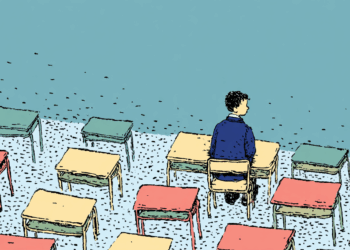
Sophie Winkleman has admitted that she gave in to allowing her 12-year-old a mobile phone, after campaigning to ban screens in schools and a smartphone ban for under-16s.
The Peep Show star, 45, shares two daughters, Maud, 12 and Isabella, nine, with her husband Lord Frederick Windsor – the son of Prince Michael of Kent and second cousin of King Charles.
Sophie has long been an outspoken critic of phones and screen use, criticising them for damaging children’s education, eyesight, life chances and mental and emotional wellbeing.
However, she has confessed that she herself ‘failed spectacularly’ with banning the devices in her own home, after being talked into getting her eldest daughter a phone.
Speaking to The Sunday Times, she explained that she’d relented after Maud ‘articulately and sweetly’ revealed how she’d become ‘isolated’ at school.
The half-sister of TV presenter Claudia Winkleman candidly said: ‘I failed spectacularly with my elder girl.
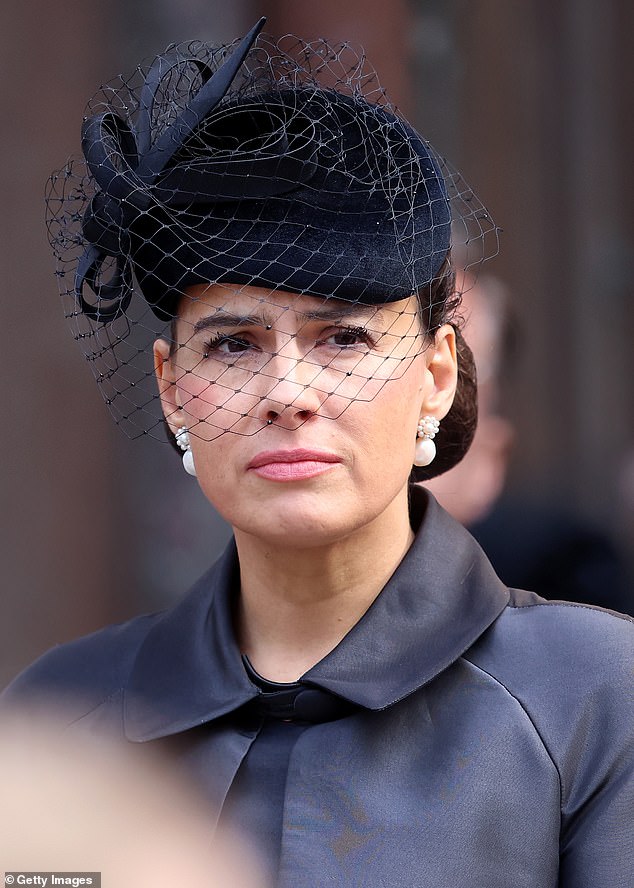
Sophie Winkleman has admitted that she gave in to allowing her 12-year-old a mobile phone, after campaigning to ban screens in schools and a smartphone ban for under-16s (seen in September)
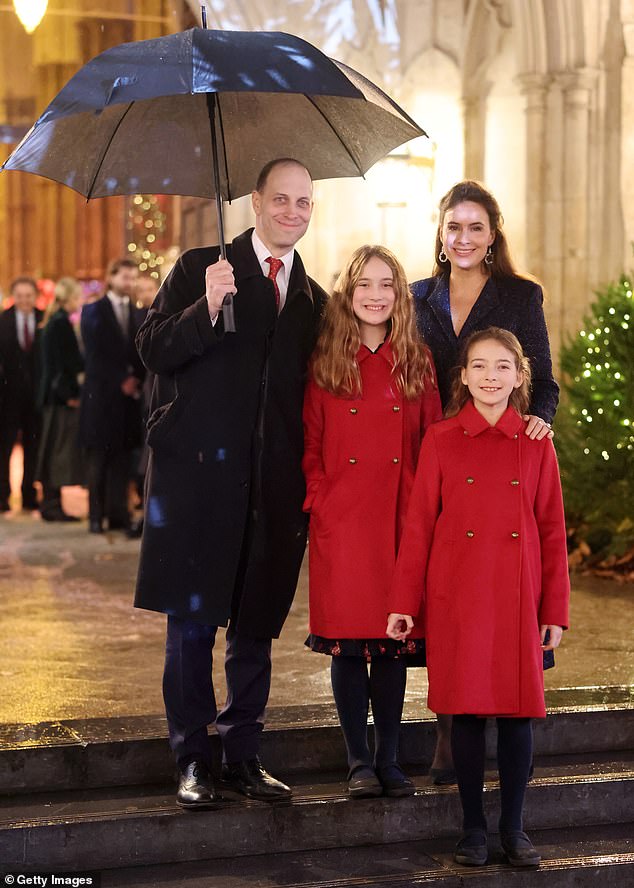
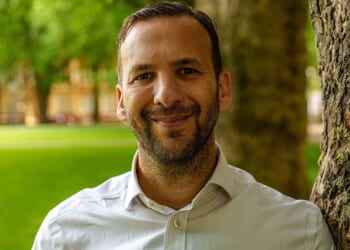
The Peep Show star, 45, shares two daughters, Maud, 12 and Isabella, nine, with her husband Lord Frederick Windsor (seen at Westminster this month)
‘She’s 12 and she went to a school where they all had phones and she said: “Dear mother, your ideology is really ruining my life. I don’t know what anyone’s talking about every morning when I come in. I’m so isolated.”
‘She was very articulate and sweet about it. So she’s got a phone. She doesn’t have any social media.’
Sophie argued with some children banned from having phones while others were allowed, it cause those without to feel left out and ‘very unhappy’.
The actress called on the Government to take responsibility and create a uniform policy in order to help parents and schools enforce phone bans.
‘[There’s] sort of a need for children to do what their friends are doing and if it’s not legislated, we all lose. I mean, it’s brutal,’ she said.
‘And the parents who are very strong, their children are very unhappy and they bang on at them all the time and it’s a cause of so much friction. I think most people with young children would be very, very grateful for some government legislation.’
Recent research has revealed that the average teenager spends 11 hours a day on screens, while 55 percent of children aged eight to 11 own a smartphone.
Earlier this year, the Tories campaigned for an amendment to the Schools Bill, which would have made phone bans in classrooms the law.

The actress called on the Government to take responsibility and create a uniform policy in order to help parents and schools enforce phone bans (seen with King Charles in June)
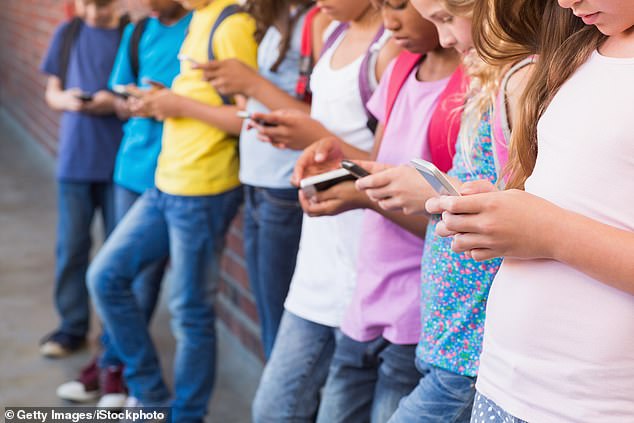
Recent research has revealed that the average teenager spends 11 hours a day on screens, while 55 percent of children aged eight to 11 own a smartphone (stock image)
However, it was defeated by Labour MPs, who said official guidance already exists to this effect, and most schools do place restrictions on phone use.
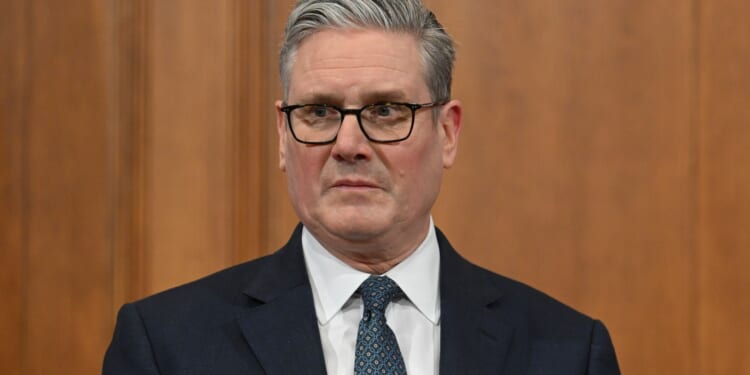
Prime Minister Keir Starmer insisted that the focus should be on the putting a stop to the content that children should not be accessing, while Education Secretary Bridget Phillipson previously branded the proposal a ‘headline-grabbing gimmick’.
Currently, there is non-statutory guidance which says schools should prohibit phone use in the school day, but they are not legally obliged to follow it.
It comes after a teenager and a mother-of-three joined as claimants in legal action against the Government, saying the guidance does not go far enough in protecting pupils.
The legal challenge was launched in July by two fathers of primary school-aged children, Will Orr-Ewing and Pete Montgomery, who are calling for a total ban on smartphones say allowing unsupervised access to the internet during the school day is a safeguarding failure because of the extreme content pupils are able to view.
But, last month, private school leaders said an ‘outright ban’ would lack ‘nuance’ and that policies should be ‘community specific’, pointing to the use of phones to help parents track their children’s movements and make sure they are getting to and from school safely.
A survey earlier this year found that 100 per cent of primary schools have a ban on mobile phone use, with a similar ban in in place in 83 per cent of secondary schools and a further 16 per cent allowing limited use outside lessons. Just one per cent of secondary schools polled by Teacher Tapp did not regulate use.
A Department for Education spokesman said: ‘Phones have no place in our schools, and leaders already have the power to ban phones.
‘Research from the Children’s Commissioner shows that 99.8 per cent of primary schools and 90 per cent of secondary schools already have policies restricting the use of mobile phones.
‘We support headteachers to take the necessary steps to prevent disruption, backed by clear guidance, and have also brought in better protections for children from harmful content through the Online Safety Act.’