This article is taken from the December-January 2026 issue of The Critic. To get the full magazine why not subscribe? Get five issues for just £25.
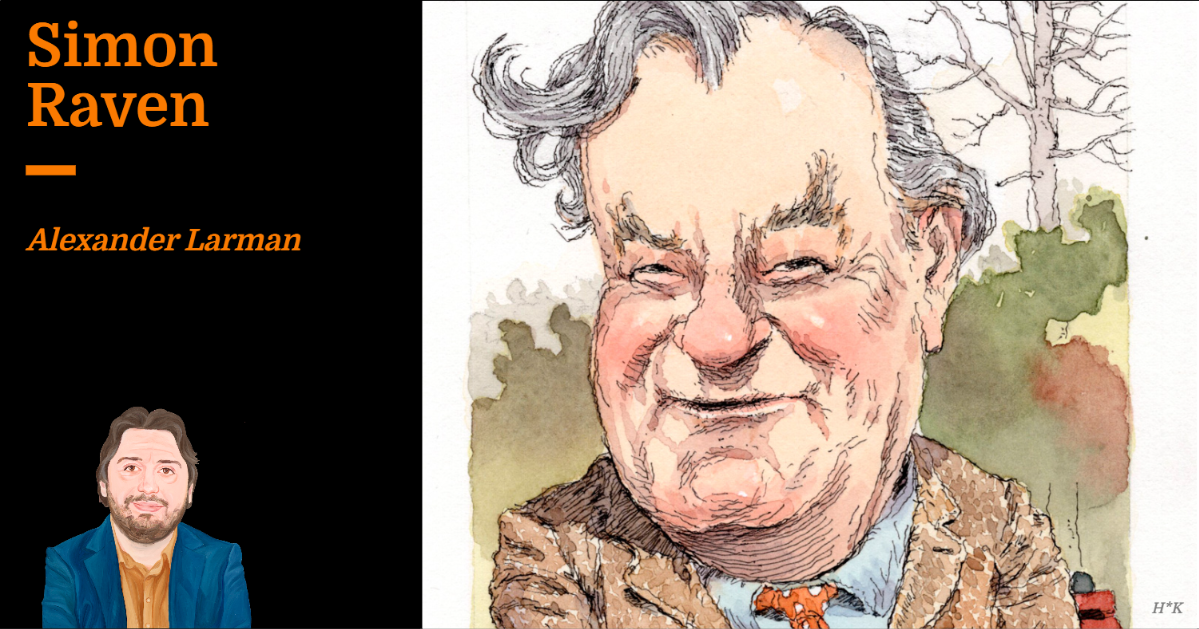
When the author, officer and roué Simon Raven died in 2001 at the age of 73, his biographer Michael Barber wrote in the Guardian that he “combined elements of Flashman, Waugh’s Captain Grimes and the Earl of Rochester”, and accurately called him “this total one-off character”.
A quarter-century after his death, Raven’s place in the literary firmament should, by rights, be negligible, if he is ever discussed at all. He was never a bestselling author, making more of the money he swiftly spent from television dramatisations. The books themselves, heavy on deeply un-PC content and unrepentant, if tongue-in-cheek, snobbery directed towards anyone who did not attend a leading public school and Oxbridge, seem as anachronistic in our current age as PG Wodehouse — or, for that matter, Flashman.
Yet Raven, who was known by his friends and admirers as “the Captain”, was not simply a Tufton-Bufton reactionary, but a novelist and essayist of great wit and literary talent whose books have attracted a select but fervent fanbase.
There have been many occasions over the past couple of years that I have referred to my interest in Raven, and a look of furtive glee has come over the face of my (invariably male) interlocutor as we begin to compare notes on our favourite novels by him. Which, equally predictably, will lead on to a discussion about the most outrageous scenes, characters and lines, followed by a conversation about the moral character, or lack of it, of their creator.
If Raven were alive today, he would not merely have been cancelled, but would probably have ended up in prison for offences real and inferred. Even by the standards of the more permissive age in which he lived and worked, he was a thorough blackguard who dismissed all strictures on personal behaviour as being the narrow-minded censoriousness of a few dusty hypocrites.

These figures included none other than his school contemporary William Rees-Mogg, the future editor of The Times who was brutally mocked in Raven’s Alms for Oblivion series as Somerset Lloyd-James, presented as a repellent social climber with a taste for flagellation. The two studied together at Charterhouse, and whilst Rees-Mogg was already considering ways in which he might advance into what became a distinguished public career, Raven was busying himself with the two things that would be lifelong preoccupations: boys and the bottle.
The first, at least, was prepared for at a very young age, when the nine-year-old Raven was seduced “deftly and very agreeably” by a paedophile games master, Lieutenant-Colonel Killock, at prep school. He later said of this pederast — who was married with children and had an impressive military record — that “he liked playing with little boys’ penises, and he did it so deftly that we positively queued up for him … it was a scene of great erotic fascination, vividly memorable to this day, of Petronian power and indecency”.
If this is a reminder that the child is father to the man, then it is also salutary to remember that Raven had a near-incestuous crush on his alcoholic mother Esther and frequently included scenes of deeply inappropriate Oedipal relationships in his novels, with the approving words “Doing it with Mummy” used.
His biographer’s comparison of the Captain to Grimes, who forever finds himself “in the soup”, was all too accurate. Although Raven won the top scholarship to Charterhouse, he was expelled from the school in 1945 for “serial homosexuality”, of which he was undeniably guilty.
Although never a bugger — he claimed “always to be mindful of Juvenal’s complaint about meeting last night’s supper” — he had a penchant for what he called “fumble-wumble”, and his friend Lord Prior said of him as a schoolboy that “[Raven] would say how beautiful so-and-so was and how satisfying it would be to seduce him. And if he did seduce him, he would tell you. In graphic detail!”
By the time the unrepentant young man, who had spent his schooldays “trailing an odour of brimstone”, in the words of another contemporary, Gerald Priestland, won a place at King’s Cambridge — “ambition will not provide me with any other object than eventually to become a fellow of King’s College Cambridge”, he vaingloriously wrote to the Provost — he was beginning to develop the persona that he would later perfect in his writing.
Owing to the controversy that had swirled around his premature departure from school, Raven, who “had been reared in the Arnoldian tradition which said that expulsion equals social death”, decided to join the army to prove himself and find redemption.
However, this was not to be some Four Feathers-esque display of gallantry. He spent two fruitless years in Bangalore and on Salisbury Plain, where he pursued intrigues with men and women alike and developed a self-consciously worldly mien. When he got to Cambridge, the future novelist Peter Dickinson noted his “slightly ruined look” and “hint of danger” and remarked of the twenty-something Raven that “he gave the impression of being aged about 40 and of having seen a great deal of life”.
He was unfavourably compared to the art historian and spy Anthony Blunt and was forever being told to “be more like Blunt”. When the older man’s treachery was exposed, the Captain took perverse delight in sending postcards to his naggers to say “Thank God I wasn’t more like Blunt.”
Although Raven found himself at home at King’s — “Nobody minded what you did in bed or what you said about God, a very civilised attitude, then,” he recalled, happily — there was still the problem of his deeply priapic ways, which manifested itself with both sexes. Work was a secondary concern — “too busy scheming to get my end away” — and Raven divided his time between the pleasures of the flesh and writing a first novel which, in a sly dig at King’s’ famous son E.M. Forster, he gave the working title A Passage to Biarritz.
He had a great capacity for friendship, but rather less aptitude for any serious or enduring romantic relationships. When he married another undergraduate, Susan Kilner, in 1951, it was not from any belief that he should be tied down by the pram in the hall but because he had impregnated her, and his inimitable moral code dictated that he should make an honest woman of her, after failing to procure an abortion on her behalf.
This did not, however, mean that he was prepared to serve as a loyal husband to her or be a remotely present father to their son, Adam. This “unmade bed of a man”, as he was once described, fled back into the army, where he remained until he was cashiered with racing debts after “a disastrous sequence of slow horses” did for him.
With Susan and Adam on their uppers in his absence, his desperate spouse sent him a telegram saying “WIFE AND BABY STARVING SEND MONEY SOONEST”. In an impressive display of callousness, Raven replied “SORRY NO MONEY SUGGEST EAT BABY”. They were divorced in 1957, and he never married again.
The Captain was conspicuously handsome and charismatic as a youth, which made him irresistible to everyone, but by the time that he began a writing career with The Feathers of Death, published when he was in his early thirties — a relatively late start for one who would go on to be so prolific — he remarked that he “preferred a good dinner to a good fuck”. In any case, he had by then led a more eventful life than most of his contemporaries put together.
He had been allowed to resign from the army rather than face a court martial for “conduct unbecoming” and, in a second stroke of good luck, made the acquaintance of Anthony Blond, a gentleman publisher who was, like Raven, flamboyantly bisexual and personally dissolute.
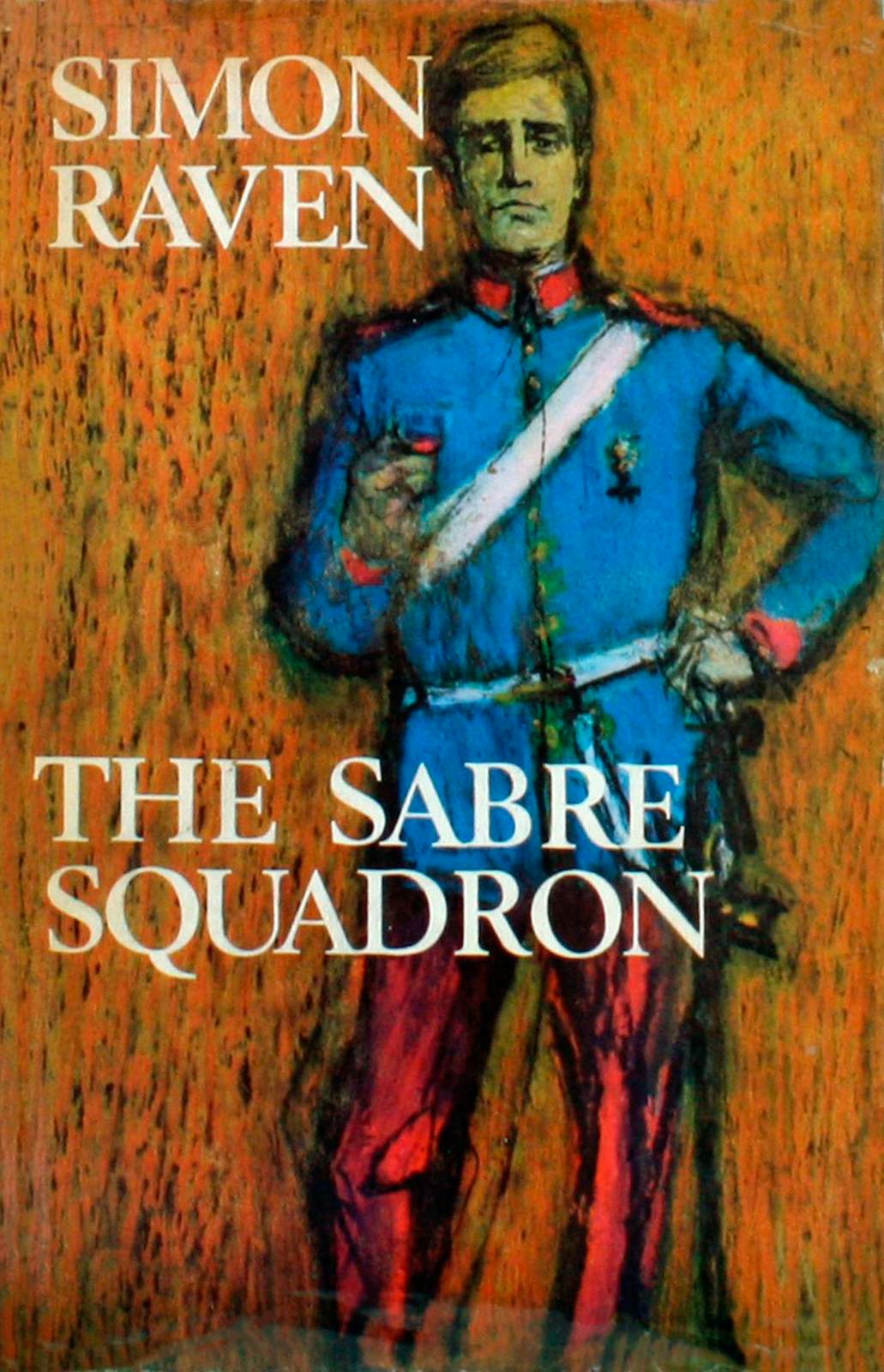
Although Blond’s advance for The Feathers of Death was not a large one (around £100, £50 paid in weekly £10 instalments and then another £50 on delivery) the discipline required to write what Raven called “a story of homosexual romance in the Army” did him good, and it established him as a novelist of note. He got away with outrageous acts for the time, including writing a carefully-researched essay on gigolos entitled, appropriately, “Boys Will Be Boys”, and continued to lead a dissipated life in the fleshpots of London.
Blond therefore offered him a deal that preserved both his literary talent and, probably, his life. In Raven’s recollection, “I turned up [at his offices] as usual one morning and he said ‘This is the last hand-out you get. Leave London, or leave my employ … go at least fifty miles.’ So that is what I did. I went to Deal … and have based myself there or thereabouts ever since.”
Life in rustication may have lacked the temptations of the city for Raven, but it enabled him to concentrate on his writing, for which he developed a considerable aptitude. Although he belittled his considerable literary ability and, via his alter ego, the soldier-turned-novelist Fielding Gray, claimed that “I arrange words in pleasing patterns in order to make money”, he combined a ferociously disciplined work ethic — whatever bender he had been on the previous night, he was sitting at his desk, ready to write, by 9.30 every morning — with a rare degree of talent and verve.
He wrote dozens of novels, television plays, collections of essays and introductions to classic books and managed to combine a mixture of erudition and humour with the persistent sense that there was something unsavoury lurking beneath the surface. His work as a screenwriter has perhaps been underrated, but, taken in all, it is oddly fascinating that he was hired as a script doctor on the atypical Bond film On Her Majesty’s Secret Service, just as he displayed an unusual amount of compassion towards the Duke and Duchess of Windsor in his adaptation of Frances Donaldson’s Edward VIII biography, Edward and Mrs Simpson. Perhaps, as a fellow outcast, he sympathised with them.
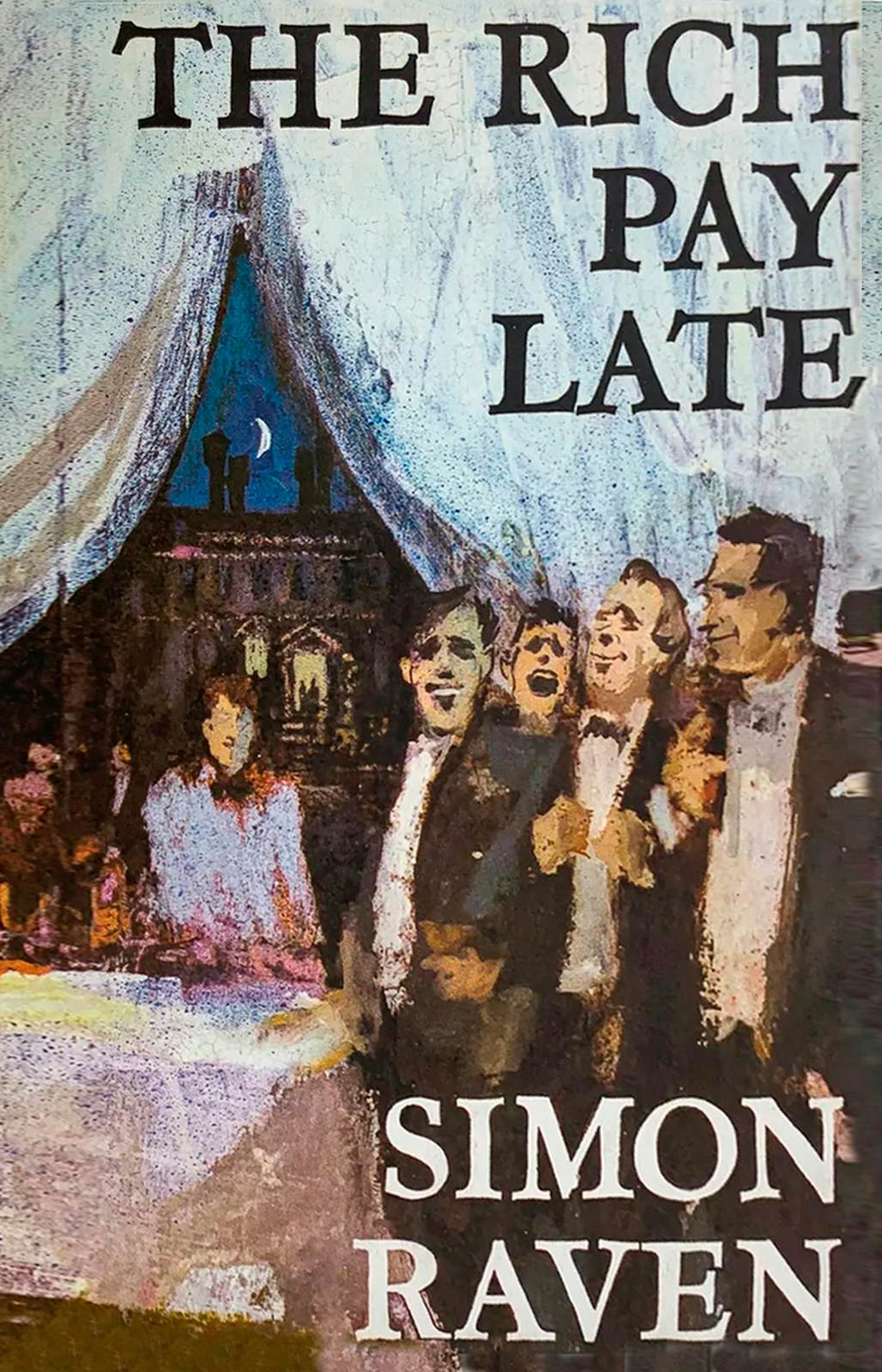
Still, these and his adaptations of Nancy Mitford’s Love in a Cold Climate and Anthony Trollope’s Palliser novels were only curtain-raisers for what would be his own magnum opus, the ten-volume Alms for Oblivion series on which Raven’s literary reputation largely rests today.
The novels can be compared to Anthony Powell’s Dance to the Music of Time or Waugh’s Sword of Honour series, and, superficially, they fit within the long defunct subgenre of English aristocrats and arrivistes alike alternately manipulating and exploiting one another for sexual and social advantage. Yet Raven is far more attuned to human frailty, and resulting nastiness, than Powell and lacks Waugh’s underlying respect for the institutions of old England.
Most of the characters in the Alms for Oblivion novels are flamboyantly unscrupulous, betraying their fellow man (and woman) with no more compunction for their actions than they would display over ordering the wrong kind of wine at their club. In some cases, this leads to their untimely (and comical) demises, but, in others, the horrible, venal protagonists simply thrive and prosper, as the old gentlemanly world comes crashing down around their heads.
Raven’s own writing was eventually affected by his licentious and wine-soaked lifestyle, and even his most fervent admirers would struggle to make a serious case for the literary merits of The First-Born of Egypt series, which followed on from Alms for Oblivion but without those books’ style.
By the time his last novel, 1992’s undistinguished The Troubadour, was published, Raven was a man out of time, both in the literary world and in the universe in general. Although he was prolific, he never had anything to show for his work, on the grounds that, as he once put it of any money he earned, “it went. Spent”. And he went too far in 1991 with the publication of what Barber called “his atrabilious memoir”, Is There Anybody There? Said the Traveller, which ended up attracting multiple libel suits — one from Blond himself, who his erstwhilst protégé presented as an idiot — and had to be pulped after initial succès de scandale.
The author claimed that he would get his own back by publishing an even more scabrous roman à clef, entitled All Safely Dead, but unfortunately his own mortality intervened.
Nonetheless, Raven had a final stroke of good fortune in the years before he died. His increasingly rackety life had seen him pass from boarding house to members’ club to cheap lodgings as he aged, but he ended his days in the London Charterhouse, an almshouse that offered him “a full library and a full stomach and peace and quiet to enjoy them both”.
It was to be the final testament of his life as a public school man — as the name implies, it had strong connections with his alma mater — and reminded those friends, as well as nemeses, of Raven of his resemblance to that other captain, Grimes, who could always remind the similarly dumbstruck and horrified that “There’s a blessed equity in the English social system that ensures the public-school man against starvation. One goes through four or five years of perfect hell at an age when life is bound to be hell anyway, and, after that, the social system never lets one down.”
The flamboyant, incorrigible exploits of Simon Raven, a bon vivant until the end, remain testament to this unarguable truth.