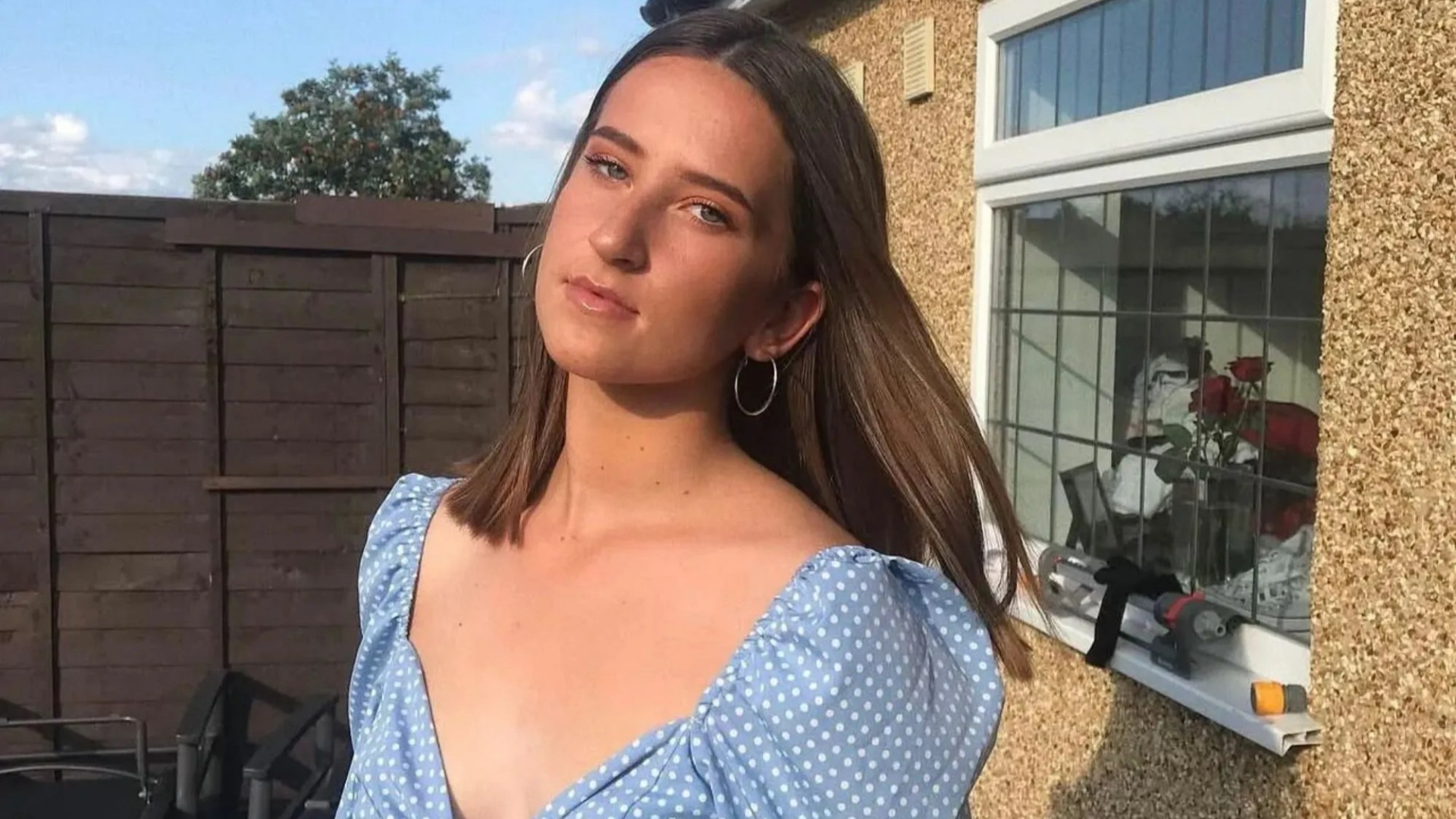
WHEN Molly Lambert opened up about her intrusive thoughts about harming children, she expected to be ripped apart by haters.
But instead she found an unexpected community of people just like her.
Molly’s seven-year obsessive paedophilic thoughts had driven her to the brink of suicide, convinced that she was totally alone.
But when she chose to share her intrusive sexual thoughts on TikTok she was flooded with messages from more than 1,000 people silently struggling with the same terrifying thoughts.
Molly, 22, shared how she lives with Pure O obsessive compulsive disorder (OCD) – a form where compulsions are mostly mental rather than physical.
She battled intrusive sexual and violent thoughts as a teen that left her convinced she was a danger to others.
After seeing a video of a woman talking about P-OCD – the paedophilic theme within OCD in which an individual has unwanted sexual thoughts or images about children – on TikTok Molly was able to get diagnosed in August 2025.
P-OCD is not paedophilia and Molly shared her story to help others who may be silently suffering with intrusive thoughts that come with OCD.
She’s since been inundated with messages from people of all ages who suffered from the same condition – who had never told anyone of the thoughts that haunted them daily.
Molly, a digital PR worker and mental health advocate, from South London, who has moved to Deansgate, Manchester, says: “The response has been overwhelming – people have been saying they have been crying, that they have felt like this for years, that they never told anyone.
“Parents have reached out saying they have obsessions about harming their children.
“Some people have said they ended up in psychiatric wards, others that they tried to take their own lives.
“It is so dangerous, because it is taboo, people do not talk about it and that makes it worse.
“Some messages come from people in their 50s who have been silently suffering their whole lives. That just shows how common it is and how hidden it is.”
Molly, 22 developed intrusive sexual and violent thoughts as a teenager. At her lowest ebb, she thought she was a paedophile and a risk to others.
But what seemed terrifyingly real, was in fact the result of obsessive compulsive disorder (OCD).
OCD is a severe anxiety disorder that affects 12 in every 1000 people with an estimated one million Brits suffering for it.
There are two aspects to OCD – obsessions and the compulsions.
Obsessions are thoughts, ideas and urges which feel impossible to ignore by sufferers – and they can be very persistent.
Obsessions can cause a huge amount of anxiety, particularly if they are distressing thoughts about harm coming to someone you love.
On the other hand, compulsions are the ritual sufferers perform to rid themselves of the anxiety felt from the obsessive thoughts.
In fact, the World Health Organization once ranked obsessive compulsive disorder in the top 10 most disabling illnesses, in terms of lost income and diminished quality of life.
Celebs such as Nicolas Cage, Jessica Alba, Leonardo DiCaprio, Niall Horan, Daniel Radcliffe and Lili Reinhart have all openly spoken about living with OCD.
I remember thinking, ‘Oh my gosh, I’m a paedophile – I thought, I’m never going to forget this thought. My life is over’
Molly Lambert
Molly recalls being an anxious child and her graphic fears about death soon escalated into relentless, unwanted thoughts that she says “changed her life forever.”
Looking back, Molly believes the signs were there from childhood.
She says: “I always had OCD traits. I had graphic images about death, I was scared of everything. I’d obsess over things like Madeleine McCann and worry I would get kidnapped.
“If there was a brownie trip coming up, I’d think about every single thing that could go wrong until my mum had to pick me up.”
But the turning point came when she was 15 during during a family holiday to Spain.
“We were at the airport and I saw a little girl wearing a crop top and short skirt and thought, ‘That’s weird for a child to wear that,’” Molly says.
“And then I panicked – ‘why would I even notice that? Why would I think about that? She’s a child’.”
Though the thought faded at first, it returned months later while she was revising for her exams.
She says: “I was 15 and I remember thinking, ‘Oh my gosh, I’m a paedophile – I thought, I’m never going to forget this thought. My life is over’.”
From that moment, Molly says she was trapped in her own mind.
Molly explained how the disorder made her obsess over thoughts about harm, morality, sexuality, and even her own existence.
She explains: “It is not being a paedophile, it is the fact that these thoughts exist in the world and your brain latches onto them.
“I know I am not a paedophile, but OCD is all about uncertainty. It tells you ‘what if?’ and you cannot prove it wrong.
“For me it was pedo, moral, sexual, harmful, and existential – all the same lie in a different disguise.
“You sit on it, you analyse it, and once you see the pattern, it stops scaring you.”
The thoughts were terrifying, but Molly stressed they never reflected her desires or intentions.
“It is literally just the fact that these things exist in the world. It is mental,” she says.
“Some people do physical rituals, like shaking their head or checking things, but for me it was purely mental.
“I would replay thoughts, check comments, overthink everything. You feel like you cannot relax. You second guess everything you do.
“If you do not follow the compulsion, your anxiety spikes, but if you do, it just makes it worse next time.
“Even now, if I am tired, stressed, or hungover, the thoughts feel stronger and stick with me longer.”
For years, the disorder left Molly trapped in what she calls “dark spirals” of shame.
She says: “It is the shame that gets you, especially with paedophilic and harm thoughts.
“You think you are a monster, that you don’t deserve to exist. The shame is in the way you view yourself.
“Even seven years after my first spiral, that feeling lingers. But knowing what it is helps so much.
“It is about unwiring the thought that you are a monster. That is the hard part.
“In the early years, when you are figuring out who you are, OCD just attacks everything and makes you question your identity completely.”
Dr Marianne Trent, a chartered clinical psychologist, previously told The Sun: “OCD is something people often talk about quite colloquially. People will say, ‘Oh that’s just my OCD’, but that doesn’t always mean they have a clinical diagnosis.
“Many people might have some traits but we are still able to function normally and live a life that feels joyful and rewarding.
“For a select few, however, OCD is a very distressing condition. Being tidy, ordered or a perfectionist does not always amount to OCD.”
Recovery for Molly was far from simple.
Molly was officially diagnosed in August 2025, and had her first talking therapy in 2023.
This seemed to work for Molly until 2024, where her OCD panic attacks became so terrible, causing her to switch to hypnotherapy.
I have had people online calling me a ‘nonce’ and telling me to die
Molly Lambert
She says: “The aftermath of recovery is awful. You realise the shame is still there, it is just quieter. You have to deal with the ongoing feelings.
“Talking about it and externalising it is the biggest help. It displaces those darker spirals. That is why I went public. Externalising it was the turning point for me.
“For years I avoided talking about it, but once I did, it was like the air cleared a little.”
Molly believes there’s an extra stigma for men with OCD.
She says: “If I was a man with this type of OCD, I would be terrified in opening up. Men are stereotyped as doing awful things, but OCD does not pick gender.
“It affects everyone, so it is harder for them to speak out that they are feeling this, in case they get accused.
“That is why I am speaking out. It is about de-stigmatising it and helping people understand it is not about desire or intent.
“If people see this story, they might realise they are not alone and that they can get help.”
But going public has also brought abuse.
Molly says: “I have had people online calling me a ‘nonce’ and telling me to die. I had to delete Facebook for my mental health and my mum is helping me with messages.
“It is confusing for people who have never experienced it, but that is why talking about it matters.
“If people understood how traditional OCD works, they could see the patterns in other types too.
“My hope is that no one they love experiences it, because the reaction can push people further into themselves.
“That is why this is dangerous.
“Walking across the street, I could be thinking about breakfast and suddenly visualise being stabbed. OCD sticks.
“It is a brain pattern.
What is Obsessive Compulsive Disorder (OCD)?
Obsessive-compulsive disorder (OCD) is a mental health problem. It has two main parts that are connected, obsessions and compulsions.
Obsessions are unwelcome thoughts, feelings, images, urges, worries or doubts that keep coming into your mind.
They may feel stuck in your mind, no matter what you do. You may worry what they mean or why they won’t go away, and feel very distressed by them.
Compulsions are repetitive things that you do to reduce the distress or uncertainty caused by obsessions.
Compulsions can be things you do physically, like repeatedly checking a door is locked. Or they can be things you do in your head, like repeating a specific word to yourself. Or they may involve others, such as asking people for reassurance.
Treatment can involve talking therapies such as Cognitive behavioural therapy (CBT) with Exposure and response prevention (ERP).
You may be offered the following medications for OCD, either on their own or alongside talking therapy:
- Selective serotonin reuptake inhibitors (SSRIs) – this is a type of antidepressant. Research has shown that it can also help to treat OCD.
- Clomipramine – this is a tricyclic antidepressant. You may be offered this if you try an SSRI but it doesn’t help.
If you think you might have OCD, visit your GP, and you can find further information at mind.org.uk/
“That is why Pure O is so hard – everything feels real, but it is all mental.
“You think something is true because your brain is convinced of it, even if logically you know it is not. It is exhausting and relentless.”
Molly has learnt how to sit with thoughts rather than following compulsions.
She says: “I sit with the thought, I observe it, I see it as a pattern.
“It is the same lie with a different disguise. You have to name it, label it, so it loses its power. People want it to end immediately, but the only way is understanding it.
“That is my biggest advice and something I tell everyone who texts me asking for help. It gives them permission to step back and see that it is the brain doing this, not them being a monster.”
Despite the difficulty, she is determined to help others.
Molly says: “Since sharing my story, people have sought help for the first time, got diagnosed, or realised they are not alone.
“That is the most important thing. I have helped people take the leap by normalising it and spreading awareness.
“I know how alone it feels, and if I had heard this earlier, it would have saved me years.
“People message me from all over saying they thought they were the only ones who felt this way. That’s heart breaking, but it shows how vital it is to talk about it.”
Despite being able to label her condition, Molly still struggles with OCD on the daily but says it has become a background noise she has learnt to live with.
“Even now I get scary thoughts daily,” she says.
“They are the same lie with a different disguise, but recognising the pattern helps me control them.
“Understanding your mind is the only way to survive OCD – it is exhausting, it is relentless, but it can be managed.
“OCD does not care who you are.
“It does not pick a personality, or background. It can make you obsess about anything. That is why awareness is so important.
“If even one person reaches out for help because of my story, it has been worth it.
“This is just the beginning, but the response shows how many people are out there silently struggling, and how vital it is to break the silence.”
You can follow Molly’s journey on TikTok at @mollambert