An amputee survivor of one of Britain’s worst air tragedies has recalled the moment she ‘knew we were definitely going to crash’ before 47 people died in the tragedy.
The British Midland Boeing 737 smashed into an M1 embankment in the Kegworth air disaster in Leicestershire following engine trouble on the night of January 8, 1989.
Alice O’Hagan, a mother-of-five from County Antrim, was among the passengers on board who became trapped between broken seats thrown forward on impact.
Mrs O’Hagan, who was travelling with her husband Eamon, could not free herself and suffered such severe leg injuries that her foot was later amputated above the ankle.
She is among the survivors giving candid accounts about the terrifying scenes both before and after the crash in a new documentary called ‘Kegworth: Flight to Disaster’.
In the programme airing on BBC Two next Thursday, she describes how they were near the front of the plane with her in window seat 2F next to her husband in 2E.
Speaking about how the plane began ‘shuddering’ which then got worse, Mrs O’Hagan says: ‘You think, my God, I’m up here, there’s no getting off. Eamon took my hand and said “We’ll be fine, darling, nothing will happen” – which was a big lie.’
She continues: ‘The noise stopped and then there was just complete and utter silence. The plane was coming down without any engines. I was looking out and then I could see the lights and I knew then that we were definitely going to crash.’
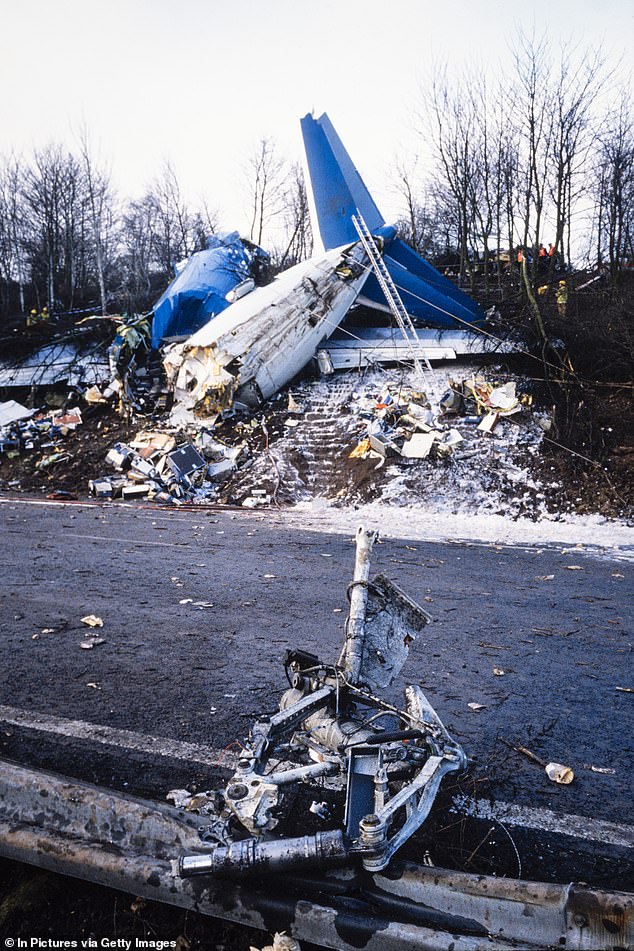
The British Midland Airways plane onto the M1 embankment at Kegworth on January 9, 1989
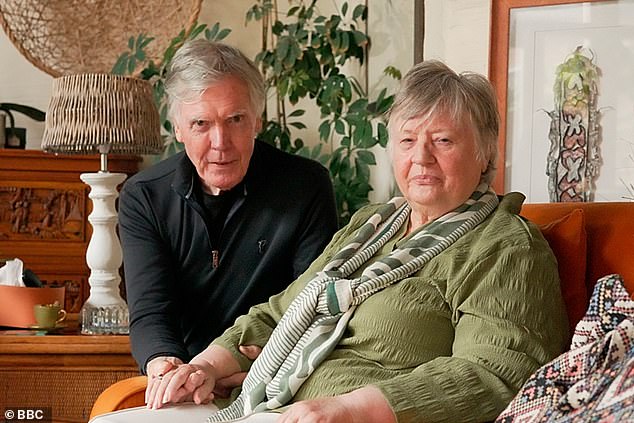
Alice O’Hagan and her husband Eamon were among the passengers on board who survived
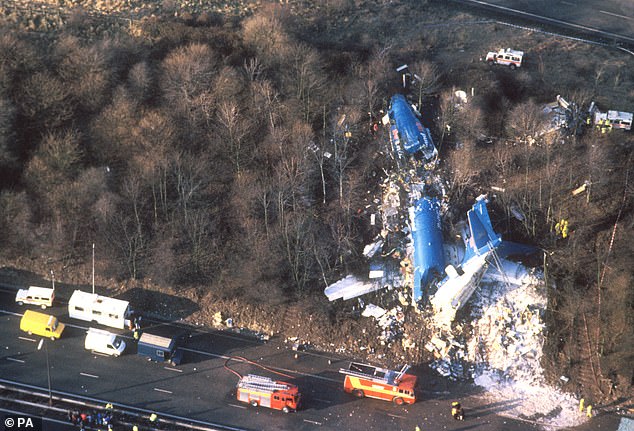
The Belfast-bound British Midland Boeing 737 crashed onto the embankment of the M1 in 1989
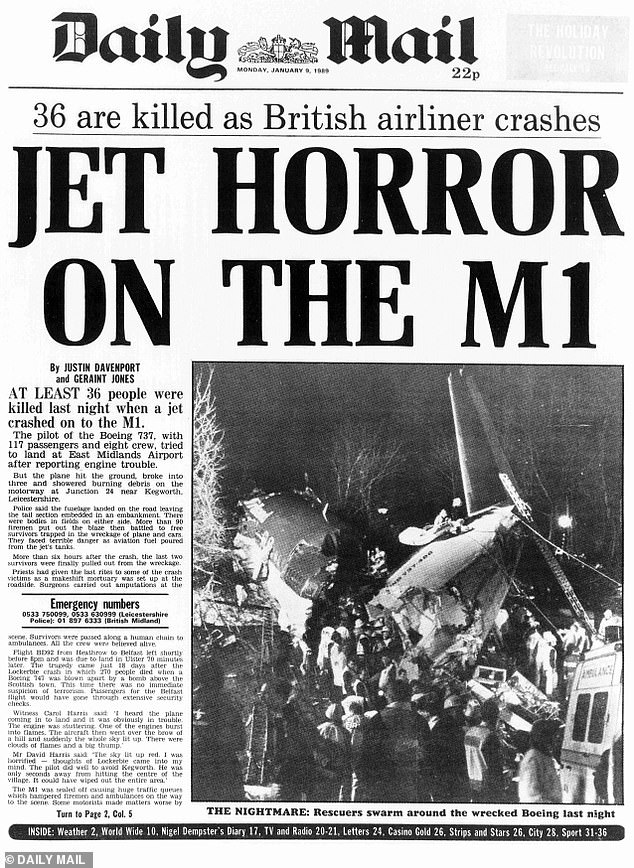
The Daily Mail’s front page on January 9, 1989 – the day after the Keyworth air disaster
‘You could see all the people bent over, obviously unconscious. I remember touching the side of the cabin wall and it actually being hot. And then I thought about fire.’
Flight BD092 had developed a problem with one of the engines as it was en route from London Heathrow to Belfast just after 8pm with 126 people on board.
The aircraft was diverted to East Midlands Airport and was in sight of the runway, but crashed onto the motorway when the pilots accidentally shut down the wrong engine.
Mrs O’Hagan’s feet were trapped. She adds: ‘I remember pushing the seat in front and my ankles started sliding out and I could see that they were pretty messed up.’
She explains her husband eventually tried to help her by ‘ripping his shirt because he was going to tie my ankles off – but he couldn’t do it because his arm was broken’.
Mrs O’Hagan’s ankle bones were severed, one her heel bones smashed and all her toes were broken – with one doctor saying her feet were ‘like a bag of broken crisps’.
She adds: ‘They tried their best, we just had to keep going down to surgery every day and they did a bit more work and they did a bit more work. So you were coming up and then you were coming out of the anaesthetic and the pain would just hit you.’
‘My right leg, we couldn’t get it into a position that it was easier to walk on and the pain levels were very high, so they decided I’d be better off [being] an amputee.’
The plane somehow managed to avoid hitting any vehicles and no one on the road was hurt – but 47 people on board died and 74 were injured, many of them seriously.
Rescuers speak in the programme about the chaos of the aftermath – including Barrie Brigham, who was travelling on the M1 in a minibus with his colleagues from the Royal National Lifeboat Institution when they spotted the aircraft in the distance.
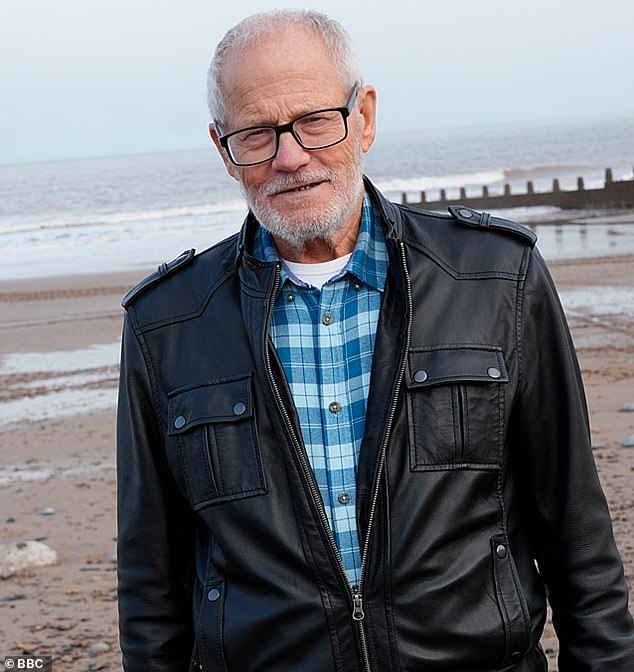
Barrie Brigham was on the M1 in a minibus with RNLI colleagues when they spotted the aircraft
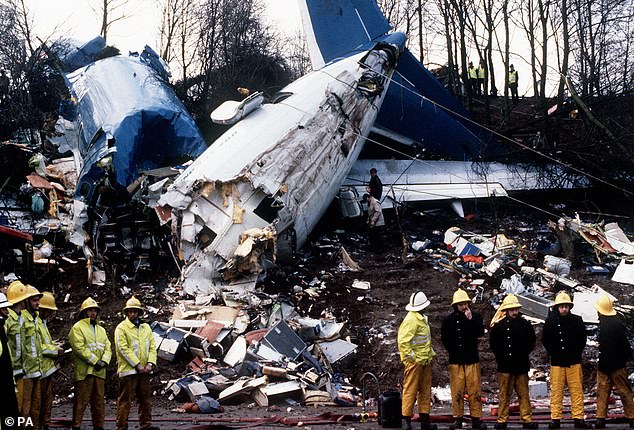
Firefighters on the scene after the British Midland plane crashed on the embankment in 1989
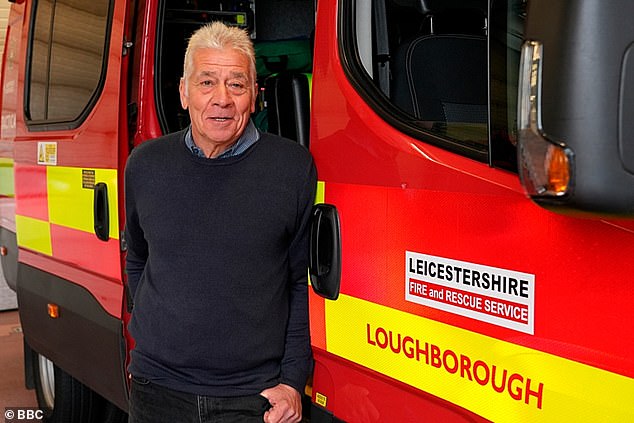
Jeremy Noon was one of the rescuers working for Leicestershire Fire and Rescue Service
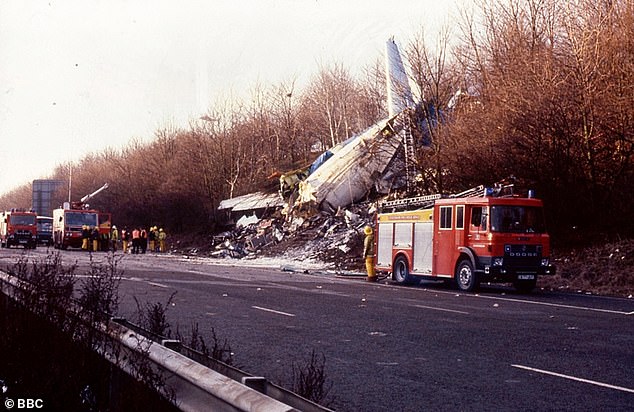
The plane somehow managed to avoid hitting any vehicles and no one on the M1 was hurt
Mr Brigham, who was with fellow lifeboatmen Rob Dawson, Des Simmons and Ken Fowler at the time, tells the documentary: ‘The whole embankment was like a flood.
‘I turned round to Rob and I said “where the hell’s all this water coming from?” And he said: “It isn’t water, can’t you smell it? It’s aviation fuel”.’
The plane took off as normal just before 8pm, but mid-flight it started shuddering and passengers heard what some described as banging sounds or an explosion.
Smoke and the smell of burning began filling the cabin, so the pilots shut down one of the plane’s two engines and diverted for an emergency landing at East Midlands.
But before they could reach the safety of the runway, the plane plunged into an embankment at the side of the motorway around 8.25pm.
Despite the extensive damage to the plane, rescuers found survivors – some of whom had been petrified while waiting for help that the fire would engulf the crash site.
Ambulance worker Pat Withers, one of the first responders on scene, said: ‘As we drove up to the scene – it was horrific. I could see a broken plane on the embankment as we pulled up. I remember standing on the wing and putting my head inside.
‘It was so quiet, there was nobody screaming and shouting – it was eerily quiet. There was no hysteria, and that threw me. You just started doing your job.’
Jeremy Noon, who was working for Leicestershire Fire and Rescue Service at the time and was also involved in the rescue effort, added: ‘I noticed where the wing was there was a doorway that had been opened and I went towards that.
‘It was pitch black inside and there was a passenger and he stood up in front of me and made me jump. It was quiet, no one cried or anything. It was so strange.’
A number of safety improvements were made by the airline industry as a result of lessons learned from the disaster, including better communication between the cockpit and the cabin, and more focus on preparing passengers for emergencies.
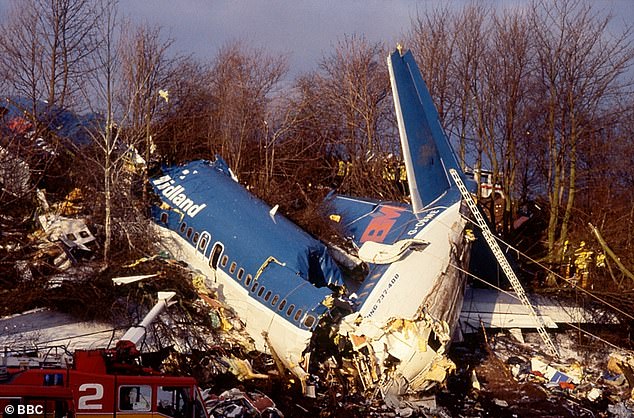
The plane developed a problem with one of the engines while en route from London to Belfast
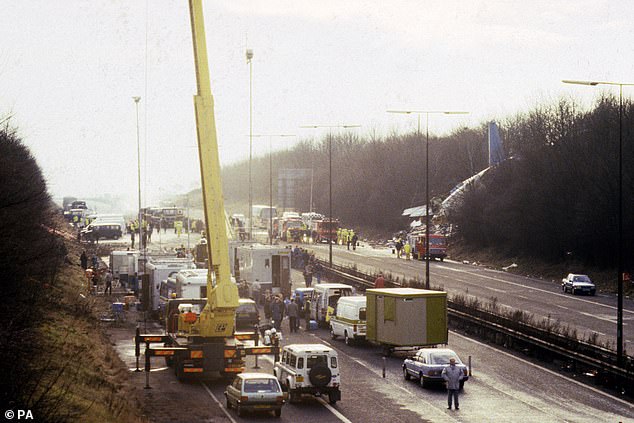
A crane on the M1 motorway as the wreckage is cleared following the crash in January 1989
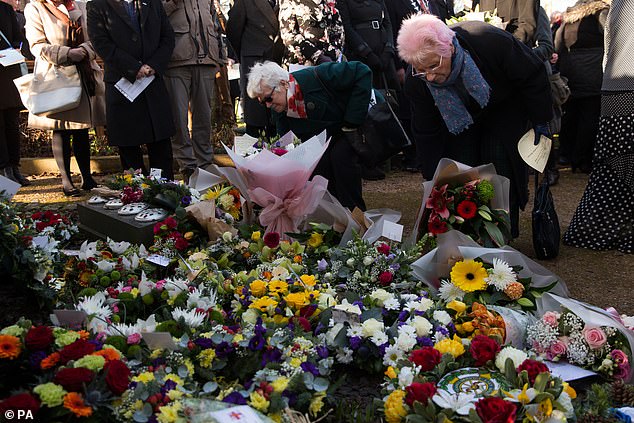
Members of the public place flowers at a memorial near St Andrew’s Church Kegworth in 2019
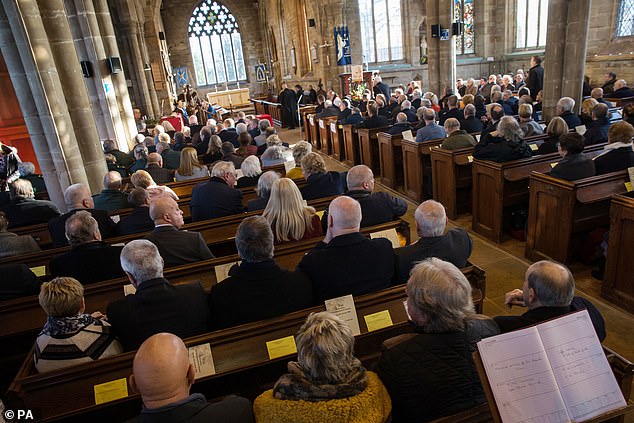
A service at St Andrew’s Church Kegworth in 2019 marked the 30th anniversary of the crash
Captain Kevin Hunt and his co-pilot David McClelland had mistakenly shut down the correctly working right-hand engine after loud bangs were heard coming from the left-hand engine.
When the commander broadcast to the cabin that this action had been taken, the passengers and cabin crew did not alert him to the error despite some of them seeing the original malfunction to the left-hand engine.
A report by the Air Accidents Investigation Branch found that passengers would be unlikely to think they could contribute to a pilot’s understanding of a situation, while cabin crew would be concerned that any intrusion into the flight deck during busy periods could be a distraction.
In the aftermath of the crash, airlines across the world began giving Cockpit Resource Management training to their staff.
This teaches that more information should be shared between pilots in the cockpit, while cabin crew should have the confidence to challenge flight crew if they believe a mistake has been made.
Nottingham surgeon Professor Angus Wallace studied the incident and found that many people did not adopt a brace position, causing their feet to shoot forward under the seat in front.
Mr Wallace developed the brace position which was adopted by UK airlines.
Airlines now place a much greater emphasis on encouraging passengers to take such action, including through the use of pictorial safety briefing cards behind each seat.
The two pilots survived, but investigators said they had not been given proper training on recently redesigned cockpit instruments – in particular the vibration indicators.
Some residents of Kegworth – who were involved in the rescue effort – also praised them for steering the flight over their village.
However, the investigation found their responses were hasty and ill-considered, and they were both dismissed by British Midland.
The new documentary initially aired on BBC One Northern Ireland on January 8, but is now being shown on national BBC television for the first time on April 2.
‘Kegworth: Flight to Disaster’ airs on BBC Two on April 2 at 9pm