A mother-of-ten dubbed The Witch is facing jail after carrying out a ‘Dickensian’ campaign of abuse which saw a woman kept as her family’s slave for 25 years.
Amanda Wixon, 56, agreed to take in the victim, who was then of secondary school age, for a weekend in 1996 – but kept her until 2021 when the slave used a phone she had secretly hidden to raise the alarm.
When officers went to Wixon’s address in Tewkesbury, Gloucestershire, they found the victim, now a woman in her 40s, bruised and with no teeth and sleeping in a mouldy and damp bedroom which was likened to a prison cell.
Bodyworn footage showed her appearing thin, timid, unwashed, and fearful, with a bruise she attributed to Wixon – her bedroom walls unpainted. The ‘vulnerable’ victim told officers she had last bathed over a year previously.
Today scratch card addict Wixon showed no emotion as she was convicted of multiple counts of assault occasioning actual bodily harm, false imprisonment and requiring a person to perform forced or compulsory labour.
Judge Ian Lawrie KC granted Wixon conditional bail ahead of a sentencing hearing in March.
But the judge told her a jail term was ‘a certainty’.
While summing up the case on Tuesday, Judge Lawrie said the prosecution case outlining allegations of long-term domestic servitude had an ‘almost Dickensian quality’.

Amanda Wixon outside Gloucester Crown Court earlier this week
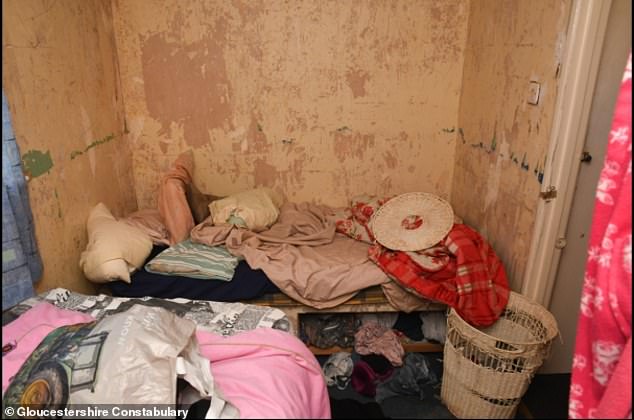
An image released by police of the victim’s cluttered and undecorated bedroom
During a two-week trial, prosecutor Samuel Jones said the modern slavery victim was a vulnerable woman who had effectively ‘disappeared’ from society.
Gloucester Crown Court heard the victim was tightly controlled, rarely allowed to leave the two homes where she had lived with Wixon over the quarter-century of her enslavement, required to ask for food, denied washing facilities and medical care and forced to clean extensively, often on her knees.
The victim who referred to Wixon as ‘The Witch’, jurors were told, alleged she had been forced to care for the defendant’s children and was frequently assaulted.
A jury heard she had been born into a dysfunctional family and Wixon stepped in to help when they could no longer cope with her.
Jurors were told Wixon had seven children at this point, and soon lodged a benefits claim for the latest child.
Much of the abuse was carried out at a housing association property in Tewkesbury, Gloucestershire, the town where Wixon still lives.
The victim described numerous assaults, including being punched, stamped on, pushed down stairs, struck with a broom, forced to have her hair cut and strangled and claimed other children at the address did not have to carry out chores as she did.
Mr Jones, prosecuting, told the jury: ‘She was kept in and prevented from leaving the address and she was assaulted and hit many, many times and forced to work with the threats of violence.
‘She had been denied food and the ability to wash over many years.’
The jury were told there were no medical or dental records for the woman as an adult, and she had not seen a doctor in two decades.
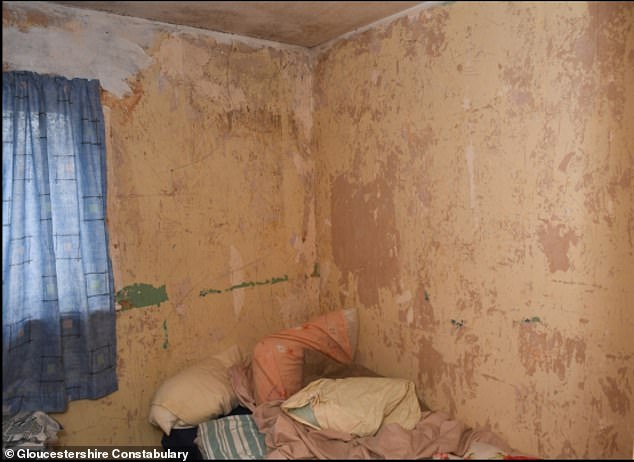
Bodyworn footage showed the victim appearing thin, timid, unwashed, and fearful, with a bruise she attributed to Wixon – her bedroom walls unpainted
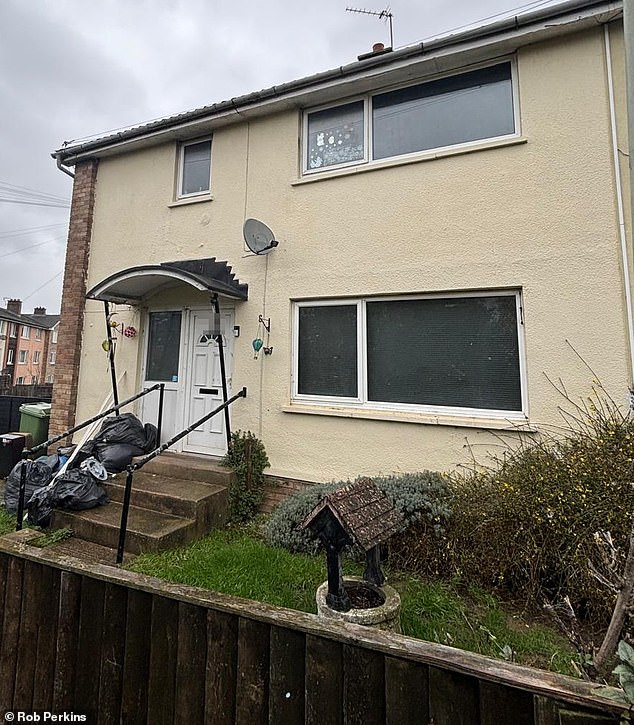
The victim was enslaved for many years at this address in Tewkesbury

Wixon was found guilty of two counts of requiring a person to perform forced or compulsory labour, one count of false imprisonment and three counts of assault occasioning actual bodily harm
‘The lack of records from the hospital, the doctor and the dentist or any involvement with social services for 20 years provides further support of her never being allowed to leave the house,’ Mr Jones said.
‘By the late 1990s it appears the woman disappeared into a black hole. Not a single meeting that left a record or a single sighting of her outside the house.’
Neighbours today described Wixon as a ‘controlling woman’. One said: ‘What has happened is beyond belief.
‘When I first moved here 20 years ago, I would regularly see her (the victim) in the garden.
‘She would be hanging the washing out or tending the garden, but then she disappeared.
‘I thought she had moved, but all the time she must have been in the house.’
Police bodycam footage shows the moment Wixon was arrested on suspicion of neglect by officers.
Further footage showed where her fearful, thin and unwashed victim was staying – a bedroom with unpainted walls.
The court heard police used voice notes sent by the victim to one of Wixon’s children – in which she expressed fear and said she was unsafe – to help build the case against the defendant, while a neighbour described the victim as resembling ‘something out of a concentration camp’.
Some residents reported seeing the victim being humiliated and abused in the garden, others said they did not see her for long periods of time, and when they did she was often sat alone at a window, waving.
The court heard following her removal from the house, the victim initially suffered trauma symptoms and had nightmares about Wixon’s abuse.
A doctor noted large thick calluses on both ankles, which the victim put down to long hours cleaning floors on her hands and knees, while a dentist said she must have suffered extreme pain at times as a result of her rotting teeth.
But since being rescued from Wixon, the woman’s health has improved and she has become more independent, jurors were told.
After being given dentures, she was said to have become highly emotional at the sight of herself with teeth for the first time in years.
Mr Jones told jurors in his closing speech: ‘She appears to be able to go out, eat well, put on weight, grow her hair in the way she says she always wanted to, even to return to college – how has she been able to achieve all those things, what does that tell you about her treatment by the defendant?’
The defence rejected allegations of systemic abuse and said the victim’s account had been exaggerated and was inconsistent.
Edward Hollingsworth, defending, told jurors the prosecution case against his client was ‘a tale of fantasy and lies’. He described the case as serious but unusual, and claimed the victim was ‘highly suggestible’ and ‘prone to repeating what she has been told’.
He said that while the prosecution had described the victim’s bedroom as a ‘prison cell’, it was little different to any other room in Wixon’s home.
Mr Hollingsworth said the victim had been on the electoral roll and the benefits agency knew she lived at Wixon’s home.
He said that while Wixon may have been ‘negligent’, it was ‘not the systemic abuse that’s being suggested’.
The court heard there had been some evidence that the victim had been allowed on trips to the beach, or trick and treating – as well as to the benefits office.
Mr Hollingsworth added: ‘This idea she was caged inside that house like an animal is simply not right.’
Twice-married Wixon denied all abuse, accepting only that her household was chaotic and hygiene poor.
She claimed that she did all the cooking and did not stop the victim from moving or going anywhere, and there was no effort at control or withholding food.
Wixon, of Tewkesbury, accepted that the victim’s hygiene was poor but said she had told her to wash but could not compel her to.
It is understood one of Wixon’s ten children died by suicide two years ago.
Wixon was found guilty of two counts of requiring a person to perform forced or compulsory labour, one count of false imprisonment and three counts of assault occasioning actual bodily harm.
She was cleared of one count of assault occasioning actual bodily harm.
Wixon showed no remorse as she left the courthouse on foot with several members of her family.
Asked if she would like to apologise to her victim, she replied: ‘Why would I say sorry for something I never did?’