For the past couple of decades, at least, the cultural elite of Great Britain has been very obsessed with convincing Britons that the islands there were not dominated by white people until recently.
The goal is obvious: just as they fear nationalism and the idea of a national identity, they fear that if people associate their culture with their race, even subconsciously, they will be mean, nasty, ugly racists who will rampage in the streets killing everybody with darker skin.
They have so much contempt for their own citizens that they believe they must lie to them constantly.
That is the impulse behind a decade-long effort to convince the British people that black people have lived on the island for millennia.
The liberal myth of the ‘first black Briton’ just got blown out of the water https://t.co/IPGbxaG6KC pic.twitter.com/4c4AEh50eV
— TheBlaze (@theblaze) December 18, 2025
It would be mildly surprising to find out that Britain hasn’t had the odd black person living on the island over the millennia, far before mass immigration became a thing. After all, the Romans certainly had some black soldiers here and there, and the Romans ruled large parts of England for centuries. But it would be equally surprising to find that blacks were there in any significant number. But that is not the story that anybody in the elite likes, so they have changed it.
The resemblance is uncanny. Yes, the last Yorkist king, the last Plantagenet king of a dynasty that lasted 330 years was an angry Black woman. I’m so tired of this. pic.twitter.com/tO7vqQdVmg
— Chrissy’s Pop Culture Corner™️ (@realpopchrissy) July 3, 2025
Amazon Show features King Edward VI as Black, Gay and Disabled. Lol. pic.twitter.com/GvXvpFu5DR
— Liz Churchill (@liz_churchill10) July 12, 2024
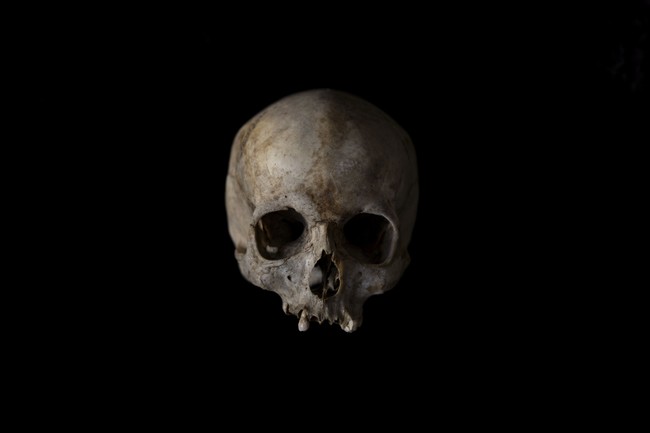
It is in this context that the story of the Beachy Head skull must be viewed. When the skull was discovered in an archive, the archaeological and cultural world had a field day declaring the skull to be of a black woman who lived out her life in England in the third century. Plaques were put up, a documentary made, and celebrations abounded for what in itself would have been a mildly interesting discovery if true.
A black woman lived in 3rd century Sussex. You might disagree. You might even have DNA evidence to the contrary. But you have to ask yourself: is this really worth losing my job over? pic.twitter.com/ZolLCcUBb8
— Ed West (@edwest) December 18, 2025
But it wasn’t true. It was a story that they wanted people to believe, so they sold it.
A skeleton was discovered in the 1950s in Beachy Head, England, which belonged to a young woman who lived in the second or third century. Her remains sat in storage for decades until 2012, when Jonathan Seaman, the heritage officer at the Eastbourne Borough council, and his team “came across two boxes, which said ‘Beachy Head, something to do with 1956 or 1959,’ and that was about it.”
By signing up, you agree to our Privacy Policy and Terms of Use, and agree to receive content that may sometimes include advertisements. You may opt out at any time.
As there were virtually no records available about the remains, Seaman and his team worked to identify the Roman-era skeleton, sending it off for facial reconstruction, which was undertaken by Caroline Wilkinson, an academic then at Dundee University.
Seaman recalled, “Straight away on seeing this girl, [Wilkinson] said, ‘Oh my, you realize you’ve got a sub-Saharan African here?’”
Seaman noted further:
“Caroline subsequently had it looked at by two more experts who agreed, without being prompted, that this individual showed many traits of being a sub-Saharan African person. They were 100% sure that this was the origin of this lady. There are certain features of the skull that you can tell are Caucasian or African. We didn’t know her carbon date at that stage or anything about her, so again it just deepened the mystery. They reconstructed her, and as they did so, her African origins came out in the features of her face.”
While the media made a big deal out of this supposed discovery, the BBC went further than most, hyping it both in its news coverage and in its 2016 “Black and British: A Forgotten History” documentary.
In the documentary, British-Nigerian host David Olusoga — overcome with delight at the sight of a facial reconstruction of the Beachy Head Woman with dark skin, dark eyes, and dark hair — tells Seaman, “So she’s a black Briton? … So she’s the same as me — she’s somebody who is both [British and African] but who spent their life in this country.”
This massive cultural event has been blown up due to DNA analysis, which shows that this sub-Saharan African was a blond-haired, blue-eyed British woman.
🔴 DNA analysis proves the skeleton of a woman found at Beachy Head was light-eyed blonde
Read more ⬇️https://t.co/9wo9GTyMTF pic.twitter.com/4toIKhGUE6
— The Telegraph (@Telegraph) December 17, 2025
The discovery that a skull found in Great Britain was of a white woman should not, in itself, surprise anybody either, and should, in a sane world, get no notice. There are millions of such women buried there.
Schoolchildren are to be taught that Vikings were ‘not all white’ and some were Muslim, according to guidance from an educational charity urging tutors to abandon ‘eurocentric’ ideas.
Imarn Ayton and Christine Cunniffe debate the matter… pic.twitter.com/AwmVNtQMw7
— GB News (@GBNEWS) June 1, 2025
It’s important not because of the facts, but because it demonstrates that this supposedly important “story” was completely false. What makes this discovery important is that it exposes yet one more lie, based on fake “science,” being sold for political reasons.
One of the reasons why I don’t trust the scientific community is that a substantial number of them went along with the fantasy that the original Britons were black in a ham-fisted attempt to legitimize importing infinity African migrants https://t.co/q9HG4cMwrV
— Lauren Chen (@TheLaurenChen) December 17, 2025
The “trust the science” people are, of all the people in the world, the least likely to care about whether the science is real. They demand trust based on the claim that science cannot be biased because it deals in facts, but what they are selling is authority, not reality. Science is not a tool to be used for discovery, but for storytelling.
The story of The First Black Briton™ had nothing to do with reality. Not in the least. There was no science. The question itself was of the most minor scientific or historical significance—black Britons, whether they existed in tiny numbers or not, were not a driving force in English or British culture or politics—so obviously all the drama and invention was about contemporary politics.
Richard III wasn’t a black woman. Edward VI was not black, and it’s unlikely he was gay, although Edward II probably was, or was sexually omnivorous.
There is a reason many others and I don’t “Trust the Science™.” It’s not trustworthy.
I truly wish it were. Reality is interesting.
- At HotAir, we’ve been dealing with real government suppression of free speech for YEARS. Despite the threats and consequences, we refuse to go silent and remain committed to delivering the truth.
But we can’t do it without your support.
Please help Ed, Beege, John, and me continue fighting back against government censorship by joining our terrific HotAir VIP community today. Use promo code FIGHT to receive 60% off your membership.
And thank you so much again for being here with us at HotAir.