The grandchildren of the last woman to be hanged in Britain are seeking a posthumous pardon, saying she was physically and emotionally abused by her partner before killing him.
Ruth Ellis, a nightclub hostess, was executed on July 13, 1955, aged 26 after being convicted of murdering her lover, racing driver David Blakely.
The sentence was carried out at Holloway Prison by Britain’s most famous hangman, Albert Pierrepoint, who said Ellis was the bravest person he had put to death.
Ellis shot Blakely dead outside The Magdala pub in Hampstead, London, following a tumultuous relationship involving infidelity on both sides, an aborted pregnancy, and physical abuse.
Her execution led to a worldwide uproar and played a significant role in the decision to abolish capital punishment in Britain in 1969, four years after it was suspended.
The judge told the jury – who took just 20 minutes to convict her – to disregard the fact that the mother of two had been ‘badly treated by her lover’ as a defence.
Ellis’ grandchildren have now applied to justice secretary David Lammy seeking a conditional pardon.
Laura Enston, Ellis’ granddaughter, said: ‘Ruth’s execution has had a devastating impact on our family.
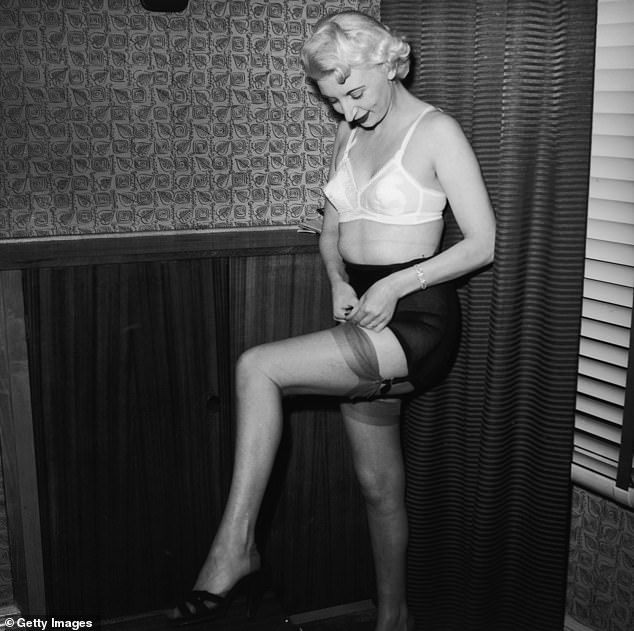
The grandchildren of the last woman to be hanged in Britain are seeking a posthumous pardon. Above: Ruth Ellis posing in her underwear in a 1954 photoshoot
‘My mother and uncle suffered from trauma from which neither of them were able to recover, and as grandchildren we have felt these ripple effects.
‘The evidence shared with the justice secretary makes clear that the punishment did not fit the crime.’
Under cross-examination, Ellis admitted that she intended to kill Blakely. Her subsequent murder conviction carried a mandatory death sentence.
Unlike court appeals, pardons can consider broader factors, such as social developments, that may render a conviction or its resulting punishment inappropriate or unfair.
Ms Enston said that the case had resulted in Ellis’ children being dogged by mental health problems, describing her mother as ‘a very tormented woman’, while her uncle took his own life.
‘We are determined to do what we can to right this historic injustice and honour not only Ruth but all victims of domestic abuse who have been let down by the criminal justice system,’ she said.
Alex Bailin KC, representing Ellis’ family, added: ‘Thankfully, 70 years after Ruth was hanged, there is now a much better understanding of the impact of domestic abuse on the emotional wellbeing and behaviour of victims.
‘Based on the evidence we have reviewed, if Ruth’s case had taken place in modern times, she would have been able to plead a defence of diminished responsibility or loss of control.
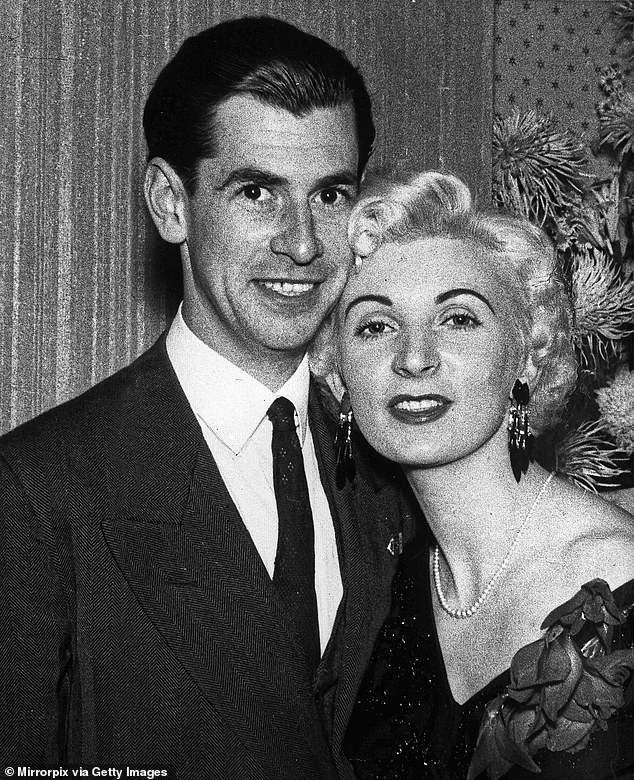
Ellis, a nightclub hostess, was executed on July 13, 1955, aged 26 after being convicted of murdering her lover, racing driver David Blakely (above)
‘A posthumous conditional pardon for Ruth Ellis would correct a historical wrong and send a clear message to the public that violence against women and girls is never acceptable.’
Ellis had a son, Andre, with French-Canadian serviceman Clare Andrew McCallum, who she had a short-lived relationship with.
And she had daughter Georgina with abusive husband George Ellis.
She met Blakely while working as the manager of a club owned by convicted fraudster Morris Conley.
Ellis quickly became romantically involved with Blakely, but was also pursued by RAF officer Desmond Cussen.
Cussen would go on to give Ellis the gun she used to shoot Blakely.
On the night of Easter Sunday, on April 10, 1955, she confronted Blakely with her gun in her hand.
After he started to run, she fired an initial two shots before chasing her lover around his car and firing again.
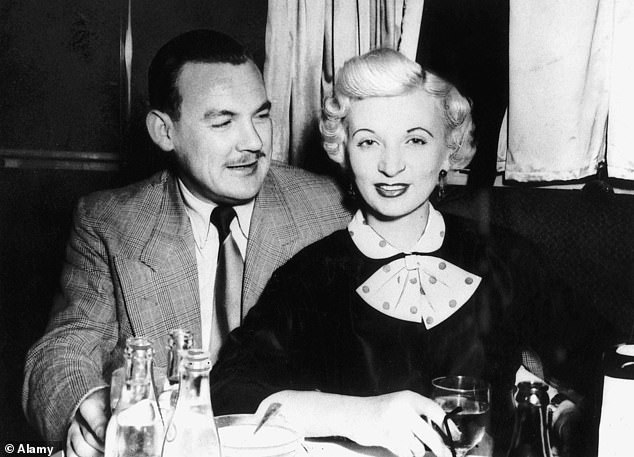
Ruth Ellis with Desmond Cussen at the Little Club in Knightsbridge. Cussen gave her the gun she used to kill David Blakely and showed her how to use it
Witnesses then saw Ellis fire two more shots into Blakely before attempting to turn the gun on herself. It initially failed to fire and then when it did go off the bullet went through the hand of witness Gladys Yule.
Ellis later refused her lawyer’s request to plead insanity and even wrote to Blakely’s mother to apologise for killing him.
Much of the physical and emotional abuse she had suffered throughout her life was not even mentioned to jurors.
And Ellis refused to implicate Cussen until the day before she was executed.
Ellis’s son became a schizophrenic and drug addict and took his own life in 1982.
Fittingly, his funeral was paid for by Christopher Humphreys, the prosecuting lawyer at Ruth’s trial.
Georgina was adopted after Ellis’s execution. She died aged 50 in 2001.
Ms Enston’s brother is former Hollyoaks star Stephen Beard, 36.
He said publicly earlier this year that his grandmother was the victim of a ‘severe miscarriage of justice’.