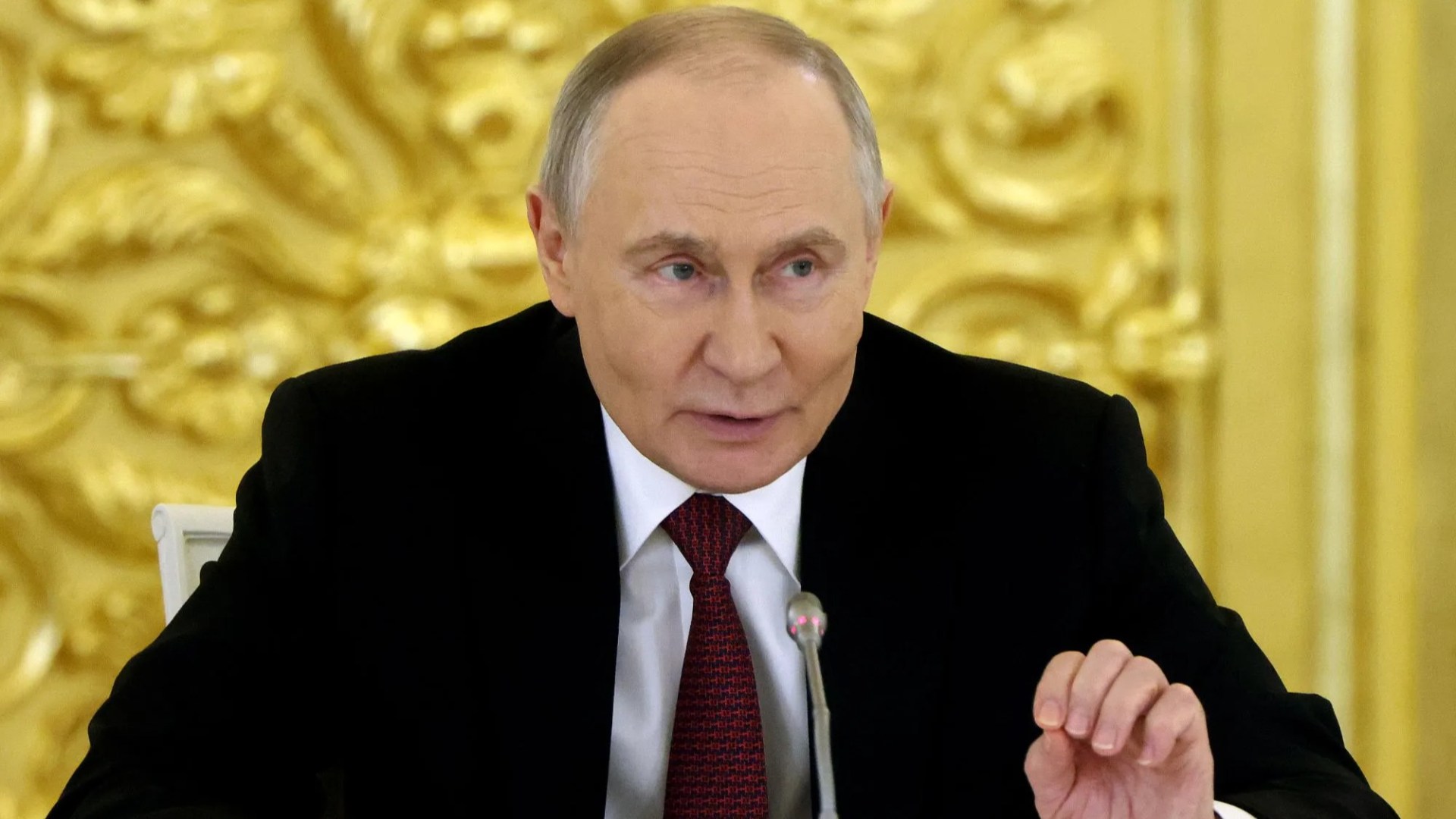
RUSSIA plotted to blow up planes heading to the US as part of its escalating sabotage campaign against the West, according to security sources.
Moscow has also attempted to burn down shopping centres, poison water supplies and plant sleeper agents in Europe – with far more going on behind the scenes than the public realises, they said.
Russian terrorists have been found pulling the strings behind numerous covert attacks and plots against Europe, and these discoveries have risen sharply in the past year, security officials told the Financial Times.
Various fires and explosions around the continent – including a blaze at an east London Ukrainian-owned warehouse – have been pinned on Putin.
Recently nations have contended with undersea cables in the Baltic Sea being severed and a string of cyber-hack attacks.
Russians were also behind the episode when, in July 2024, DHL parcels exploded in centres in the UK, Poland and Germany.


Each of the payloads was powerful enough to have brought down the cargo planes if they had detonated onboard.
Security services eventually traced the the plot back to a group of Russian-led saboteurs with 6kg of further explosives.
This they had been saving for another target: America.
Had the plot succeeded, it would have inflicted more disruption to the airline industry than any terror attack since 9/11.
Intelligence this time caught up with the saboteurs – but the near miss was just one strand in a web of terror being waged against the West.
And officials warn it is steadily posing more of a risk to human lives.
Intelligence and police forces have foiled plots to derail crowded trains, burn down shopping centres, discharge a dam and poison water supplies.
Keir Giles, Russia expert at Chatham House, told the FT: “The first important thing to consider is that we still don’t really appreciate everything which is going on.
“What is publicly understood about this is just the tip [of an iceberg] … there’s still a lot that governments have chosen not to talk about.”
Until recently, these attacks were being treated as a nuisance “pin prick” campaign, designed to destabilise low-level European targets – but no longer.
Poland has already judged that Russia now poses the same level of threat to civilians in Europe as Islamist terrorism.
Many in the intelligence community believe the escalation in the lengths Russia is willing to go to represents more than just another front in the war against Ukraine.
There is evidence of a longer-term strategy.
Many Russian spies have been booted out of Europe in recent years, but the Kremlin has sought to drop trained agents back into nations across the continent.
The head of one major European intelligence agency told the paper his officers were now seeing Russian agents assessing road bridges with, he presumed, the intention to plant mines in them.
He said railways all over the continent were being mapped to identify weak spots.
His agency and others are also tracking Russian attempts to insert highly trained sleeper-saboteurs into European states.
European officials are issuing increasingly stark warnings in the face of Russia’s scattergun of terror.
Last week, the chair of Nato’s military committee, Admiral Giuseppe Cavo Dragone said the alliance could fire the first shot.
He warned Nato could be forced to strike preemptively – which would be a toughening of its current policy of waiting to react.
He said: “We are studying everything […] On cyber, we are kind of reactive.
“Being more aggressive or being proactive instead of reactive is something that we are thinking about.”
Dragone said that revenge cyber attacks would be the simplest option, because many Nato member nations hold the capabilities to launch them.
Retaliation for physical sabotage or drone incursions would be more complex – but not out of the question.