★★☆☆☆
The perfect movie ending should at once be a surprise and feel inevitable. You think of The Usual Suspects or The Sixth Sense, of course, but also The Godfather, where Michael Corleone has become the man he swore he wasn’t. A great ending can lift an entire film, as Casablanca’s arguably does. And a tacked-on ending can ruin one: BladeRunner was much better with the happy ending removed, and Harrison Ford and Sean Young heading to what might be their deaths.
But the really important thing about the ideal movie ending is that there should only be one of it. Two endings is generally the sign of a film in trouble, with a studio desperately seeking aa fix for something that has simply come out wrong. I mention this because The Running Man has no fewer than three.
I so wanted to like this film. Stephen King stories often work well on screen, as The Long Walk showed a few weeks back. And here is a King story directed by Edgar Wright, a British filmmaker with a brilliant visual style and a terrific eye for both character and comedy. And yet.
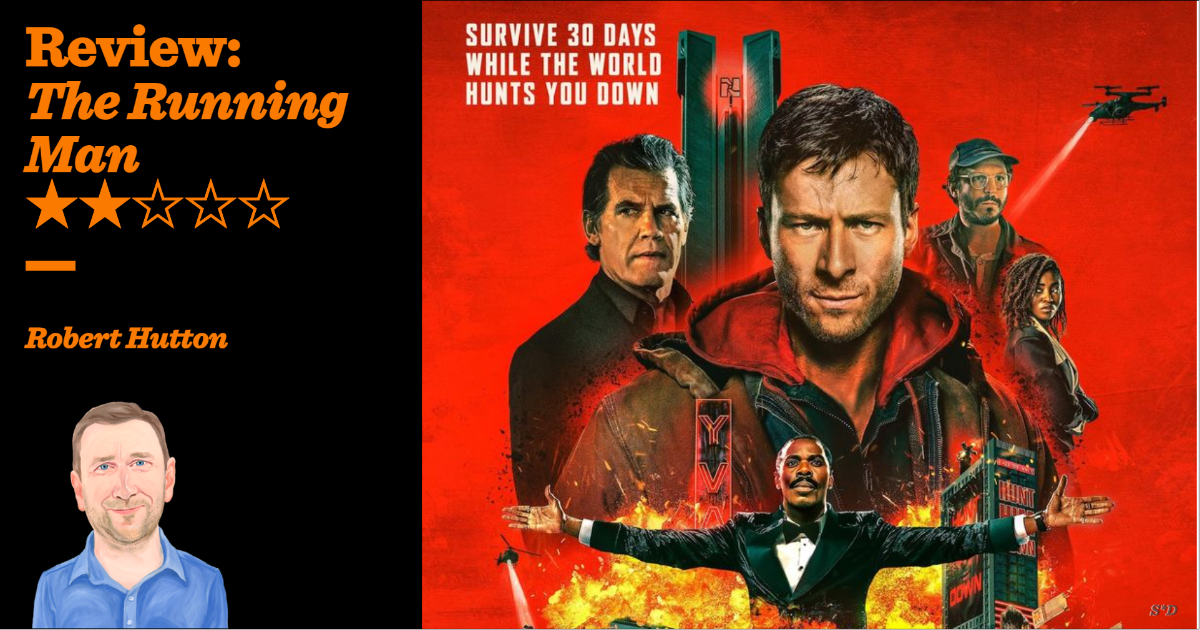
The setup is easy: in yet another dystopian near-future, blacklisted factory worker Ben Richards needs to buy medicine for his sickly daughter. Out of options, he takes a place on reality TV show The Running Man, where contestants go on the run and win money for avoiding a team of hunters for as long as possible. When they’re caught, they’re killed. Can Richards, played by rising star and loveable Texan everyman Glen Powell, beat the game?
If any of this sounds familiar, it’s because Arnold Schwarzenegger made a film loosely based on the book in 1987. Wright’s version is much more faithful to the original story, which sounds like a good thing, but throws up jarring oddities: this is a future in which everyone watches live television on actual televisions, and not that many people seem to have mobile phones.
The film is full of these strangenesses. There’s a great scene that surely isn’t in the book, where a cynical YouTube-type explains to Richards how the show really works. This suggests that this future has the internet, but at the same time people are spreading revolution using photocopiers.
You’d let all that past, but there’s a compounding feeling that that ideas are being set up only to be left uncompleted. It’s a world of deepfakes but everyone believes what they see on-screen. There’s a masked Hunter who when he takes his mask off reveals himself to be … someone we’ve never seen before!
Meanwhile the Wright style is lacking. There are flashes of it here and there, but if you didn’t know this was from the same director as Hot Fuzz and Baby Driver, you’d never guess. Those films had a joy and panache to them, even in their darker moments.
Which brings us to the three endings. My guess is that the first of them was the one Wright wanted, and the next two were tacked on after disappointing previews. But if a filmmaker has a problem with the ending, it usually means they have a problem far earlier than that.