Some describe it as a sweet smell like maple syrup, while others identify it as smelling like onions or body odour.
If you’ve ever noticed an unusual smell on a plane before taking off on a cold day, you’re not alone.
In fact, there is an entire discussion thread dedicated to people trying to work out what the smell is.
One holidaymaker (r/bonnie69420) wrote: ‘You know the smell, like a new car with the windows rolled down, but just a hint of something else I can’t describe.’
The comments were filled with people offering their interpretation of what the smell was, with one writing: ‘Jet exhaust mixed with cleaning chemicals, people and coffee.’
‘It’s probably from cleaning the planes. They’re cleaned pretty often. Be grateful for that because people are gross,’ wrote another user.
But now an expert has revealed the real reason for the smell, and it may not be what you expected.
According to instructor pilot Kevin Singh, the unusual aroma is likely de-icing fluid.
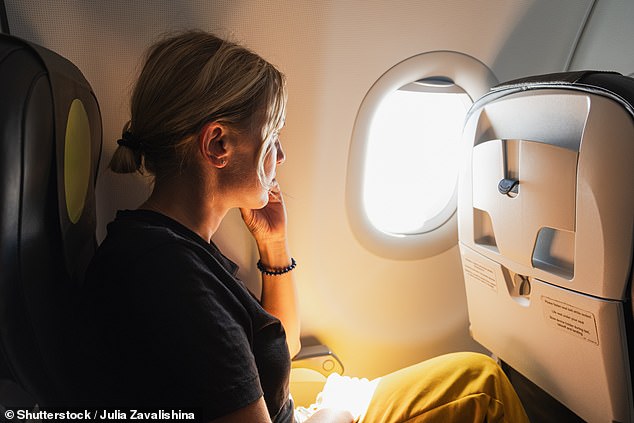
An expert has revealed what the unusual smell is that you may catch wiff of during take off

The de-icing process involves ground crews spraying a heated de-icing fluid under high pressure to remove existing snow, ice and frost
‘If a plane is not properly de-iced, the ice and snow buildup on the wings prevents the plane from generating the necessary lift for a safe takeoff,’ Singh told Reader’s Digest.
The de-icing process involves ground crews spraying a heated de-icing fluid under high pressure to remove existing snow, ice and frost.
Then they apply a different anti-icing fluid to create a protective layer, preventing new buildup before takeoff.
The whole process typically takes 10 to 20 minutes, depending on the aircraft’s size and weather conditions.
Ventilation systems draw in outside air, meaning the scent can make its way into the cabin.
As for the scent, plane de-icer shares the same basic ingredients with the de-icer you use to clear your windscreen in the winter.
The smell comes from primarily glycols (like ethylene glycol or propylene glycol) mixed with water, to lower the freezing point and melt ice.
It’s an alcohol-based solution, and that slightly alcoholic sweetness you smell comes from the same type of compound found in some e-cigarette liquids.
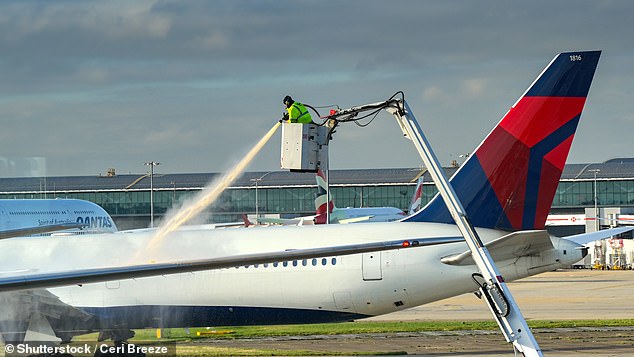
An airport worker is pictured spraying de-icing fluid onto an aircraft on a freezing winter morning in London
Thankfully, the unusual smell is likely nothing to worry about.
‘The fluid is non-toxic and not harmful to breathe in, though the smell can certainly be strong enough to make you wrinkle your nose,’ Singh said.
Some passengers with heightened sensitivities might experience minor irritation or sneezing, but for the vast majority of travellers, it’s simply an unusual scent that passes quickly.
Modern aircraft have HEPA filtration systems that efficiently cycle cabin air, which helps clear any residual odours.