The compass used by Captain Bligh to find land 48 days after he was set adrift by his mutinous crew has sold 236 years later for thousands of pounds.
The seaman and 18 of his loyal men only had the compass, a watch, a quadrant and a week’s worth of food and drink following the Mutiny on the Bounty.
They were cast off in HMS Bounty’s small launch boat east of Tahiti in the South Pacific in 1789.
While the mutinous crew, led by Fletcher Christian, made for Tahiti and the Pitcairn Islands on the Bounty, Bligh headed east towards Timor, 3,600 miles away.
Despite having limited equipment, Captain Bligh had perfected excellent navigational skills under the famous Captain James Cook.
He and his crew made it to Timor in 48 days via the island of Tofua, from which they had to flee after the natives attacked and killed one of them.
The compass that guided Captain Bligh has now been sold in London for more than £14,000.
The 3ins wide compass is set in a mahogany case.
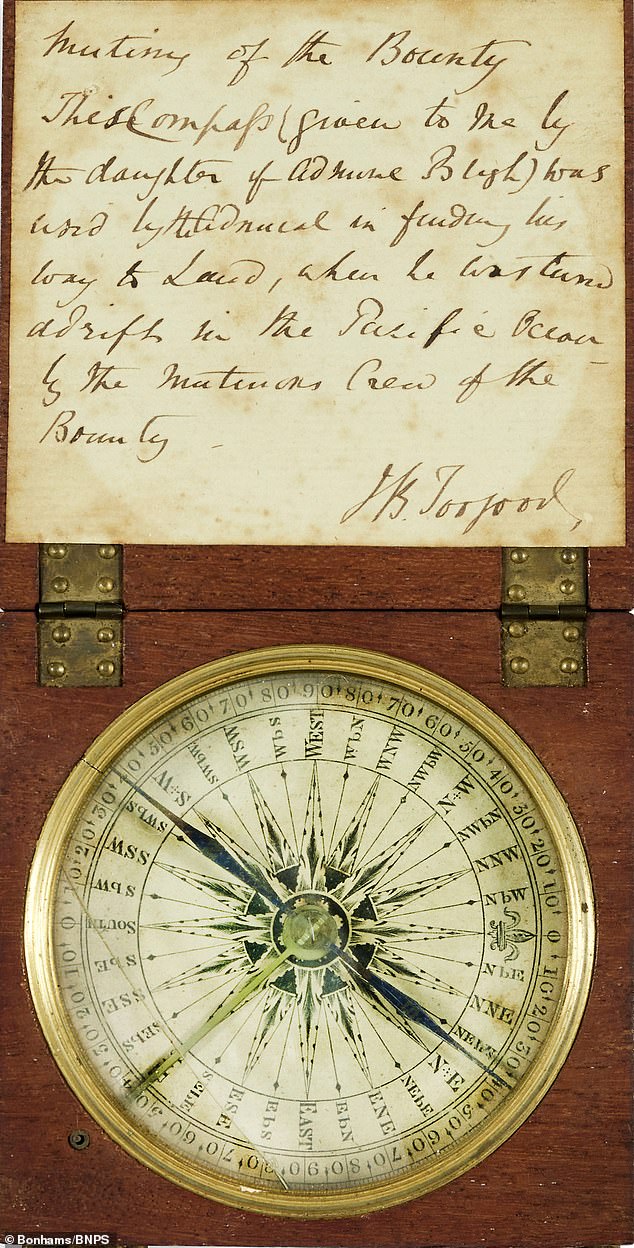
The compass used by Captain Bligh to find land 48 days after he was set adrift by his mutinous crew has sold 236 years later for thousands of pounds
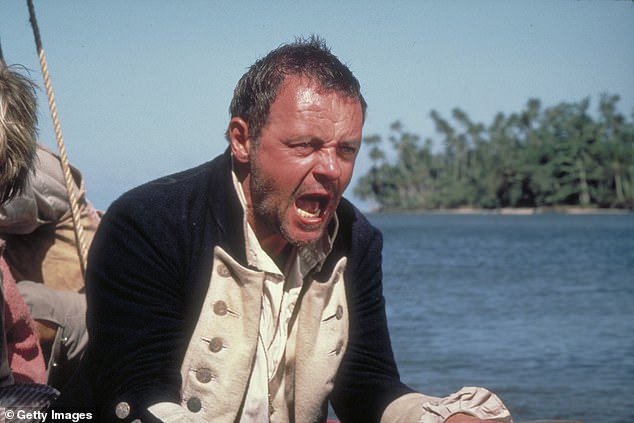
Anthony Hopkins as Captain Bligh in the film ‘The Bounty’, 1984
A note in period ink writing on a paper label on the inside of the hinged lid reads: ‘Mutiny of the Bounty.
‘This compass given to me by the daughter of Admiral Bligh was used by the Admiral in finding his way to land, when he was turned adrift in the Pacific Ocean by the mutinous crew of the Bounty. J.B Toogood.’
Toogood was a 19th century collector of maritime artefacts.
It is thought the compass remained in his family for 200 years before it was acquired by a private collector who has now sold it.
A spokesperson for Bonhams said: ‘No description of the compass employed by Bligh is recorded, but it is likely to have been readily portable in the confusion of the mutiny.
‘The pocket watch stopped on June 2, 1789 but Bligh successfully navigated the 3,618 nautical miles to Timor in 47 days, with the loss of only one crew member, and landed on June 14.’
To this day, the motives for the mutiny remain unclear.
Bligh was later subjected to character assassination by Fletcher Christian’s supporters, who accused him of abusing his crew.
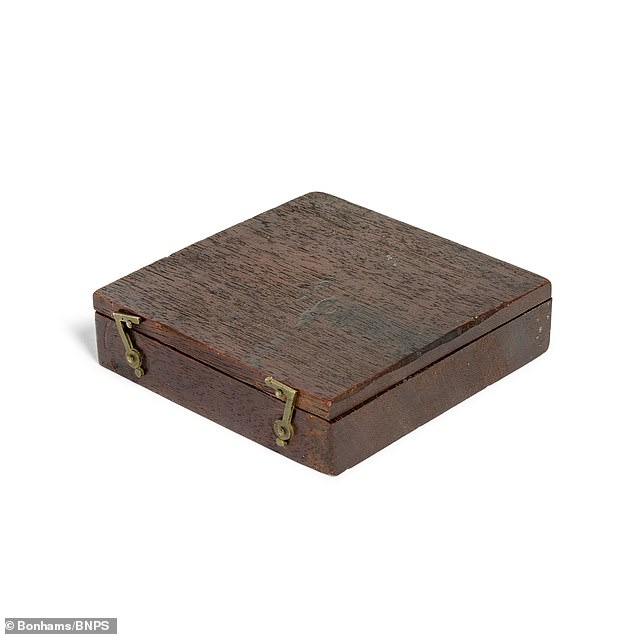
The compass that guided Bligh has now been sold in London for more than £14,000. The 3ins wide compass is set in a mahogany case
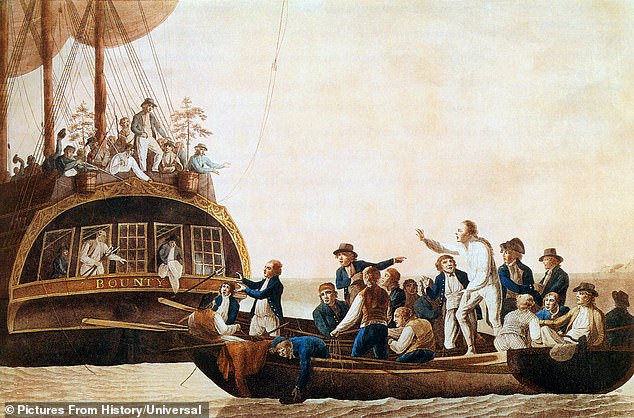
The seaman and 18 of his loyal men only had the compass, a watch, a quadrant and a week’s worth of food and drink following the Mutiny on the Bounty
Before the mutiny, the crew had spent five months on Tahiti to collect breadfruit seedlings that they were meant to take to the West Indies, where they would be planted to provide a diet for thousands of slaves working on sugar plantations.
The Bounty’s crew had come to enjoy the freedoms and hedonism of Tahiti, where they found native women willing to sleep with them.
Discipline disintegrated on the island, leading to rows. The mood descended further when the crew had to bid reluctant farewell to their friends and lovers on Tahiti.
The mutiny was triggered by Captain Bligh accusing Christian of taking a coconut from a pile kept on deck.
Christian refused Captain Bligh’s conciliatory offer of dinner that evening. The next morning, he led a rebellion.
When Captain Bligh landed in England in March 1790, news of the mutiny had preceded him and he was welcomed as a hero.
He was later acquitted of responsibility for the loss of the Bounty at a court martial.
Two years later, a ship was dispatched to the South Pacific to arrest the mutineers.
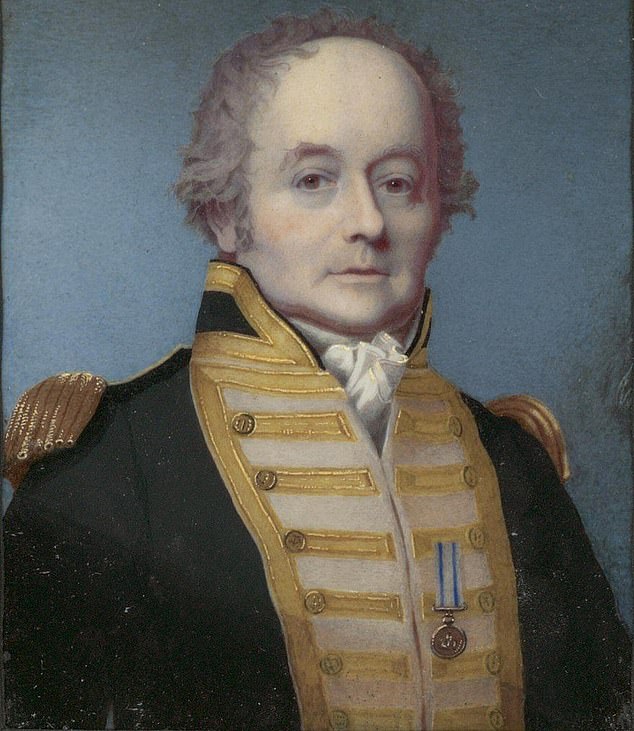
Captain Bligh went on to serve under Admiral Lord Nelson at the Battle of Copenhagen in 1801 and was praised by him after the victory
After rounding up 14 out of 23 rebels, they were imprisoned in a makeshift cell on the deck of HMS Pandora and sent back to Britain.
Four died along the way but the remaining 10 prisoners faced a court martial in Portsmouth.
Three of the mutineers were hanged while four were acquitted and three were pardoned.
The other mutineers, led by Christian, picked up women from other islands and bred quickly on Pitcairn Island.
From a population peak of 233 people in 1937 there are now thought to be less than 50 inhabitants.
Captain Bligh went on to serve under Admiral Lord Nelson at the Battle of Copenhagen in 1801 and was praised by him after the victory.
He later became governor of New South Wales in Australia.
He died in 1817 in London and was buried in Lambeth.