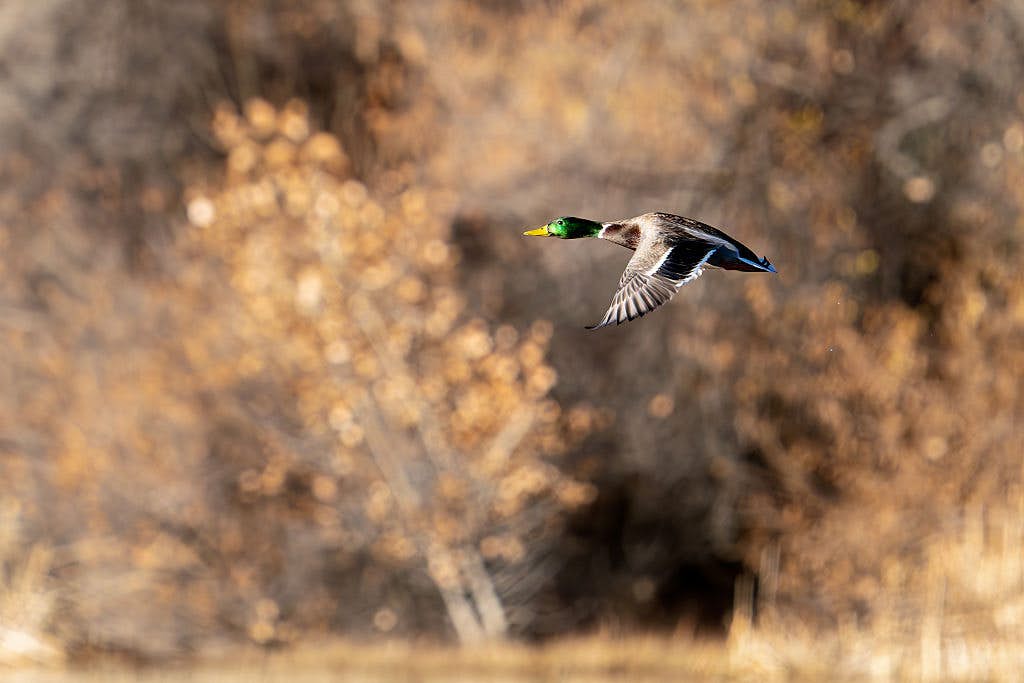

There was a mallard duck in Norfolk that over the week or so, I’ve been thinking about often. On the last day of the shooting season, as the sun was starting to set over the wheat fields in the east, my wife shot this particular duck as it was coming into land.
We’d been away near Cromer for the day and as we were returning home we passed one of my ponds and decided on account of having my dog with us and Constance’s gun in the back — newly returned from the local gun repair shop — that we should have one last outing. We were only down by the pond for twenty minutes or so and we decided that a single duck was enough.
It fell dead onto the water and Jessie ran out from the gutter beside me to retrieve it. A couple of hours later, we had it for supper. And following that, I scribbled a quick note in my game book: “One mallard duck, shot by Constance, retrieved by Jessie. Full moon. Final night of the season.”
I always think that keeping a game book is a bit of a stuffy formality if all you tend to do is shoot reared pheasants and partridges but if you’re more interested in wild quarry, success tends to be determined by things like the moon and the weather, and it’s fascinating to look back at jottings from seasons past to get a sense of change. This year, for instance, lots of woodcock have only just arrived from Scandinavia but two seasons ago, the bulk of them seemed to come after a cold snap in mid-November.
A couple of days after roasting the duck, I made a stock with the carcass. Cooking game is as much about ritual, I think, as culinary endeavour. By now, in a strange way, from shooting to retrieving to plucking, roasting and then stock-making, I feel I know that mallard duck well.
This morning, I found myself watching a video of Chris Packham broadcasting from a wood in Dorset where he was following a trail hunt. His objection was that they didn’t seem to have actually laid a trail. In fact they seemed, according to Packham, to be hunting a fox in the same way people have done for hundreds of years. I can’t possibly know if he was right about what they were up to. His stepdaughter’s “gotcha” was that the hounds were in a dense wood. “Who on earth”, she wondered aloud, “would lay a trail in there?” I imagine it’s a bit beyond her that some people — people like me — often find themselves in forbidding scrubby woodland understory without thinking much of it all.
But the point they kept returning to again and again was “in what world” do people think hunting is okay?
I know Chris quite well and I have a lot of respect for him as a naturalist. Whatever anybody else might think, he is charming to boot but as I watched the clips, I realised that he and his stepdaughter and I are on totally different wavelengths. Shooting that duck wasn’t an act of coldblooded disregard for nature. It was an act of ritualistic love. She was a beautiful creature, the retrieve was a majestic thing, and the duck tasted beautiful too. I wrote it up in my little book as an act of remembrance.
Hunting with hounds is a similar thing. In hunting parlance every fox is called “he” never “it”, because every fox is respected as an adversary. Hunting elevates foxes. Sure, I’ve met people in the shooting and hunting field whose relationship with nature I really don’t admire but I’ve met plenty of hunting men too who I suspect will lie on their death beds thinking of foxes not in hatred but in remembrance of something spiritual. That is a deeply complex and very special thing.
I pity people who shoot driven pheasants with no understanding of the ecology of the landscape and with no ability to recognise the other wildlife they might see when they’re out. Equally though, I pity those who look to hunting and can only say “how awful”, “how barbaric”, because in that sentiment is an admission of the relative shallowness of their appreciation of nature. I suspect I will be thinking of that duck all my life.