A rescue mission is underway after a US refuelling plane crashed down to earth in Iraq following a suspected mid-air collision.
Iraq became the main theatre of war in the Middle East on Wednesday as one drone attack killed a French soldier in the country and another hit British special forces.
As the conflict headed into a 13th day, an American plane involved in the military operation against Iran ‘went down’ in western Iraq, with no suggestion of hostile or friendly fire.
US Central Command, which oversees the Middle East, revealed two aircraft were involved in the incident, with one described as ‘a loss’.
One of the planes was a KC-135 tanker, a refuelling craft that needs a three-person crew to operate, according to a US official.
Sources told the Daily Mail the second aircraft landed in Israel.
Events in Iraq also threatened to pull Britain and France into the conflict after days of practising a defensive strategy.
A French soldier was killed in an attack on a joint base in Iraqi Kurdistan, President Emmanuel Macron announced on Friday.
The strike on the headquarters – which France shares with Kurdistan’s Peshmerga forces – involved two drones and injured five more troops.
Meanwhile, Iranian drone attacks targeted a British Special Forces base in Iraq earlier in the day.
The ‘hidden hand’ of Vladimir Putin was blamed for directing strikes against military headquarters and helping co-ordinate Iran’s military operations.
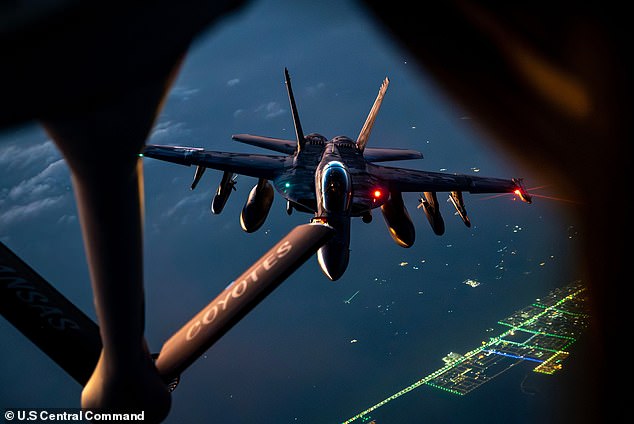
A US Air Force refuelling plane has gone down in Iraq (Pictured: A US Air Force KC-135 Stratotanker refueling a Navy Super Hornet during Operation Epic Fury earlier on Thursday)
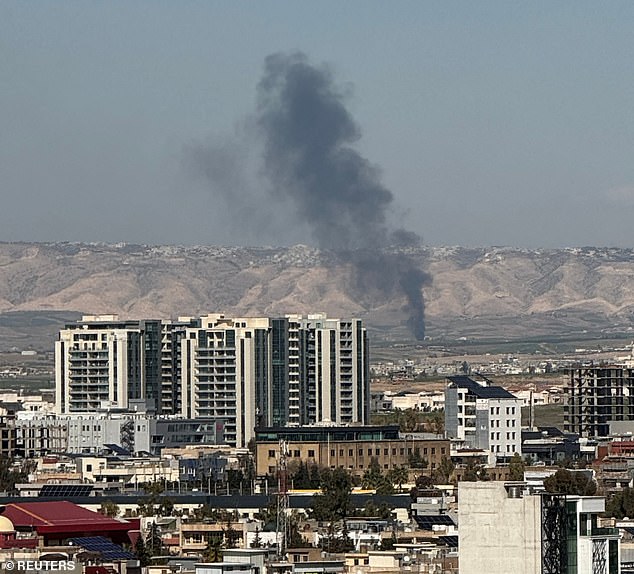
Smoke rises from the site of a drone crash on the outskirts of Erbil, Iraq on Thursday
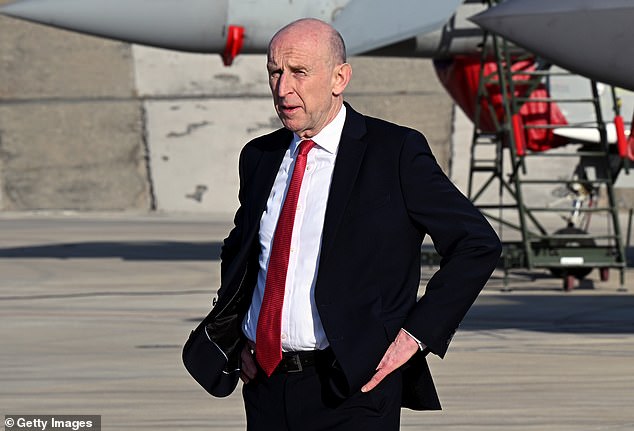
Defence Secretary John Healey, pictured this month in Cyprus, blamed the ‘hidden hand’ of Vladimir Putin for directing strikes against military headquarters
John Healey condemned the Kremlin’s secret mission to support the regime that has fired at UK troops at least three times.
The assault on the camp at Erbil in northern Iraq was repelled by soldiers using the UK’s Martlet missile system.
Wednesday night’s engagement followed attacks on RAF Akrotiri on Cyprus and challenged the wisdom of Keir Starmer’s strategy.
On the Prime Minister’s orders, British troops are permitted only to intercept enemy rockets. They cannot engage rocket systems.
Meanwhile, RAF pilots flew operational sorties over the United Arab Emirates, Jordan and Qatar as Britain was dragged deeper into the conflict.
Mr Healey said: ‘No one will be surprised to believe that Putin’s hidden hand is behind some of the Iranian tactics and potentially behind some of their capabilities as well.
‘We have seen this axis of aggression with Russia firing 60,000 drones into Ukraine. We have seen the same tactics by Iran. These countries like to menace their neighbours.
‘Nobody wants a situation where the Strait of Hormuz is closed, where international oil prices are at more than $100 a barrel. Nobody except Putin. Everyone else is concerned about it.’
The Kremlin was struggling to find money to support its illegal occupation of Ukraine before the spike in oil prices.
The increase from $60 to more than $100 a barrel has delivered a windfall for Putin, as has the US waiver on sanctions applying to countries buying Russian natural resources.
Overstretched British forces have been withdrawn from patrolling the High North and the North Sea to contribute to Middle East operations.
HMS Dragon, which sailed from Portsmouth on Monday, had been earmarked for Nato operations there before she was redeployed.
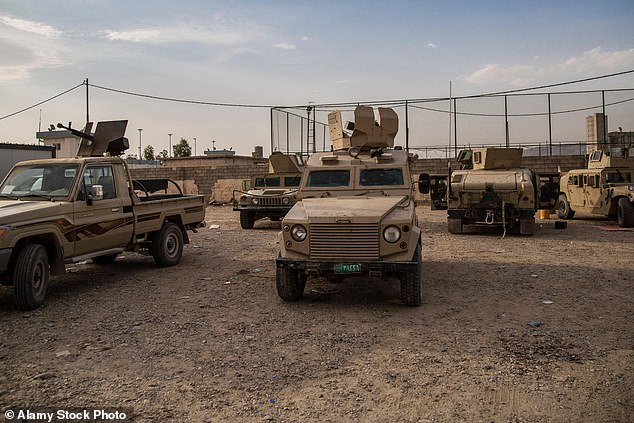
A French soldier has been killed in a drone attack targeting a base in the Makhmour area of Iraqi Kurdistan, pictured, which France shares with Kurdistan’s Peshmerga forces
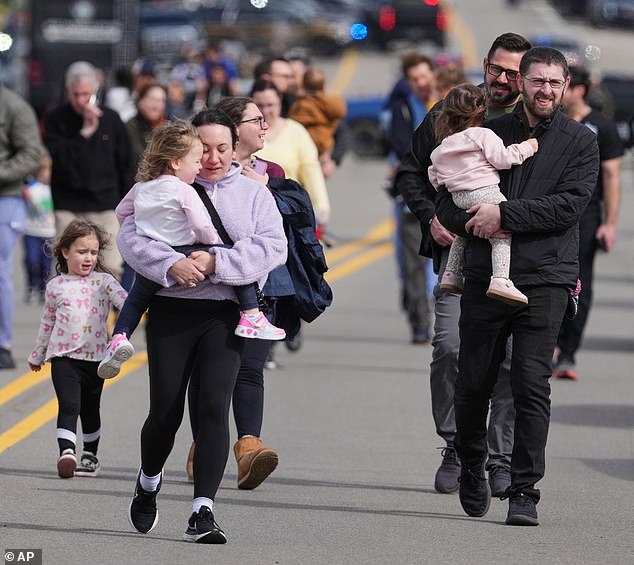
Parents carry their children away from the Temple Israel synagogue in West Bloomfield, Michigan, on Thursday after a gunman drove a truck into the building
There were no British casualties in the Iranian attack on the Erbil base, but some US service personnel were wounded. Targets in Baghdad were also struck.
The UK’s Chief of Joint Operations Lieutenant General Nick Perry said the Iranian drones were ‘problematic’ and ‘proving effective’ due to their flight patterns.
In tactics borrowed from the Russians in Ukraine, the Iranians are ensuring their Shaheed suicide drones approach targets on a lower trajectory.
The shallowness of their flight makes detection and interception more challenging. But the Martlet missile system proved up to the task.
With the Hormuz strait blockaded due to threats to cargo ships and oil tankers, Mr Healey was asked why the Navy removed its minesweeper HMS Middleton.
He said: ‘Any ship, like a car, needs maintenance. It was brought back for that.’
In other developments yesterday:
- US Treasury Secretary Scott Bessent said he believed America and its allies will form an ‘international coalition’ to escort oil tankers through the Strait of Hormuz.
- There was no sign of the Iranian regime collapsing yesterday after attacks on Iraq, Kuwait, the United Arab Emirates, Bahrain and Oman.
- A gunman who drove a truck carrying explosives into a synagogue in the US has been killed.
- The vehicle caught fire after ‘something ignited’ when the driver smashed into the Temple Israel in West Bloomfield, Michigan. A man armed with a rifle was found dead inside the vehicle. No one else was killed in the incident.
- Donald Trump said the war against Iran is moving ‘very rapidly’, adding: ‘They really are a nation of terror and hate, and they’re paying a big price right now.
- Iran insisted it is not laying mines in the Strait of Hormuz after an expert warned unmanned naval attack drones could ‘create havoc’ along the vital waterway.
- Iran’s new Supreme Leader Mojtaba Khamenei released the first statement to his war-torn nation despite rumours he is incapacitated his hospital with severe injuries.
- The Israeli armed forces commenced ‘several waves’ of strikes in Beirut and southern Lebanon targeting ‘Hezbollah infrastructure’.
Meanwhile, another European nation was dragged further into the war after a French soldier died in a drone attack targeting a base in Iraq.
A member of the armed forces ‘died for France during an attack in the Erbil region of Iraq,’ President Macron posted on X, confirming the first French military death in the Middle East war that began late last month when Israel and the United States struck Iran.
The strike on the headquarters – which France shares with Iraqi Kurdistan’s Peshmerga forces – involved two drones.
No Peshmerga personnel were on the site at the time of the attack, according to Governor of Erbil Omed Koshnaw.
The base lies in the Makhmour area of Iraqi Kurdistan, around 80km (50 miles) from the capital, Erbil.
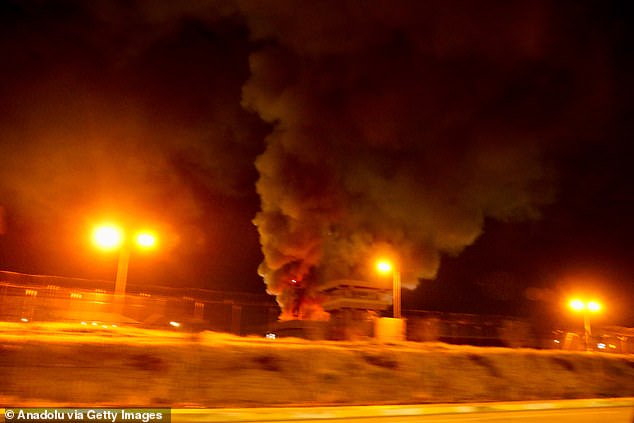
Fire breaks out following explosion where a military base is located, in Erbil, Iraq, yesterday
‘This is all the movement of the terrorist militias in Iraq and we reiterate that the Iraqi government are not taking it seriously,’ Mr Koshnaw said.
‘If these outlaws are part of the Iraqi government, then they are responsible. If they are not, then their security apparatus has a duty of reining these groups in.’
The soldiers were ‘engaged in training activities on counterterrorism with Iraqi partners’, according to a member of the general staff.
The troops were rushed immediately to the nearest medical facility.