A widow who faced possible persecution after travelling to Switzerland with her dying husband has revealed the criminal case against her has been dropped.
Louise Shackleton, a mother-of-three from North Yorkshire, said she received a phone call informing her that the Crown Prosecution Service (CPS) had decided it was not in the pubic interest to pursue charges.
The 59-year-old’s husband, Anthony, who was suffering from motor neurone disease, died at the Dignitas clinic in Zurich on December 5 last year.
Shackleton had accompanied him on the heartbreaking assisted dying journey.
Speaking to The Mirror she said: ‘On top of the death of my husband and my grieving, I have had the excruciating pressure of a possible court case.’
Reflecting on the Assisted Dying Bill currently before the House of Lords, Shackleton added: ‘Assisted deaths need to be open, not driven underground.’
Campaigners say her ordeal highlights the urgent need for clarity in the law surrounding assisted dying – a debate that continues to divide the nation.
It comes six months after Shackleton revealed the awful moment Anthony had received an email detailing the date he would die.
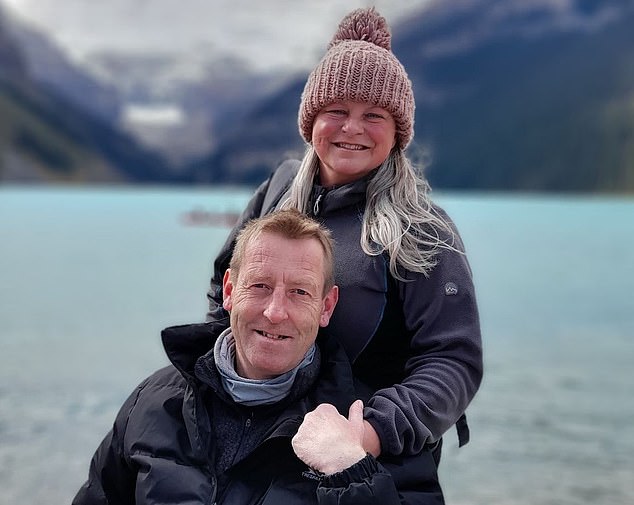
Louise Shackleton, a mother-of-three from North Yorkshire, said she received a phone call informing her that the Crown Prosecution Service (CPS) had decided it was not in the pubic interest to pursue charges
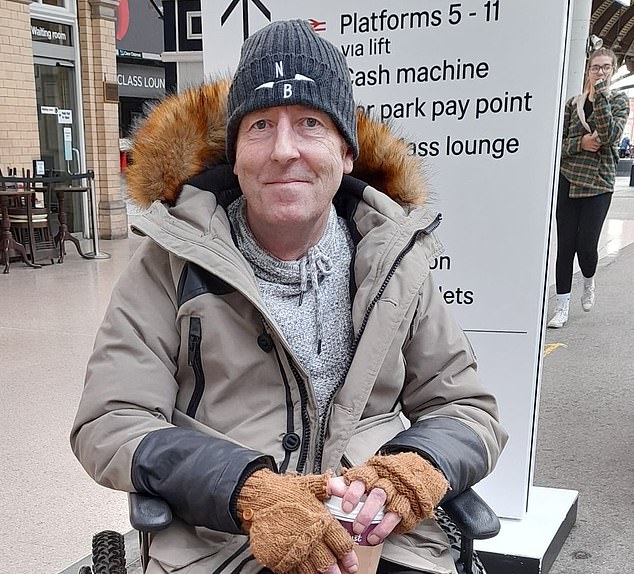
The 59-year-old’s husband, Anthony, who was suffering from motor neurone disease, died at the Dignitas clinic in Zurich on December 5 last year.
She said her world was ‘blown apart’ by the email – while he was so happy he marked the date on his calendar.
Shackleton said: ‘Antony had anxiety before he got what they call the provisional green light from Dignitas.
‘When he got the green light, he then started looking at how his body would come back.’
She continued: ‘Because he was deteriorating, he knew that I wouldn’t be able to help him soon, and he didn’t want anyone else to get in trouble.
‘He was scared of his death from motor neurone but he wasn’t scared of his death day at Dignitas. In fact he was rejuvenated knowing that his end would be peaceful.’
Shackleton described how she had to wait to call their three children and his 90-year-old parents after he died and even had to leave his husband’s memorial early to protect them from laws against assisted dying.
She described the awful moment she called her family for a familiar voice as she drove away from the Dignitas ‘blue’ house in an Uber.
She said they were ‘blindsided’ by the ‘horrifying’ news and he could not even say goodbye because they couldn’t let them know they were going.
Shackleton said that the event was made all the more painful because he had to die away from everyone he loved, and had to plan how he could speak to them for one final time.
She said they must have been suspicious to get a phone call out of the blue, but he rang all his friends the night before he left for Manchester Airport – with the exception of one he could not get hold of.
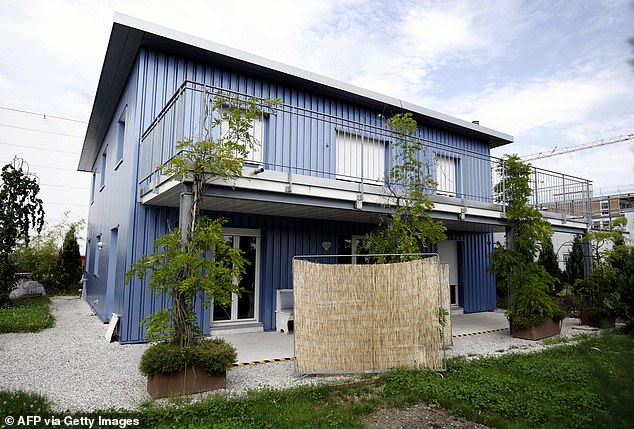
British membership of Dignitas has increased by more than 50 per cent over the last five years. Pictured is a file photo of the Dignitas clinic in Pfaeffikon, near Zurich
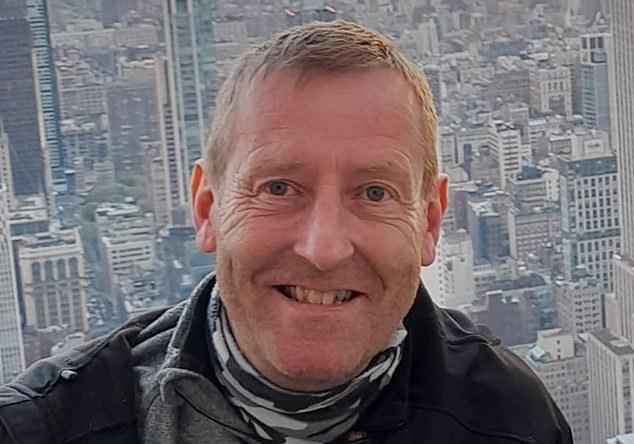
The Shackletons discussed assisted death from more than two years before deciding it was the only way Anthony could die without pain or suffering
Shackleton has previously described her husband’s final days, saying Anthony was given an ‘anti-sickness medication’ upon his arrival to Dignitas and was greeted by three ‘knowledgeable’ staff members who ‘explained everything that was going to happen’.
After their walk, he was asked again if he wanted to go through with the process, which would see him take medication, fall asleep and never wake up.
Shackleton claims he smiled, laughed and replied: ‘What do you think I’m here for? Let’s do this!’
She laid next to her husband as he administered his own end-of-life medication, admitting she ‘couldn’t look at him doing that’.
She recalled how she held him in her arms and ‘within minutes he was becoming heavy’.
Anthony told his wife ‘I feel sleepy’ and let out a snore, prompting her to hold him tighter as she joked about his snoring.
She says ‘he laughed and gently slipped away’ in what she described as a ‘beautiful death’.
The Shackletons discussed assisted death for more than two years before deciding it was the only way Anthony could die without pain or suffering.
It is illegal in the UK to assist someone’s suicide – but people are rarely prosecuted.
Shackleton argued that if the laws had been different in Britain, the couple’s family would have been able to support them during his final moments.
She gave herself up to police after returning from Switzerland and said that although she ‘committed a crime’, she does not regret going to Dignitas.
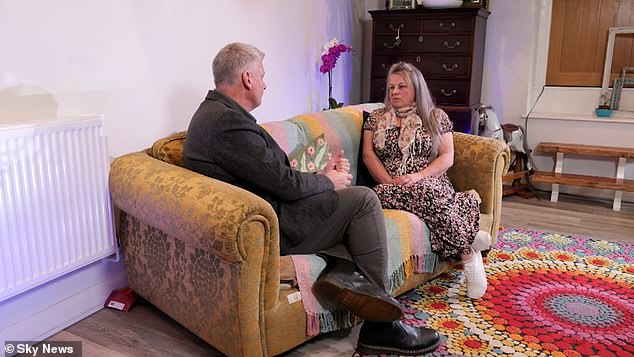
Shackleton said that the event was made all-the-more painful because had to die away from everyone he loved, and had to plan how he could speak to them for one final time
She told Sky News earlier this year: ‘I have committed a crime, which I have admitted to, of assisting him by simply pushing him on to a plane and being with him, which I don’t regret for one moment. He was my husband and I loved him.’
The couple had been together for 25 years – and had known each other since they were both 18.
She said: ‘It was in those four days that I realised that he wanted the peaceful death more than he wanted to suffer and stay with me, which was hard, but that’s how resolute he was in having this peace.’
And if legislation had been different in the UK, she added, they could have also shared those final days with family.