Rachel Reeves has been urged to adopt a ‘hybrid’ business rates model that will tax online operators to ease pressure on the High Street.
Business leaders are proposing a new system involving a 2 per cent levy on online sales and a 37 per cent cut for bricks-and-mortar firms.
The plans have been put forward by the Heart of London Business Alliance (HOLBA), which represents more than 500 businesses, and are now winning support from organisations around the country.
It comes after the Chancellor faced a fierce backlash over her botched business rates reforms announced last year that saw Labour MPs banned from pubs and many industries facing punishing hikes in their bills.
Rates went up at the start of this month – hammering businesses across Britain already dealing with inflation-busting increases in the minimum wage alongside other tax hikes and red tape.
With firms reeling from the barrage of extra costs, Reeves is under mounting pressure to finally introduce full-scale reforms to the rates system.
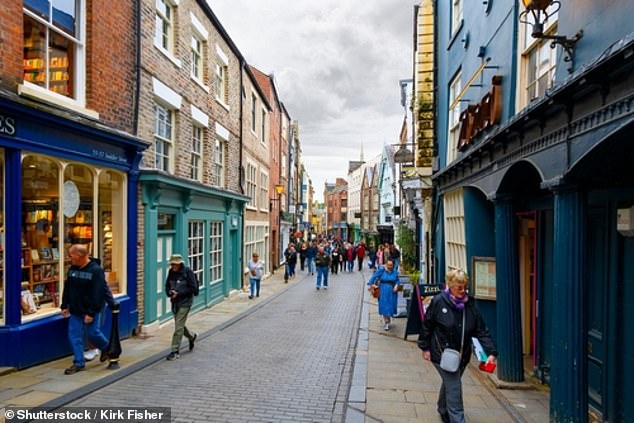
Out of date: The current system is said to be a ‘millstone around the neck’ of high streets
The latest group to give its backing to the HOLBA plan is the Association of Town and City Management, whose chief executive Ojay McDonald said a ‘modest’ levy on online sales that enabled rates to be slashed for bricks-and-mortar businesses would ‘relieve the crippling burden on high streets’ across the country.
Writing for dailymail.co.uk, he said: ‘Britain’s business rates system – a tax originally designed in the late 20th century – has become a millstone around the neck of our high streets and local economies.
‘It is so badly out of step with a 21st-century economy that without urgent reform it threatens jobs, investment and the very future of bricks-and-mortar business.’
A host of industries face huge increases in business rates bills, with hotels set for an average rise of 115pc over three years.
McDonald said: ‘Rising business rates make investment unviable, suppress wages and hiring and reduce the resilience of our businesses.
‘Look at the stories we heard in our own call for evidence: cafés forced to cut staff hours, independent bookshops facing existential choices, art galleries closing and supermarkets pushed to the edge of closure. These are real people, real jobs and real businesses at risk.’
HOLBA chief executive Ros Morgan said: ‘The business rates system is broken and increasingly holding back the UK economy.
‘All sorts of businesses — from pharmacies to offices to tourist attractions — are facing unsustainable rises starting this month.
‘Without radical reform of this sort, businesses will be forced to pause hiring or shed jobs, cut back on investment and impose higher prices for consumers.’
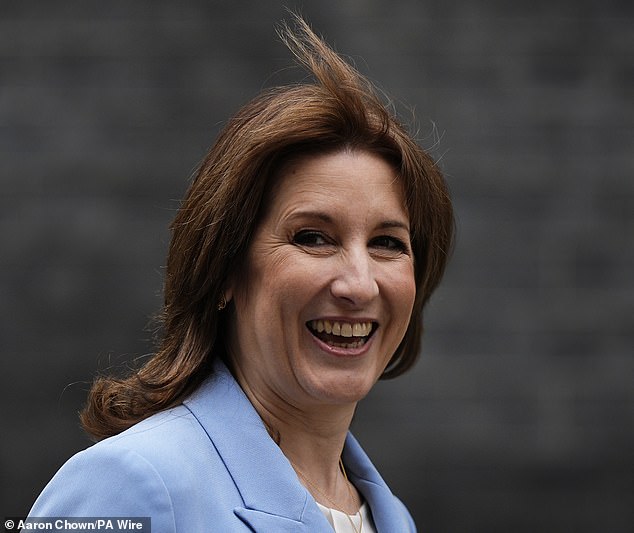
No laughing matter: Rachel Reeves has been urged to adopt a ‘hybrid’ business rates model that will tax online operators to ease pressure on the High Street
Real people, real jobs and real businesses are at risk
By Ojay McDonald, Chief Executive of the Association of Town and City Management
Britain’s business rates system – a tax originally designed in the late 20th century – has become a millstone around the neck of our high streets and local economies. It is so badly out of step with a 21st-century economy that without urgent reform it threatens jobs, investment and the very future of bricks-and-mortar business.
Over the past few months, we at the Association of Town and City Management (ATCM) have collected heartbreaking, detailed evidence from businesses right across the UK, from specialist shops and restaurants to world-famous entertainment venues. We are a not-for-profit membership organisation, one of the largest dedicated to promoting the vitality and viability of urban centres across the UK. Our findings paint a stark picture: a system that is failing to reflect market realities, that increases tax burdens irrespective of economic performance and that is pushing viable businesses to the brink.
That is why we are supporting proposals for a new Hybrid Business Rate, drawn up by the Heart of London Business Alliance, as the starting point for reform.
Business rates were established nearly four decades ago when physical premises were at the core of economic activity. Today, digital commerce accounts for a rapidly growing share of activity – upwards of 20 per cent of the UK economy and increasing all the time. However, online businesses contribute only a fraction of business rates revenue – many paying nothing at all – while bricks-and-mortar establishments carry an increasingly disproportionate load.
The current system is revenue neutral, meaning that when the value of commercial property falls – as it has repeatedly in recent years due to changes in the economy and consumer habits – the tax burden on the remaining ratepayers goes up to keep total receipts unchanged.
Across the high street, in town centres and in our city cores, this has created a vicious cycle: rising business rates make investment unviable, suppress wages and hiring and reduce the resilience of our businesses.
Look at the stories we heard in our own call for evidence: cafés forced to cut staff hours, independent bookshops facing existential choices, art galleries closing and supermarkets pushed to the edge of closure. These are real people, real jobs and real businesses at risk.
Before the last election, Labour promised fundamental reform to address these unfairnesses and finally level the playing field between online and bricks and mortar businesses.
Instead, Chancellor Rachel Reeves fiddled with the existing system. She tried to soften the blow via lower multipliers for retail, hospitality and leisure properties. Although well intended, the light touch reform still created millions of losers – most vocal of which were pubs, who forced the Government to bail them out. But many sectors face punishing rises: hotels, for example, will see average increases of 115 per cent over the next three years.
The failure to embrace structural reform leaves bricks-and-mortar businesses paying a disproportionate share of the bill, even as online platforms increase their footprint and influence. It actively penalises investment in physical places that support tourism, cultural life, hospitality and local employment.
We cannot engineer our way out of this with one more relief here or another cap there. We need a fundamentally fairer tax base – one that reflects where economic activity truly happens today.
As an organisation that includes all tiers of local government amongst its members, we need solutions more realistic than simple tax cuts which would further erode the public services people rely on. We need reform that fairly redistributes the tax burden.
The Hybrid Business Rate offers precisely that: a sensible reform that broadens the tax base to include digital economic activity.
Put simply, a modest levy on online sales – around two per cent – would bring digital operators into the fold, contributing fairly to the cost of local services and the places they benefit from.
Bricks-and-mortar business rates could then be cut, by 37 per cent, relieving the crippling burden on high streets.
Because the system would generate substantial revenue from the giant online economy for the first time, this reform could raise more for the Treasury more overall than the current system while cutting rates for physical businesses.
My members at ATCM – from local authorities to Business Improvement Districts – know full well what happens when investment dries up and costs squeeze firms to breaking point. This matters for jobs, capital investment, and the viability of our communities: once shops and venues close, footfall declines, leading to further closures.
Unless we act now, this cycle will worsen. That’s why genuine reform – not more fiddling at the margins – must be the Government’s priority.
The Hybrid Business Rate is bold, practical and rooted in economic reality. It aligns the tax system with how business actually works today and ensures everyone pays a fair share. It protects high streets, secures jobs, supports investment and sustains vibrant communities.
This is the reform Britain’s towns and cities have waited too long for.
DIY INVESTING PLATFORMS

AJ Bell
AJ Bell
Easy investing and ready-made portfolios

Hargreaves Lansdown
Hargreaves Lansdown
Free fund dealing and investment ideas

interactive investor
interactive investor
Flat-fee investing from £4.99 per month

Freetrade
Freetrade
Investing Isa now free on basic plan

Trading 212
Trading 212
Free share dealing and no account fee
Affiliate links: If you take out a product This is Money may earn a commission. These deals are chosen by our editorial team, as we think they are worth highlighting. This does not affect our editorial independence.