A letter from Blake Lively bragging about how much power she had on the set of the 2024 movie It Ends With Us has come back to haunt her in her ongoing legal battle against co-star and director Justin Baldoni, the Daily Mail can reveal.
The actress, 38, had sent a five-page letter to the Producers Guild of America as she sought a coveted producing credit – declaring that she had ‘produced every moment of this film’ and setting out her contributions in 77 bullet points – many beginning with the word ‘I’.
But in a devastating ruling to her $161 million lawsuit, Judge Lewis Liman cited Lively’s own words to conclude on Thursday that she had exercised such extensive control over the film that she could not be considered an employee – a crucial distinction that rendered the laws she relied on inapplicable and led to the dismissal of 10 of her 13 claims against Baldoni and the film’s producers.
In her June 2024 letter, Lively described the credit as the ‘highest honor in film’. She name-dropped ‘her friend’ Bradley Cooper and talked about the ‘immense work’ she had done on the movie.
But Judge Liman said that ‘not only did she reserve substantial contractual control over her participation in the film, but she exercised that control’.
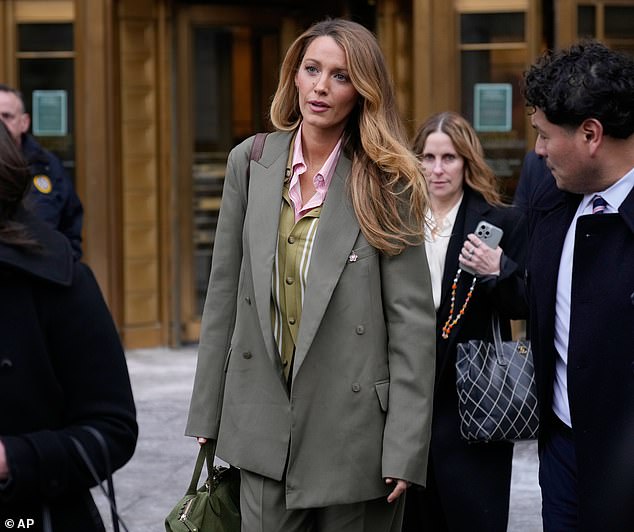
Blake Lively’s bragging claims that she ‘produced every moment’ of It Ends With Us caused a judge to throw out the bulk of her claims against co-star and director Justin Baldoni

The movie follows Lily Bloom, a florist played by Lively, who falls in love with a charming but abusive neurosurgeon played by Baldoni, who was also the film’s director
That meant she could not move forward with her claims under Title VII of the Civil Rights Act of 1964 and the California Labor Code as they only applied to staff, not independent contractors.
A trial is still due to go ahead on May 18 but it will cover just three counts: retaliation, aiding and abetting retaliation and breach of an agreement, known as the Contract Rider.
However, lawyers for the two sides have been called to discuss their current positions on Monday afternoon.
Assuming the case does reach a jury, it will be focused more on the alleged online ‘smear campaign’ that Baldoni’s PR team put into action during the film’s release.
Judge Liman’s ruling delved deeply into New York and California contract and labor law which Lively used to make the claim that she suffered $161 million in damages after being sexually harassed then retaliated against.
The key point was whether or not Lively was an independent contractor or an employee: Judge Liman found she was a contractor.
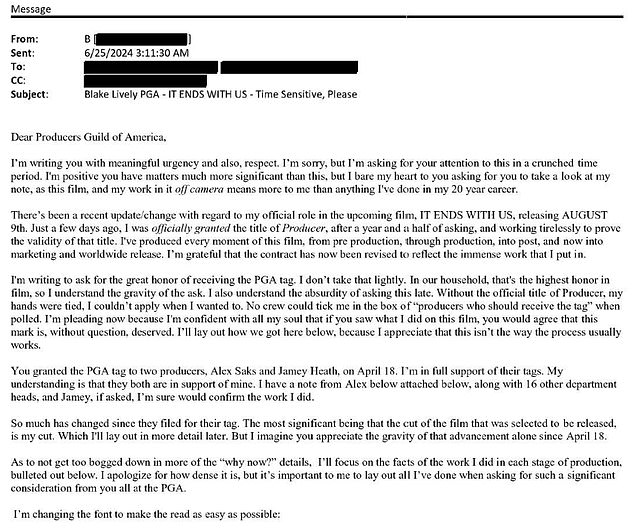
The five-page letter Lively sent to the Producers Guild outlining her influence – seen in part here – was central to the judge’s decision
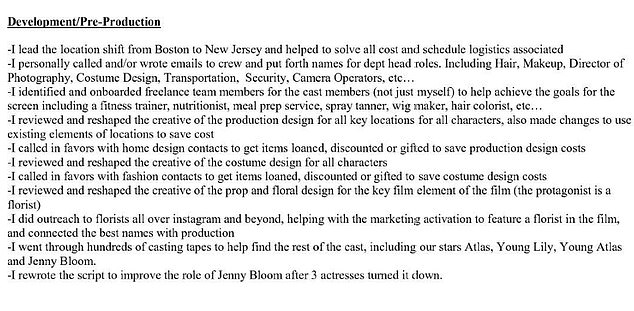
Lively set out her contributions in 77 bullet points, many beginning with the word ‘I’
This was because she had power and control way beyond what a normal staff member would have, he ruled.
Lively’s request for a PGA credit appears to have been driven by her interest in moving behind the camera and a credit, or ‘tag’, from the PGA would have been crucial to help her with that.
The PGA credit lends an actor credibility and generally allows them to be considered for awards on films they work on.
Scarlett Johansson was granted one with her 2024 film Fly Me To The Moon, in which she starred and produced.
In Judge Liman’s ruling, he included 22 of Lively’s own points from her letter to the PGA including that she ‘led the location shift’ from Boston to New York and ‘went through hundreds of casting tapes’ to find the actress who played the young version of Lily Bloom, her own character.
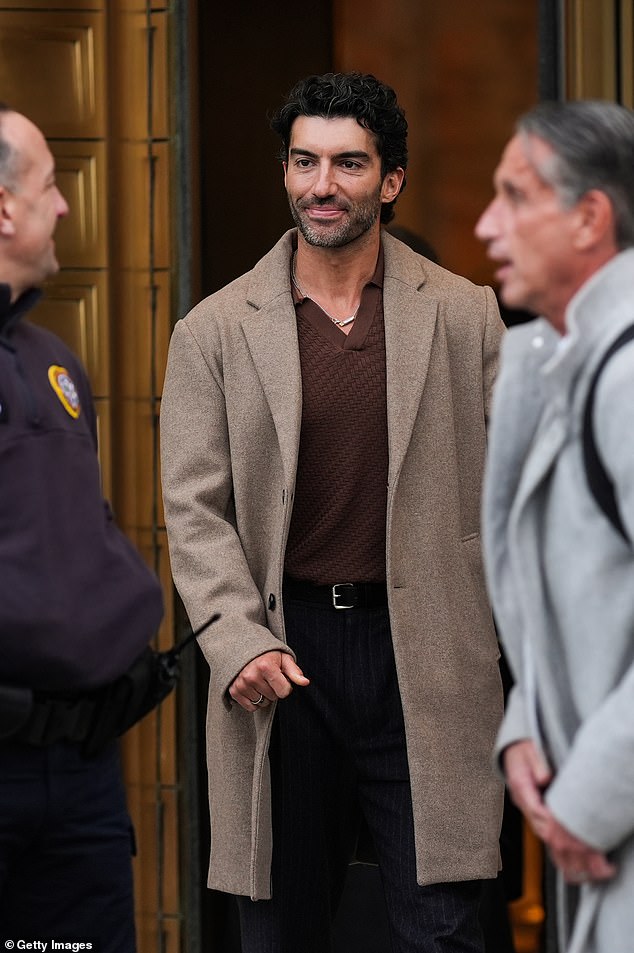
Justin Baldoni welcomed the ruling after a judge threw out all sexual harassment claims against him
She talked about how she held frequent Zoom calls with the cast and crew, fired a senior member of the film crew, watched the monitors between takes, worked with her own editors, chose 90 percent of the music and spearheaded the film’s marketing.
Lively pleaded with the PGA that her work ‘off camera means more to me than anything I’ve done in my 20 year career’.
She also acknowledged how unusual it was for the PGA to consider an application such as hers: normally the guild conducts its own analysis to decide to award a credit.
Lively said the film had ‘taken every bit of me, practically, logistically, creatively and emotionally’.
‘So thank you for considering this,’ she added. ‘I also know and appreciate this is not how this mark grant goes down’.
In his ruling, Judge Liman said that Lively’s ‘role far exceeded that of a traditional employee’.
He said: ‘She enjoyed the economic independence to walk at any moment with the only consequence being that she would potentially be in breach of contract.
‘And she exercised that independence in negotiating the terms under which she would return to work. She also enjoyed equity in the film, ensuring that her compensation would be based not just on her own work but on the film’s success as a whole’.
According to the judge, the ‘undisputed facts’ showed that Lively was not a member of staff.
He said: ‘Although not every factor weighs equally in favor of that conclusion when viewed in isolation, analyzing the factors collectively eliminates any genuine dispute’.
Lively’s efforts to take more control also came back to bite her in another area, the judge’s ruling stated: she did not sign the Actor Loanout Agreement, or ALA, which would have governed sexual harassment on set.
Baldoni’s lawyers sent Lively’s team a copy of the ALA in May 2023 but it was not signed by the time filming started a few weeks later.

The judge said that several of the incidents that Lively had cited ‘would not support a hostile work environment claim or would do so, at most, only minimally or in context’
Nor was it signed by February 2024 when filming finally wrapped: instead Lively’s lawyers sent it back with changes to 20 percent of its provisions, the judge noted.
They included changes to sexual harassment policy and confidentiality which were all ‘flatly rejected’ by Baldoni’s legal team.
By June 2024 exasperated Baldoni, 42, sent a text saying that Lively ‘won’t sign her contract’ – and she never did.
Despite this, Lively tried to bring a claim citing the ALA but the judge rejected this, saying it was not enforceable because she didn’t sign it.
Judge Liman – whose younger brother Doug is a movie director with credits including The Bourne Identity, Swingers and Mr & Mrs Smith – wrote: ‘Ultimately, Lively fails to confront what is the central dilemma in her claim.
‘She contends that the ALA became binding on (Baldoni and the producers) at some point while the parties were still negotiating it, but she cannot pinpoint a time when the parties began to be bound by it or which version of the ALA they were bound to.
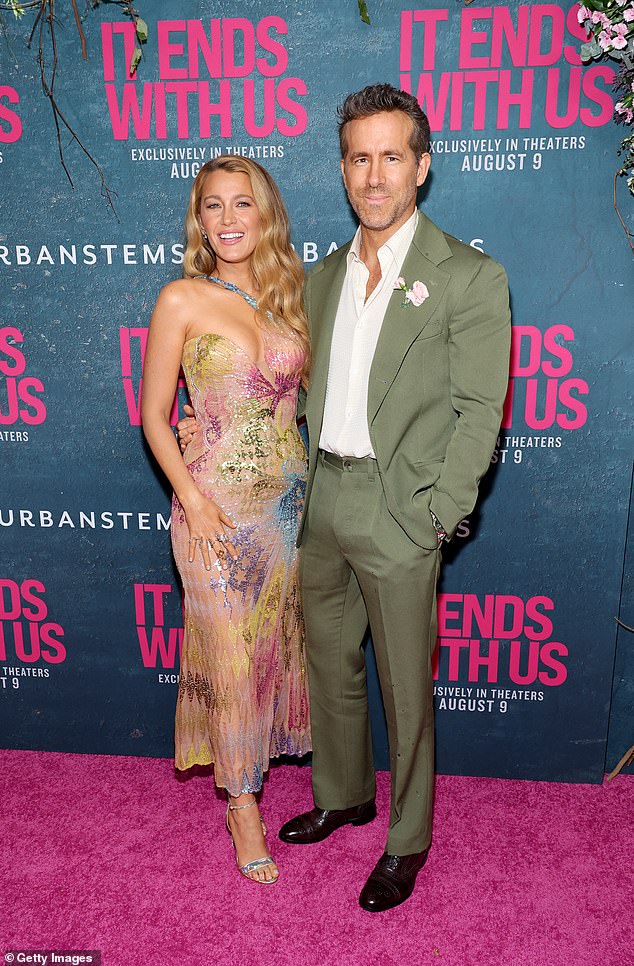
A judge ruled Lively – who is married to Ryan Reynolds – was not an employee on the set of the film but an independent contractor, a distinction that proved decisive
‘Unless both parties are bound, neither party is bound.
‘Which draft of the ALA bound Lively? Was it the version that lacked the sexual harassment provision?’
Speaking after the ruling, one of Lively’s lawyers, Sigrid McCawley, said they would press on to trial regardless of the judge’s decision.
She said that the case had always been about the devastating retaliation and the extraordinary steps the defendants took to ‘destroy Blake Lively’s reputation because she stood up for safety on the set’.
McCawley said: ‘For Blake Lively, the greatest measure of justice is that the people and the playbook behind these coordinated digital attacks have been exposed and are already being held accountable by other women they’ve targeted’.
Baldoni’s attorneys, Alexandra Shapiro and Jonathan Bach, said in a statement they were ‘very pleased’ that all the sexual harassment claims had been dismissed.
They said: ‘These were very serious allegations, and we are grateful to the court for its careful review of the facts, law and voluminous evidence that was provided.
‘What’s left is a significantly narrowed case, and we look forward to presenting our defense to the remaining claims in court’.
The future of the case is up in the air. Lively’s lawyers have been ordered to call US Magistrate Judge Sarah Cave at 3pm Monday ‘to discuss their client’s updated settlement position’, according to a scheduling order posted by the District Court in Manhattan, Friday.
Lawyers for Baldoni and his company Wayfarer Productions have been told to call one hour later.
However that does not mean it is all over. Another Lively attorney, Michael Gottlieb, said the actress is looking forward to the trial.
In a statement, Gottlieb said the jury will still hear her claims about sexual harassment, which he called ‘the beating heart’ of the case.
‘The court’s ruling that Ms Lively’s state and federal harassment claims could not go to trial was about legal issues rather than an endorsement of the defendants’ conduct,’ said Gottlieb.
‘The court held that Ms Lively’s sexual harassment claims could not go to a jury because Ms Lively did not sign a contract, that she is an independent contractor instead of an employee, and that the offensive conduct occurred in New Jersey instead of California.’