Families hit by huge hikes in heating oil costs are set to be offered help with their bills under plans outlined by Rachel Reeves.
Treasury officials are said to be working on a package aimed at poorer households amid a doubling of prices to around 130 pence per litre in some areas since the start of the Iran War.
Heating oil is not protected by the energy price cap and any subsidy is expected to cost tens of millions of pounds. Full details are expected to be unveiled next week.
The chancellor said: ‘I have found the money and we’ve worked through with MPs and others a response for people who are not protected by the energy price cap.
‘We’re giving greater support to those who really need it’.
She has also promised to consider ‘different options’ for households most vulnerable to spikes in gas and electricity prices in the event that a Middle East war drags on for months.
Although both are protected by a price cap, this is due to come to an end in June – pushing average bills up by up to £300 to over £1,900.
However, the chancellor was cautious about a universal bailout on the lines of a package announced by Liz Truss following Russia’s invasion of Ukraine. That intervention cost taxpayers some £35 billion over a six-month period.
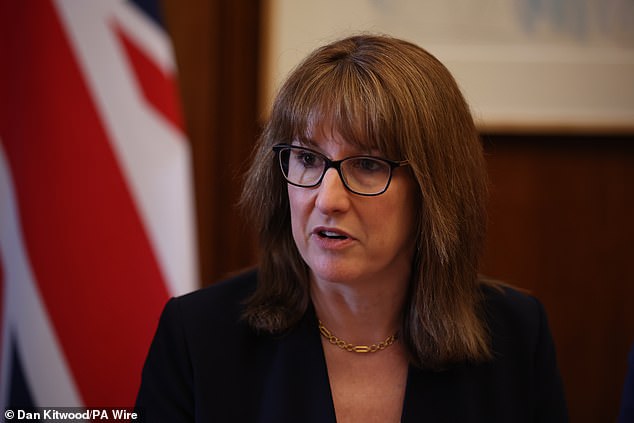
Chancellor of the Exchequer Rachel Reeves during a roundtable with petrol retailers and energy suppliers, hosted at no 11 Downing Street, Westminster
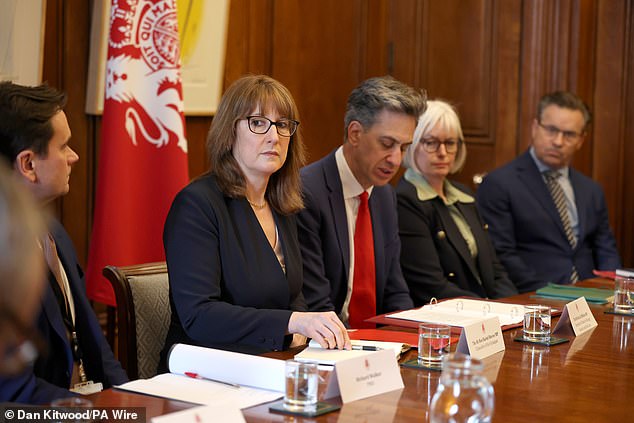
Treasury officials are said to be working on a package aimed at poorer households amid a doubling of prices to around 130 pence per litre in some areas since the start of the Iran War. Pictured: Ms Reeves (centre) and Energy Security and Net Zero Secretary Ed Miliband (third right)
She hinted that the Treasury was modelling different approaches to household support, prioritising lower-income families.
Calculations are likely to take into account how long the Iran conflict might last and the long-term effect on wholesale prices.
‘We’ve got some time, and we are working through in the Iran response board [a group of treasury ministers and officials] different approaches that we could take, including looking at more targeted options,’ she said.
‘We are working through different scenarios at the moment and I don’t want to suggest that we’re going to do something that we know we’re not able to deliver.
‘I am concerned given how high our debt is, the debt that we inherited, and so I want to look at what the different options available would be.’
Speaking to The Times, she went on: ‘It is important even when there is an economic shock – or perhaps particularly when there’s an economic shock – that you continue to be disciplined about your use of public money.’
Ms Reeves remains under pressure to scrap plans for a five pence a litre fuel duty increase from September, after the Prime Minister announced that the rise was under review.
On Friday average petrol station prices passed £1.40 a litre – up 5 per cent since the conflict began and toiching a 16-month high.
The Chancellor suggested she was unlikely to intervene, saying she was ‘frustrated’ that the government had already invested heavily in keeping fuel duty down and believed it was not ‘always being passed on to consumers’.
She said research by the Competition and Markets Authority suggested some garages were charging too much, adding: ‘I don’t want to freeze fuel duty to allow petrol retailers to make a bigger profit.’
Tory leader Kemi Badenoch has called for the Chancellor to scrap September’s ‘stupid’ planned increase in fuel duty, which she said was ‘the last thing we need’, and demanded the UK should ‘start drilling’ in the North Sea.
The Strait of Hormuz, a vital route for oil and gas tankers, usually sees 138 ships a day pass through but that has declined to about five due to the threat of attack.
The threat to global supplies has led to volatility in oil and gas prices, feeding through to the higher fuel bills and the risk of increased household energy costs.
Distributors’ trade group UKIFDA says the spike has been severe because heating oil, like jet fuel, is kerosene-based.
Both are traded on European wholesale markets which depend on Gulf oil tankered through the Strait, which Iran has effectively closed.
Around 40% of Europe’s jet fuel comes from the Middle East and stands at a three-year price peak.
UKIFDA CEO Ken Cronin said distributors bought oil ‘almost daily’ and had themselves been hit by fast-moving wholesale costs.
‘In a market this volatile, lack of certainty is difficult,’ he said. ‘Our members are doing everything they can to support oil-heated homes.’
According to latest Census figures, 865,000 households in England and Wales – mostly in eastern England, Wales, the north-east and the west country – 127,000 in Scotland and 380,000 in Northern Ireland are affected.
Ms Reeves insisted the UK was in a better position to cope with the economic consequences of a Middle East war because policies she’d adopted had stabilised the nation’s finances.
‘When I came in, there was no money left in the reserve,’ she said.
‘Interest rates were too high. Our borrowing costs were too high. They were much higher than other countries and they were not coming down. And it’s taken a year and a half to get us into that better place.
It does show that we were right to do what we did the first year and a half because we are in a much stronger position economically and fiscally to deal with this than we would have been if it had happened 18 months ago. I feel that very strongly.’
A Government spokesman said: ‘We know that people are concerned about the potential impact of global conflicts on the cost of living.
‘While it is too soon to know the full impact of this crisis, as the Chancellor said, she will take the necessary decisions to help families with the cost of living and protect the public finances.
‘We have extended the 5p fuel duty cut, expanded the Warm Homes Discount to take £150 a year off of energy bills for six million households and the energy price cap will protect households for the next three months as bills will fall by £117’.