Here is something nowadays seldom said: at the Houses of Parliament this week a statesman gave a stonking speech. The audience was left awestruck by his invocation of national pride and military defiance. Not once did he apologise for his culture; nor did he moan about ‘the party opposite’ or ‘the mess we inherited’. He just whacked out a can-do message in a manner as distinctive as it was electrifying; with which he sat down to an eruption of cheers.
Yes, an actual statesman at our crumbling, cobwebbed, rat-infested Parliament! The optimist in question, inevitably, was not one of ours. No such luck. He was the president of war-racked Ukraine, Volodymyr Zelensky, who was in London to meet Sir Keir Starmer and was invited to Westminster by Speaker Hoyle. Downing Street was not entirely keen on the event happening, such is No 10’s scurvy view of our legislature, but the Speaker insisted.
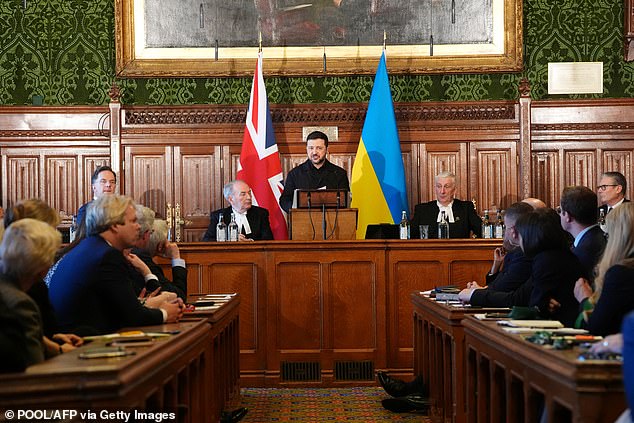
Thus it was that as shadows lengthened on the Thames and mid-March’s chill descended on the day, Ukraine’s 5ft 7in leader rose in Committee Room 14 to relate two vital messages: that Iran and Russia are ‘brothers in hatred’ whom we must fight to save our way of life; and that Kyiv has developed the expertise to stop Iranian drones and is willing to help the West in the Persian Gulf.
As a parliamentary sketch writer I will let others chew the geo-strategy of all that. What gripped me was Zelensky’s manner, his theatrical delivery, his inner grit. The president’s short stature helped, as did his guttural English. They accentuated his terrier-like tenacity.
This was no technocratic smoothie, basting the audience with buttery compliments and projecting a sense of his own cleverness. He flew straight to blunt descriptions of life under the anti-bomb nets in Kyiv. He whipped out an iPad and demonstrated how, late at night, he can watch live-time diagrams of incoming missiles and the Ukrainian defence drones that fly up to smash them.
His fellow citizens, greatly against the odds, had flexed their stoicism. By acting fast – executive despatch, if we here can ever imagine such a thing – Ukraine had maintained her dignity. The speech ended with a few diplomatic comments about Britain being ‘a great country’ with ‘a strong navy’.
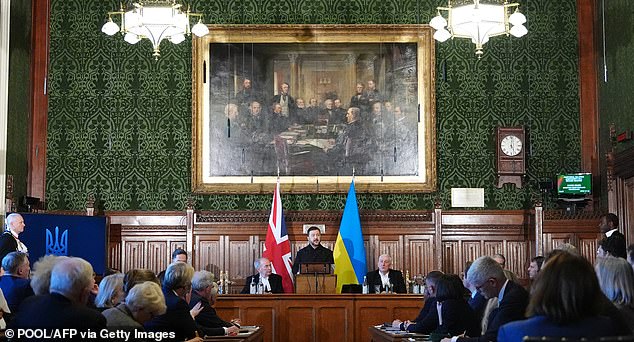
As a parliamentary sketch writer what gripped me was Volodymyr Zelensky’s manner, his theatrical delivery, his inner grit, writes Quentin Letts
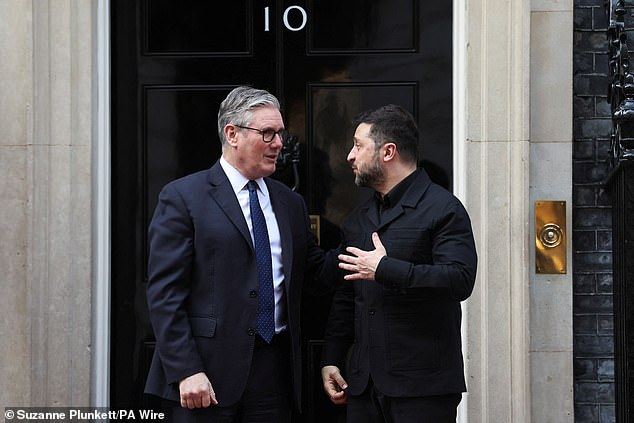
Sir Keir is a process man, a scrivener who shuts himself in his Downing Street study to pore over small print, writes Quentin. Authority does not reside within his heart
Those last phrases were shaming. The Royal Navy has been enfeebled, to the terrible discredit of our governments over the past 30 years. Is Britain truly still great? Specifically, are our politicians? Do we possess any Zelenskys? As the applause rained down on the president on Tuesday it was depressing to compare this intense, urgent Ukrainian with the middlers and prigs, burblers and childish finger-pointers of our current politics. Where are the figures who in future years will merit more than a single line in the records? Where, today, are our history-makers?
Sir Keir sat near Mr Zelensky in Committee Room 14 and I wondered what, if much, was going through his mind. Sir Keir is a process man, a scrivener who shuts himself in his Downing Street study to pore over small print. For him, answers are written by others. Authority does not reside within his heart. It lies in legal textbooks and briefings from his internationalist Attorney General, Lord Hermer. By his own admission Sir Keir does not dream.
Although a native of these islands, he speaks English less excitingly than the foreign-born Zelensky. Language, to Sir Keir, is a commodity no more textured or tangy than unsalted porridge. Such is the dud who leads our land at this daunting hour.
What of his Cabinet? The Chancellor, Rachel Reeves, this week delivered a defeatist Mais lecture that claimed her policies were a success, even while she pleaded for Brussels to come to her rescue. Our deputy PM, David Lammy, is so on-the-button that he calls Typhoon fighter planes ‘Tycoons’ and thinks Cyprus is a member of Nato, which it is not. The Foreign Secretary, Yvette Cooper, is a head-wobbling grievance jockey reportedly plotting with Ed Miliband – the ‘nightmare ticket’ – to replace Sir Keir.
In that, she will face competition from Angela Rayner, sacked from the Cabinet for a tax scandal just six months ago but already clip-clopping around Westminster with a sleek makeover and a fistful of cash from the corporate-speeches circuit. Public sector trade unions want Mrs Rayner to seize power, not because she will rescue our country but because she will allow them to work shorter weeks for more of our money.
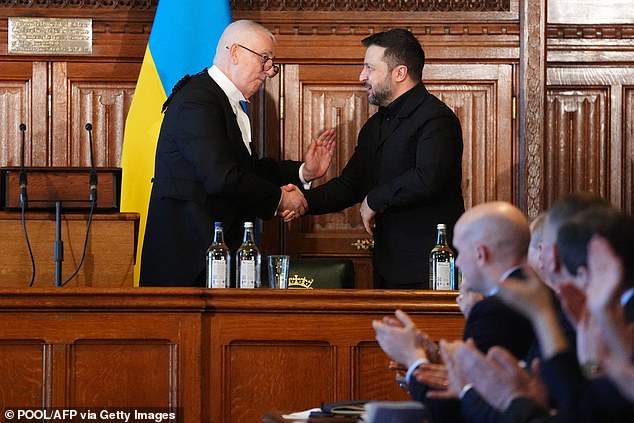
Commons Speaker Lindsay Hoyle greets Mr Zelensky ahead of his speech to MPs… Downing Street was not entirely keen on the event happening, but the Speaker insisted
How about the other parties? Reform’s Nigel Farage has brio (make that Chateau Brio) but the crew under him could scuttle the ship before it leaves port. The Conservatives’ Kemi Badenoch shows promise but is barely more than a sapling. An economics speech on Wednesday from the Greens’ Zack Polanski showed he has little advanced from his hypnotist days when he claimed he could make women’s breasts bigger by staring at them. Polanski comes across as a coin-clipping mountebank, a fantasist, a political swindler.
Which leaves us with: human cannonball Rupert Lowe, whose one-man party, Restore, sounds like a tin of furniture polish; Jeremy Corbyn, 76, springy young thruster of the daft-as-dodos Your Party; and Sir Ed Davey of the Liberal Democrats. Heavens, did you see the fool at his Spring Conference last weekend? He sauntered on stage in sunglasses, jiggling his shoulders to the music Daddy Cool. Having unburdened himself of a forgettable speech he disco-danced to a Generation Z pop hit, Hot To Go. The man is incorrigibly juvenile.
British politics used to be better served, until even quite recently. I started sketch writing when Margaret Thatcher was prime minister and I was in the Commons Press gallery when she gave that speech just before she left office.
‘I’m enjoying this!’ she roared, flourishing an elbow and swivelling to blaze that torch-flame gaze at the backbenchers who had ousted her. It was magnificent. Her Cabinets included several big figures, among them Nigel Lawson, Michael Heseltine, Norman Tebbit and Willie Whitelaw.
It has become fashionable to pooh-pooh the Labour Party of that era but it, too, had substantial talents. Neil Kinnock was a rare orator. Michael Foot, John Smith, Roy Hattersley, Bryan Gould – all were of a calibre far superior to today’s non-events. Why should any of this matter? Is policy not pre-eminent in politics? Tony Benn used to say we should concentrate on ‘the ishoos’; yet Benn himself was a dazzling communicator. He had a hinterland bigger than today’s Cabinet members combined (and they include his son Hilary, a thoughtful but timid soul).
Dean Acheson, US Secretary of State in the late 1940s, argued that ‘the first requirement of a statesman is that he be dull’. Acheson’s president, Harry Truman, added that a statesman was ‘a politician who’s been dead 10 or 15 years’.
Am I guilty merely of nostalgia? Am I being snobbish? Not guilty on both counts, your honour. Sir Keir claims that his Cabinet is working-class, but so was that of Clement Attlee. Its Foreign Secretary was Ernest Bevin, a sometime drayman in Bristol. Yvette Cooper has but a fraction of his heft. Attlee’s Health Secretary was Aneurin Bevan. Wes Streeting is an engaging lad but he is, please, no Nye.
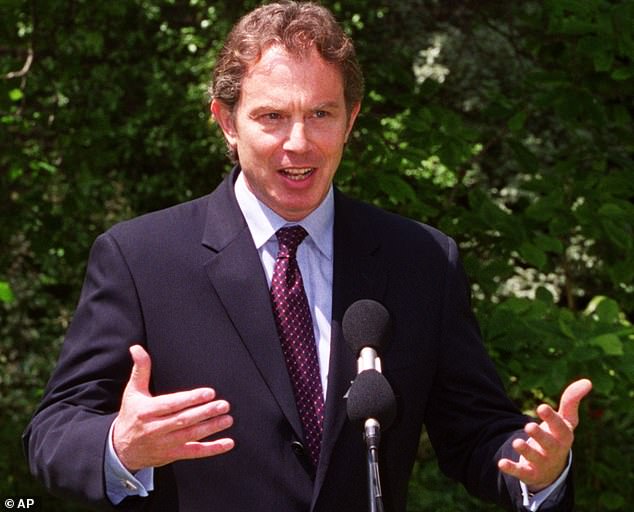
I never voted for Tony Blair but at his best he held our nation’s essence in his peacock palm, writes Quentin Letts
Today’s ministers are such drab professionals, people who have known little but political work. How different the background of Ukraine’s Zelensky. A decade ago he was an actor and TV producer. Our politics has become furred by careerism.
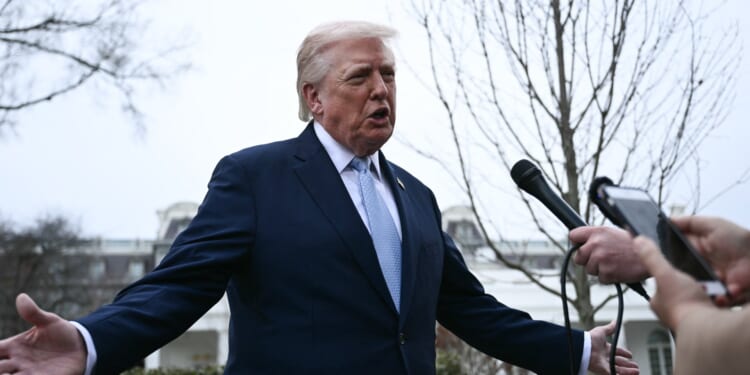
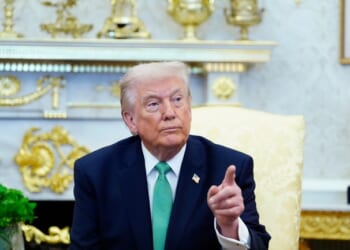
Readers may, quite reasonably, raise another objection: might the dullness of Sir Keir Starmer not be welcome compared with the repulsive boastfulness of Donald Trump? Benjamin Disraeli, himself flamboyant, reflected that Britain wanted stolidity in its leaders. ‘An insular country subject to fogs and with a powerful middle-class requires grave statesmen,’ muttered Dizzy. Well, there is nothing intrinsically bad with gravity. But that alone does not make a leader.
Statesmanship is hard to define. A statesman somehow embodies his or her people. A statesman has the ability to command instant attention and to give voice to the country’s hopes and instincts. These go beyond matters of tax and regulation and they transcend party loyalties. I never voted for Tony Blair but at his best he held our nation’s essence in his peacock palm. Gordon Brown did bad things to our pensions and blew billions on the welfare state but the speech he gave to the US Congress in 2009 made my neck tingle.
Even chillaxed David Cameron, with all his suave vanity, was able to cross party boundaries and radiate an idea of British manners and competence. The current occupant of 10 Downing Street hits none of these notes. He is a vacuum, a missed beat, an empty helmet on a wooden stick in a forgotten trench.
The reason this matters was on display in Parliament’s Committee Room 14 on Tuesday afternoon. Our squat, bearded visitor from Kyiv laid out, more clearly than any Western head of government, the moral imperatives of defence. He did so by force of a quicksilver quality we may call character or charisma or courage – or statesmanship.
In his unsteady English, Volodymyr Zelensky communicated clearly why the ayatollahs in Iran are a threat to our security. He used no cliches. He did not waffle. He just spat it out. He also offered a sense of hope that has so far been lacking from the egomaniacal Dr Strangelove in the White House and the busload of bespectacled accountants that passes for the leadership of Nato. Morality and hope will always, eventually, triumph over the malice and despair of Moscow and Tehran.
Britain can indeed learn from Ukraine, but not just in terms of drone technology. We can learn from the administrative speed Zelensky mentioned. Kyiv has had to be nimble in its response to war. Our own, bloated civil service has become suicidally glacial. The Ukrainian people may have been cold and hungry but they have found comradeship in adversity. Their resilience should mortify us when we examine our own country’s riven discord.
What came first, the statesman or the national sense of purpose? Chicken or egg? President Zelensky is not without his critics at home. He is, like any politician, moulded from human clay. But he walks with his head held high and he speaks with his nation’s voice. Somehow we must find a Zelensky of our own, or Great Britain will be a goner.