
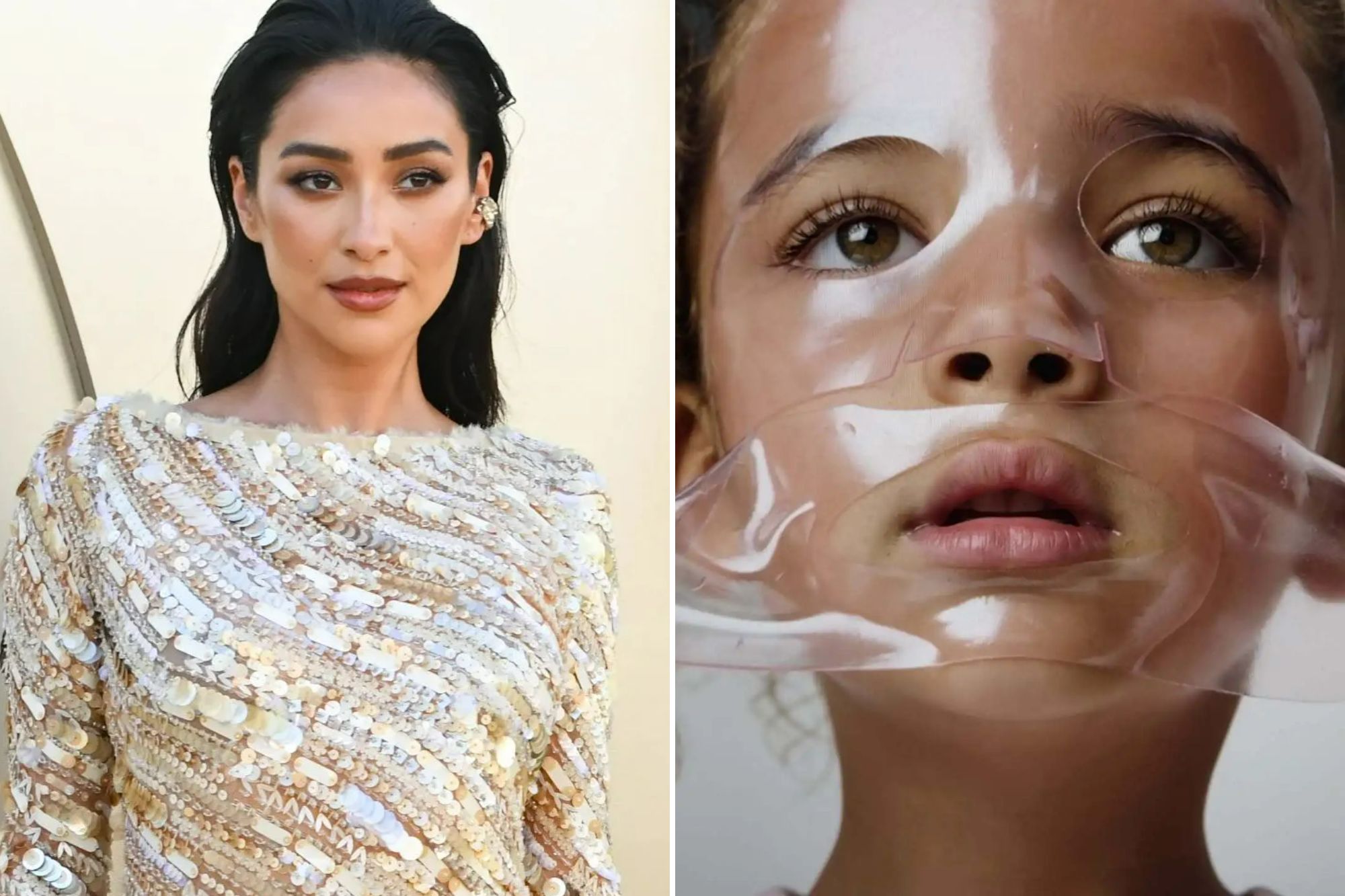
ACTRESS Shay Mitchell has defended her new beauty range aimed at children as young as three by saying “skincare starts from birth”.
The mother-of-two, most famous for starring in U.S. TV show Pretty Little Liars, caused controversy worldwide when she announced she was launching a line called Rini, which features face masks for kids aged three and upwards.
The products are all dermatologically tested, hypoallergenic and vegan, but Shay’s range has been deemed “gross and exploitative” by countless angry parents.
However, appearing on the Today Show in America, Shay addressed the backlash as she said she was “a little surprised” by the response to Rini.
“Anything that involves kids, there should be a conversation around it,” she added.
“I have a lot of questions, as I’m sure you both do, when anything involves our kids — with what they eat and what they put on their skin — so I didn’t think this would be anything different.”
Read more Skincare stories

She also insisted she doesn’t think of face masks as a “beauty thing”, and insisted that “kids don’t look at masks and think about fixing (their appearance).
“They think about it being a cooling sensation and a shared moment,” Shay, who is mum to daughters Atlas, eight, and Rome, three, continued.
And while she doesn’t think face masks are “necessary for kids”, and also doesn’t “think masks are necessary for us”.
“But are they great for added comfort and extra hydration? Yes, and that’s all it is,” she smiled.
“Skincare starts from birth.
“We moisturise, we soothe, we comfort their skin as newborns. This is the same thing.
“It’s just in a different format that’s more fun and I feel very age-appropriate.”
People had their say on Shay’s new venture in comments on social media, including on a Reddit thread.
“This has made me do a 180 on Shay,” one wrote.
“This business venture is gross and exploitative.
“You can talk in circles trying to justify it by saying kids want to experiment with face masks but this is gross capitalism and we all know it.
“How old were you the first time you felt unpretty or not enough. By introducing these tools at such a young age, these children are going to be conditioned into thinking they must always ‘improve’ or be better.
Why shouldn’t children use adult skincare?
“Children’s skin is delicate and, let’s be honest, often lovely.”
Milly Ahlquist, researcher at Lush, said: “Children’s skin is not being mucked around by hormones or showing the effects of late nights, city pollution or too much time spent in the sun.
Unfortunately, the cosmetics industry today is filled with strong actives and acids that were once only available from a professional. Children have a less mature skin barrier than adults and a lower body mass, which makes them more susceptible to irritation and allergy if they use strong products being marketed to adults. This could have a lasting impact on their complexion – and even their lifestyle, if they develop an allergy.
What skincare could children use?
Some skincare good practice is recommended. Gently cleaning your skin to remove sunscreen and any dirt or skin squames is also a good idea. Safe, gentle oils like almond and coconut are often up to this task so you don’t need to splurge on a cleanser aimed at adults.
If the skin needs a little hydration, try a moisturiser.
What skincare could teenagers use?
During adolescent years, skin undergoes extensive physical, emotional and hormonal changes that take us from childhood to adulthood.
Unfortunately, our skin does not get left out of the fun! Of course, puberty will be a different experience for each person, but there are some general changes we expect to occur at this stage of life.
One of the first things you may notice is pinhead-like dots on your t-zone for the first time. These openings contain the hair follicle and sebaceous gland (though some people call them ‘pores’). Your sebaceous glands produce a protective waxy substance called sebum, which
Spot-prone skin needs a very delicate touch. However tempting it is to squeeze or subdue a particularly bold breakout with strong products, this increases your risk of damaging the skin and can lead to scarring. And, as anyone with a scar will know, preventing scarring is generally easier than treating it.
Use a gentle cleanser or exfoliant, and apply a clay-based face mask a few times a week to give the skin a deeper cleanse and absorb trapped dirt.”
“I’m beyond grossed out and disappointed.”
“Like the wrong product could do so much more damage long term, different skin has different needs,” another added.
“Next decades are going to be wild for dermatologists, they’re gonna be rich rich because of such irresponsible practices and even more irresponsible parents who allow it to happen.”
“It’s just kind of exploitation,” a third commented.


“Kids want cool things, the parents want to be nice parents so they buy – it’s the same thing the toy industry does.
“Honestly very unnecessary and disappointing.”