Princess Diana‘s press team was branded ‘predatory’ by Charles’s own entourage and accused of trying to ‘upstage’ him, newly released documents show.
The revelations are found in memos from Charles’s press officers to Irish officials ahead of his two-day visit to Ireland in June, 1995 – and shine a light on tensions between the two camps after the high-profile split three years earlier.
One of the Prince’s staff suggested that Diana’s team, which they claimed was ‘more predatory and skilled’ with the media, would likely stage a visit of their own soon afterwards.
The files also note that Charles’s team saw coverage of the Ireland excursion as ‘part of a long-term public relations strategy to rehabilitize the Prince in the eyes of the British public’.
Led by his press secretary Alan Percival and successor Sandy Henney, the Prince’s team told Irish officials that they felt the visit was ‘the best public outing the Prince has had in a very long time’.
Ms Henney was described in the Irish Department of Foreign Affairs’ document as ‘fiercely loyal’ to Charles and ‘alive to every opportunity to advance his cause’.
A Department of Foreign Affairs note shows officials were confused by her suggestions Diana might follow in Charles’s footprints, and were unsure if she was joking.
The document reads: ‘Henney (who would have been less aware of the political dimension than the more restrained Percival) told me that if she had any say in it the Prince would be here again before the summer was out.’
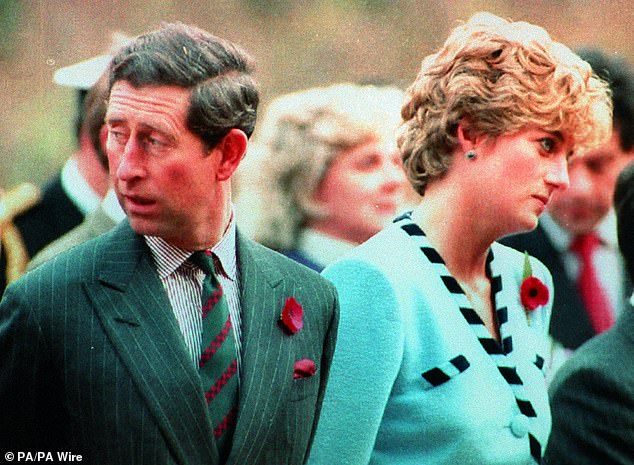
New documents show evidence of a rivalry between the press teams associated then Prince Charles and Princess Diana after their split
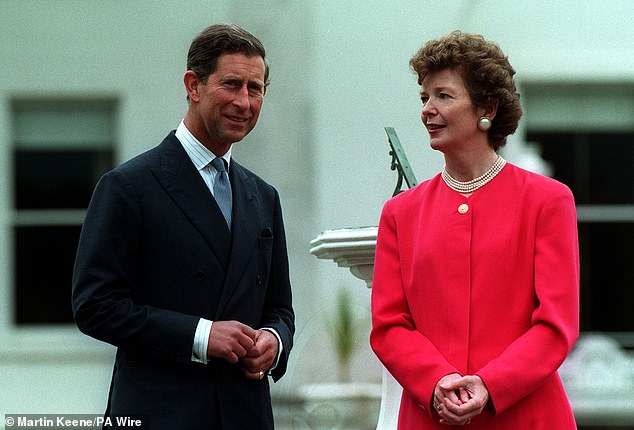
Charles, seen here with the then president of Ireland Mary Robinson, made a two-day visit to Dublin in 1995
‘She also remarked that if practice to date was any guide we could shortly expect an approach from Princess Diana!’
Department of Foreign Affairs official Joe Hayes added: ‘I took this as a joke until she repeated it and assured me that in the media battle between the two, the Princess was by far the more predatory and skilled and her staff devoted a great deal of time to finding ways and means of upstaging St James’ Palace.’
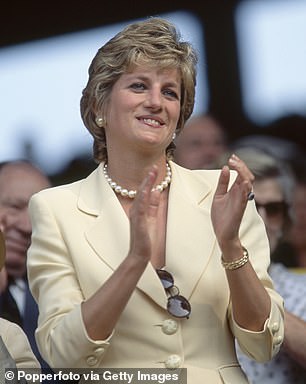
Charles’s team suggested that Diana’s people might encourage her to make a similar trip of her own
Charles’s officials agreed with the Irish diplomats that coverage of the visit in the UK was, while positive, ‘relatively light’ compared with that in Ireland.
Then 46-year-old Charles’s two-day visit to Dublin in 1995 was the first by a member of the Royal family since Ireland gained independence from Britain.
He went within a year of the ceasefire announced by the IRA, who had assassinated his great-uncle Lord Mountbatten in a bomb explosion off the coast of Mullaghmore in 1979.
The trip was considered a success and a turning point in British-Irish relations which helped pave the way for his mother, Queen Elizabeth II, to make a historic visit herself in 2011.
Charles and Diana made a number of public visits together, but they struggled to keep their marriage struggles hidden from view.
In November 1992, the pair embarked on the ill-fated ‘Togetherness Tour’ that took in Soeul, South Korea for four days – but earned them the nickname ‘The Glums’.
It was intended to reassure the public that the couple, now parents of a young Prince William and Prince Harry, remained happily married and that any speculation of a separation was mere hearsay.
Yet, this facade proved near impossible for neither Charles nor Diana to maintain, with striking video footage capturing their looks of angst and sorrow.
The former couple popped up unexpectedly last week when a photograph of them appeared in the Epstein files.
Inexplicably framed and hung in the back of one of Epstein’s wardrobes was the front page of The Times from June 1994, when the then-Prince Charles told interviewer Jonathan Dimbleby that divorcing Princess Diana would not prevent him from becoming King.
The story was accompanied by a full-length photo of Diana in her so-called ‘revenge dress’ – an off-the-shoulder evening gown that has been described as the most iconic little black dress of all time, which she wore for a high-profile gala in London on the night the interview aired on ITV.