This article is taken from the February 2026 issue of The Critic. To get the full magazine why not subscribe? Get five issues for just £25.
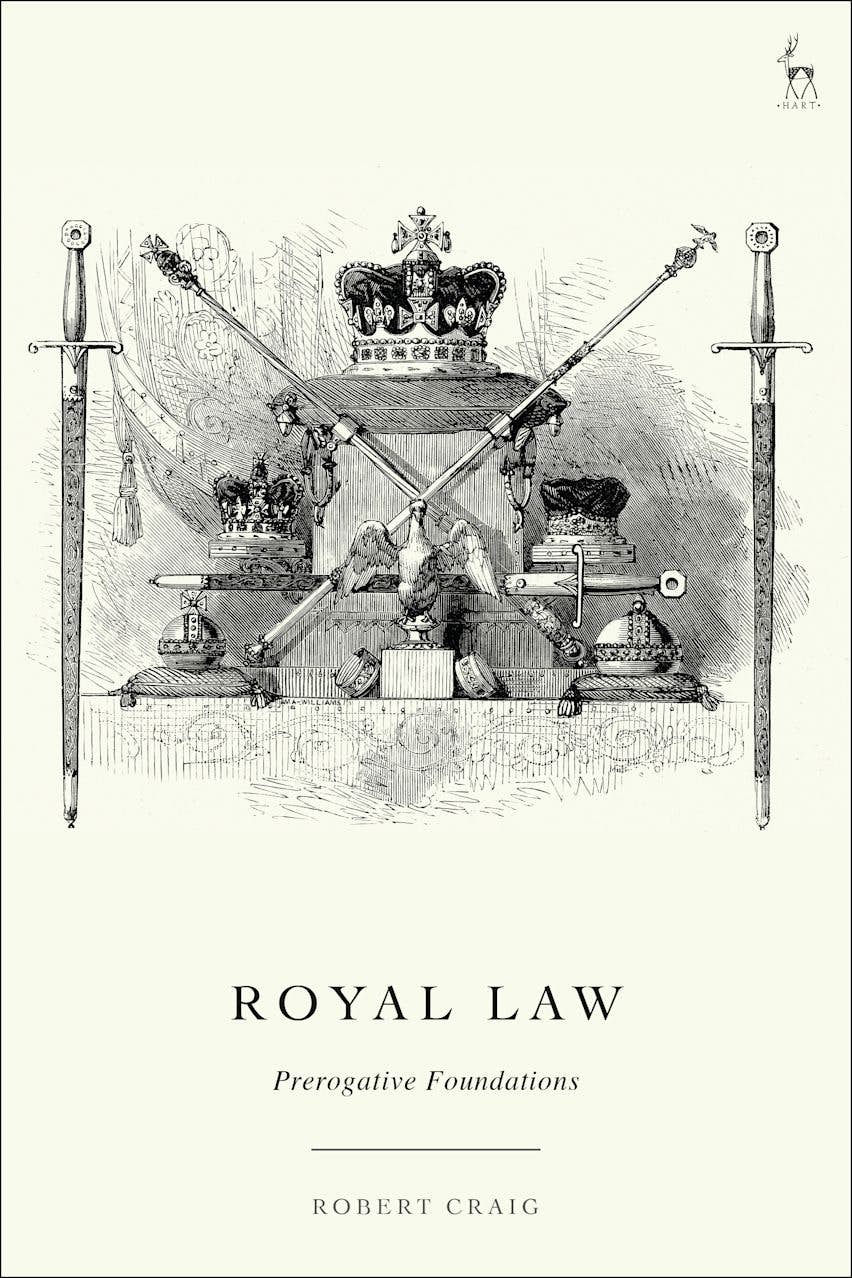
Robert Craig’s new book, Royal Law: Prerogative Foundations, is not a dry academic dissection of the Crown’s role in Britain’s contemporary constitution. In its study of the prerogative, Royal Law is ambitious and academically provocative. From the outset, Craig breaks taboo by arguing that the conventionally opposed definitions of the prerogative offered by William Blackstone and A.V. Dicey are, in fact, compatible.
Dicey, the great Victorian scholar, presented the prerogative as the leftovers of earlier non-statutory royal power, or: “The residue of discretionary or arbitrary authority, which at any given time is legally left in the hands of the Crown.” For Dicey, “Every act the executive government can lawfully do without the authority of the Act of Parliament is done in virtue of this prerogative.”
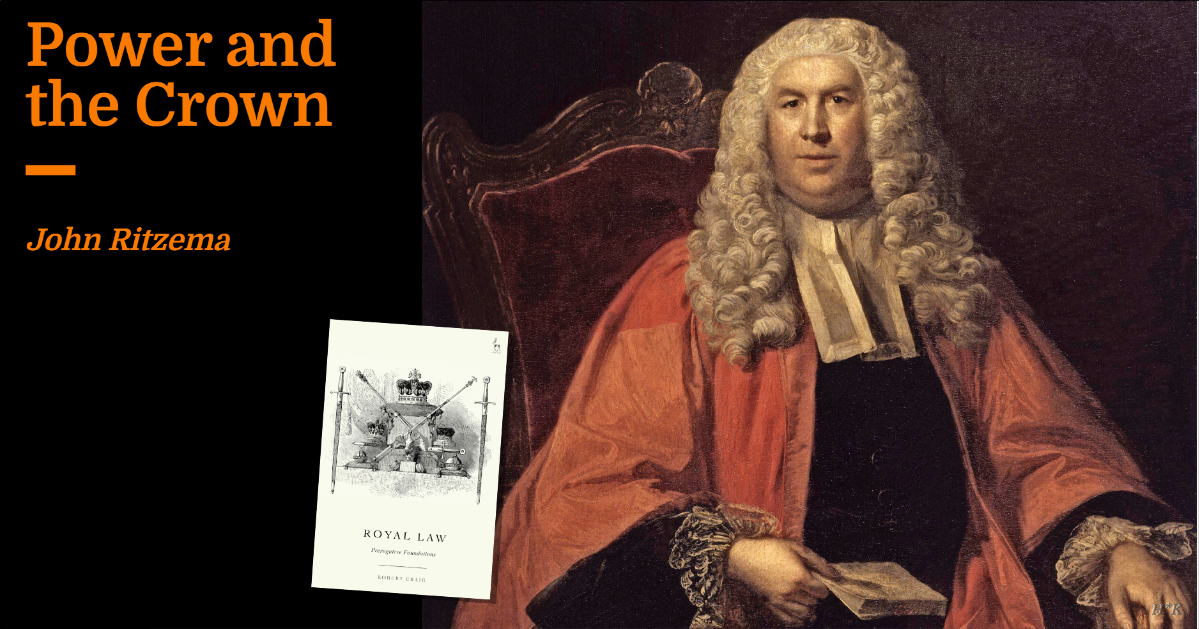
Blackstone, the 18th century doyen of Oxford Toryism, instead pinpointed the positive uniqueness of the Crown itself. “By the word prerogative we usually understand that special pre-eminence, which the king has, over all other persons, and out of the ordinary course of the common law.”
Are all non-statutory acts by the Crown prerogative powers, or are prerogative powers unique to the Crown? Craig slices this Gordian Knot with a striking claim: that the Crown has no common law powers. This is controversial, to say the least. Craig’s claim is academically radical. In denying that the Crown has ordinary common law powers at all, he argues that apparent similarities between the powers of ordinary persons and the Crown are a mirage.
He argues, for example, that there is a chasm between private gifts and ex gratia payments by the Crown. In each case, giving money might look similar. But Craig sharply distinguishes the freedom with which private persons may give away their funds from the constraints imposed on the disbursement of public funds. The latter is subject, for instance, to judicial review.
With not a little ingenuity, Craig grounds much of the Crown’s power in what he terms an “administration prerogative”. He concedes that this is “a mostly forgotten prerogative power”, but finds it articulated, inter alia, in Chitty’s Treatise on the Law of the Prerogatives of the Crown (1820).
Chitty gives the King a very broad “right to administer and execute” the laws, “in his political capacity of supreme executive magistrate”. For Craig, this, rather than the common law, is the source of the Crown’s power to do things that look like the normal legal abilities of ordinary persons.
This theory will raise eyebrows. Lawyers will make comparisons with the imaginative discovery by the Court of Appeal of a prerogative power to keep the peace in the 1980s Northumbria Police case. Both can seem dangerously open-ended.
Craig gamely contends the opposite. His historicising philosophy leads him to hope that “it will be necessary for the executive to think carefully about whether a desired outcome or exercise of prerogative power can be identifiably brought within the historic fixed previous usage of that power”.
Some will argue that Craig blurs the line between legal history and legal theory, and complain that in Royal Law the two are frustratingly hard to untangle. The author, though, would retort that this fusion of precedent and doctrine is the “historical” approach endorsed by Lord Reid in Burmah Oil: “how [a prerogative power] was used in former times and how it has been used in modern times”.
Craig assaults further orthodoxies. He argues, against received wisdom, that the Crown is not a corporation (whether sole or aggregate). He insists on treating it as an entity sui generis. Royal Law concludes by tying legal history to threatened constitutional vandalism. Craig notes that senior British judges have occasionally hinted that the courts might one day refuse, in extremis, to apply a statutory provision. On his model, the only two sources of law are statute and the prerogative.
Craig contends that such a move would therefore implicitly be a revival of the controversial old regal power to suspend or dispense with statute, forbidden by Article I of the Bill of Rights. The book thus finishes by conjuring the shade of the House of Stuart to warn against contemporary threats to parliamentary supremacy.
Craig affects no false modesty. “The more ambitious claim of this book has been its attempt to reframe the entire legal architecture of the United Kingdom constitution.” It is certainly ambitious — a bold, controversial thesis, which makes for a rewarding read.