This article is taken from the February 2026 issue of The Critic. To get the full magazine why not subscribe? Get five issues for just £25.
In 1845, one of the most notorious scandals of the “hungry forties” came to light. Rumours about harsh conditions in the Andover workhouse in Hampshire had circulated for years, but the local Poor Law guardians had ignored them and left the master of the workhouse, Colin McDougall, to run the establishment — where paupers crushed animal bones to make fertiliser — according to his whims.
One of the former inmates, Charles Lewis, testified in the subsequent enquiry into McDougall’s regime that he had seen many of the labourers unfortunate enough to enter that workhouse “eat marrow out of the bones” they were supposed to be crushing, so starved were they. Many of the Andover paupers deliberately committed crimes in order to be transferred to prison, which was considerably more comfortable. Andover workhouse was, in short, little better than a torture chamber.
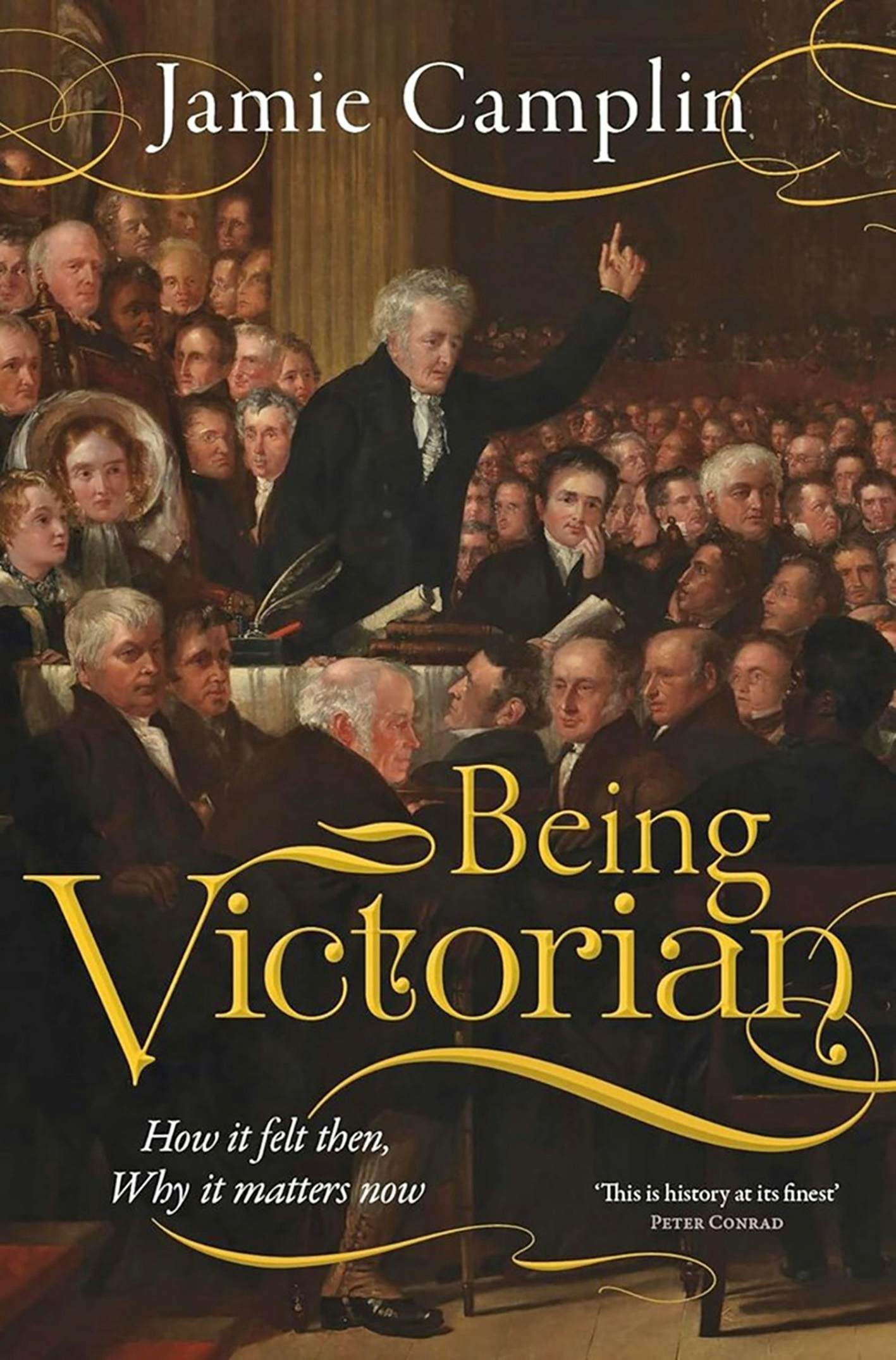
You won’t find details like this in Jamie Camplin’s new book Being Victorian, which focuses overwhelmingly on a Pollyannaish story of Victorian Britain in which enlightened reform and optimistic go-getters drove forward impressive if sometimes gradual progress towards a brighter future. The earnest social reformers, brilliant inventors, visionary scientists and swashbuckling entrepreneurs who used to be the stock characters of older histories of the Victorian era are all out in full force in this book, from Florence Nightingale and Isambard Kingdom Brunel to George Stephenson and Charles Darwin.
Camplin marshals a mass of sources to recount the achievements of a range of lesser figures, too: sometimes he unearths interesting anecdotes and insights, but at other times the result seems contrived or bizarre. Why he makes such a manful attempt to whitewash the reputation of Liberal statesman Robert Lowe, a man whom even his own boss, W.E. Gladstone, thought was useless, is anybody’s guess.
The desire to rehabilitate the can-do Victorians in an age where the British state takes more time processing a single planning application, than it took Brunel to actually build vast swathes of the nation’s infrastructure, is understandable.
He is not wrong to cast a sympathetic eye on the drive and vim of the many energetic figures of the epoch, and rescue them from the ahistorical and ungenerous condescension of posterity, particularly at a time when many modish historians try to blame the Victorians for just about every sin of modernity — from climate change and racism to sexual illiberalism and the evils of slavery.
It is dishonest to ignore the fact that the biggest strides towards our lives of relative comfort and ease were made by the forbidding, top-hatted, bewhiskered giants of the age of Dickens, Factory Acts and imperial grandeur. To be fair to Camplin, his basic insight — that the optimistic faith in progress and “improvement” of many characteristic figures of the 19th century was understandable, often noble and easily taken for granted in a more cynical and jaded century — is not unreasonable.
The problem is that Camplin’s argument is too selective. He often caveats his account of progressive Victorian achievement with nods to the downsides of industrialisation, empire and “progress”, but these nuances are usually acknowledged in a perfunctory and passing fashion. Edwin Chadwick’s work on sanitation and public health is lauded; his role in drawing up the wicked Poor Law Reform Act, which condemned many of the working poor to a living hell and cruelly split up families, is mentioned only euphemistically and briefly.
But, of course, precisely the same energetic and bold faith in reason and progress that created new sewers and better schools could also be perverted, in the name of Political Economy or Free Trade or some other sterilised abstraction, into profound degradation and betrayals of the human spirit.
The century that produced anaesthetic and abolished slavery also produced Boer concentration camps and imperial massacres — the very things that anticipated the descent into barbarism represented by the Great War and the Holocaust. This interesting paradox is never really confronted.
The book is at its very worst on religion. If the Victorian period was the Age of Progress, it was also the Age of Faith. From the rise of the evangelical movement to the onward march of Methodism, from the Catholic Revival in the Church of England to the anti-modernist boldness of the Roman Catholic Church under Pope Pius IX, Christianity saw an extraordinary resurgence in the 19th century. Secularising trends, although important, remained mostly a phenomenon of (some) elites and intellectuals.
The Victorian era saw important and often ferocious battles over religious issues, from the vigorous evangelical campaigns to enforce strict Sabbatarianism on society to disputes over baptismal regeneration, vestments and ritual in the wake of the rise of Anglo-Catholicism. “Being Victorian” was, for many, a question of being Christian: you wouldn’t get a very strong sense that this was the case from Camplin’s book.
Whilst he does occasionally mention the continuing strength of Christianity and acknowledge its contribution, Camplin overwhelmingly sees the Victorian era as an age of secularisation and the falling away of traditional religious views and dogmas, which he assumes was a simple and unalloyed good. This leaves him struggling to process the fact that many of the most impressive figures of the Victorian era were motivated by their deep and powerful Christian faith.
The Earl of Shaftesbury was probably the most vigorous, and in many ways the most successful, social reformer of the 19th century: his campaigns led to legislation that limited working hours, improved schools and housing, and rescued chimney sweeps. He was also a devout evangelical who was quite convinced that the Second Coming of Christ was imminent; he is barely mentioned. Josephine Butler, whose campaigns on behalf of women and against child prostitution are covered by Camplin, was motivated chiefly by her Anglicanism. It is telling that Camplin ignores this fact.
Camplin’s narrow focus and faulty assumptions make the book’s argument — that the Victorian era provides a model by which the boons of science and materialism can be “reconciled with morality and individual freedom”, in contrast to the woes of contemporary society — very thin.
He does not elaborate in any meaningful way on what he means by “morality”, trading purely in airy notions of “progress” and “improvement” and “equality”, contrasting them with painfully superficial characterisations of our contemporary problems which go little beyond vague grumbling about social media and identity politics. If Camplin had a richer grasp of the paradoxes of Victorian Britain, he could have made a strong and interesting argument along these sorts of lines, but instead his analysis is paper-thin.
Ultimately, this book, despite being motivated by some sound instincts, is a sadly missed opportunity. It mostly consists of hackneyed rehearsals of a very familiar, old-fashioned view of the Victorian era which is often reasonable but overall tired, and the prose is frequently clumsy. Rather than invest your cash in this underwhelming tome, buy a copy of Simon Heffer’s infinitely superior High Minds instead.