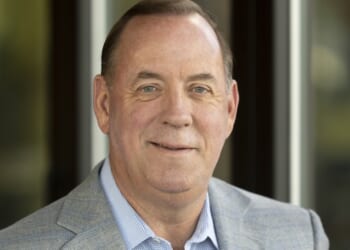
On the thirteenth of this month, Rupert Lowe registered Restore Britain as a political party — only the latest in a series of right-wing parties aiming to outflank the mainstream right to the right (at least three of which have names beginning with “R”).
Such projects are not unique to Britain. The right has been in a race with itself to see how far it can push all over the West. Unlike most of them, however, Lowe’s project poses a serious threat — though only to the right’s own political ambitions.
Unlike Advance UK or Laurence Fox’s Reclaim Party, Restore Britain can boast some relatively serious electoral credentials. It has the endorsement of the world’s richest man and, according to questionable polling, they win 10 per cent of the vote. I call it questionable because it reminds me of the joke that 98 per cent of respondents report they enjoy answering polling questions. The polling was presumably done through an online poll, and Rupert Lowe is a remarkably online person. People who respond to online polls are likely to know who he is, and so it is possible for them to support him. By contrast, the average Brit has never heard of Lowe. In another poll, only 8 per cent of them recognised a picture of him. The questionable poll addressed this problem by describing who Rupert Lowe is. Ten percent of respondents said they would vote for a “Party led by Rupert Lowe MP.” Perhaps they would have changed their minds if they knew that the party was going to be Restore Britain.
Lowe presumably chose to launch his own political project as a challenge to Reform UK. A former MP of said outfit, his animosity towards its leaders — Nigel Farage and Zia Yusuf — is well-documented. Reform UK expelled Lowe, having accused him of making threats and bullying. According to Lowe, however, the real reason he was kicked out of Reform was for supporting mass deportations — something too radical for Farage to stomach.
Even before he parted company with Reform, Lowe was generally seen among the British right as a more “serious” right-winger. This is not just because Lowe is happy to be radical — for example, on mass deportations or banning the burqa. Lowe was also seemingly more interested in policy than his Reform colleagues. His X profile was full of fairly substantive policy commentary, and he made very extensive use of his power to submit written questions. A search on the parliamentary website reveals an astounding 2,204 results for “written questions submitted by Rupert Lowe.” The same query for Nigel Farage gives just 20. All this meant that, once the breakup had occurred, Lowe was ideally placed to position himself as the tougher, realer alternative to Farage.
This repeats a pattern we have seen on the British right before, just in other places. The thinking goes that, to tackle the problems of the day, we need to be even more radical, even more uncompromising, even more unlike the status quo — and anybody who is unwilling to go further will be left behind by the revolution. This is the strategy that many Reform supporters adopt in their debates with the Tories — who, after all, represent 14 years of status quo — and that some factions of the Tory Party wanted to adopt in response to the Reform challenge. Multiple Tory strategists, Robert Jenrick chief amongst them, had hoped to beat Reform at their own game by offering even greater reductions in immigration numbers, even more radicalism, even more ruthlessness. For them, there was no distinctive Conservative offering — there was only the hope to out-Reform Reform. Would they now be attempting to out-Restore Restore UK? The Conservative Party sees itself as the party of the right in the UK, but that does not mean it ought to be the UK’s most right-wing party.
Indeed, there is scope to go even further than Lowe. Having three right-wing parties may seem unusual, but a remarkably similar scenario has recently unfolded elsewhere in Europe. In Poland, in 2025, Grzegorz Braun split from the very right-wing Confederation party after he lost their internal hustings to determine the party’s candidate for the 2025 Presidential Election. After Confederation passed him over in favour of the right-wing libertarian pub owner Sławomir Mentzen instead, Braun chose to run for President himself under the banner of the “Confederation of the Polish Crown”. He did not do as well as Mentzen — who won 15 per cent of the vote — but did manage to come fourth, winning 6 per cent — far more than the pollsters predicted, and more than either of the two left-wing candidates.
Since then, Braun’s Confederation of the Polish Crown has gone from strength to strength. The bizarre, monarchist, anti-American and unashamedly antisemitic party is currently polling at 10 per cent, and in serious polls too. There are other analogies one could draw between Braun and Lowe. For example, neither the Confederation of the Polish Crown nor Restore Britain has a real policy manifesto.
Braun is clearly deluded … It also goes to show, however, that even deluded people can win a lot of votes.
That said, there is no doubt that Lowe is a more serious politician than Braun. Some of the eyepatch-wearing Braun’s most notorious antics include using a fire extinguisher on a menorah in the Polish Parliament in protest at the supposed Jewish control over Polish politics; denial of the existence of gas chambers in Auschwitz; denial that COVID-19 was a real pandemic; and voicing support for the Islamic Government in Tehran during the recent anti-government protests there. Although he has certain political talents, Braun is clearly deluded. It goes to show that the race to outflank your opponents to the right takes you to weird places. It also goes to show, however, that even deluded people can win a lot of votes.
The result of Braun’s manoeuvres is that Poland’s main right-wing outfit, Law and Justice, has lost around 10 percentage points since the 2025 presidential election and now lags well behind the ruling centre-left Civic Coalition. Before Braun’s party launched itself onto the Polish political scene, Law and Justice could hope to see as much as 33 per cent of the electorate supporting them. That number is down to 23 per cent in the most recent poll. Civic Coalition’s numbers? 32 per cent, 32 per cent now.
In Poland, which uses a proportional voting system for the Sejm, the more important of the two Polish parliamentary chambers, politicians on the fringes can get away with nabbing a few percentages of the electorate in an attempt to join and influence a larger coalition — though, in the case of Braun, his politics are so extreme that it is unlikely Law and Justice, let alone the Civic Coalition, would entertain him as a coalition partner. However, in Britain, with a first-past-the-post voting system, an analogous scenario would be a disaster for the right.
The 2024 election was already the most marginal in British history, with four parties winning a significant proportion of the vote. The next election will likely be even more marginal now that the Greens can command respectable levels of support. With such tight margins, dividing the right-wing vote three-way would produce close to no right-wing MPs. Lowe’s ambition is mass deportations, but the result might instead be another five years of Labour or, even more worryingly, Zack Polanski as Prime Minister — whose ideas on immigration are too left-wing even for the Blairite Rt Hon Jack Straw.
Unlike Braun, Lowe seems to be a serious politician. His political brand is not built around outrage and being edgy. People find him edgy and outrageous, but this is a byproduct of the fact that Lowe has firm beliefs about controversial topics. Lowe should therefore act like a serious politician. In 2019, Lowe’s nemesis, Farage, was able to do the politically right thing and stand down in Tory-held seats in a bid to boost the pro-Brexit vote. His Brexit Party did not win a single seat, but it maintained a platform from which Reform UK emerged. Unless Lowe follows Farage’s example, the British right risks decimation. Whether he chooses to might show whether he is indeed a serious politician.