The police officers who had been summoned to the University Hospital of Wales in Cardiff must have scarcely been able to believe their eyes.
In a staff room at the Hospital Sterilisation and Decontamination Unit (HSDU) a bizarre confrontation was playing out.
It revolved around a bottle of Lucozade, which an employee found had been moved in the fridge. What’s more, the seal on its lid appeared broken, and the drink inside now gave off a noxious smell.
The staff member likened that smell to Surgistain, an acidic solution used to remove rust and stains from surgical instruments. Derived from phosphorous, it’s corrosive, causes severe burns if it touches the skin or eyes, and is harmful if swallowed in even tiny quantities.
To put things another way, he reckoned someone – almost certainly a colleague – may have been trying to poison him.
‘There was concern a Lucozade bottle had been tampered with,’ reads an official report detailing the incident. ‘The staff member recalls not making any allegations but did contact the police as there was a feeling that management would not deal with it.’
The written account adds that a ‘band five manager’, who was called to the scene, ‘smelt the contents on the same day and felt it smelt like Surgistain’.
Yet cops eventually decided against launching a full criminal inquiry, seemingly on the grounds that no one had yet been injured. Hospital management also decided against testing the contents of the bottle, apparently because of the cost.

A report on the University Hospital of Wales portrays it as something akin to Lord Of The Flies, with a dysfunctional and chaotic workforce divided into hostile factions who repeatedly attack, abuse and assault rival colleagues
So this surreal episode, which unfolded in 2020, was brushed under the carpet. And there it remained until earlier last month, when the details above finally became public.
They were contained in the pages of a ‘Comprehensive Service Review’, NHS speak for a sort of official inquiry. The probe was set up in 2024 to investigate complaints about goings-on in the HSDU, a huge department in which surgical tools and equipment are supposedly rendered safe and sterile before being used on patients.
Published that summer, its findings are astonishing. Put simply, it portrays the facility as something akin to Lord Of The Flies, with a dysfunctional and chaotic workforce divided into hostile factions who repeatedly attack, abuse and assault rival colleagues.
Given that the unit has a critical role in maintaining patient safety at the largest hospital in Wales, this is quite the scandal. As tawdry, given the details, as any in recent NHS history.
The report, after all, highlights severe shortcomings, which ought to be of huge concern to the roughly 500,000 people who rely on the facility for sometimes critical medical care.
Yet despite this pressing fact, bosses at the University Hospital of Wales (UHW) decided to keep the report’s existence secret.
Only thanks to a horrified whistleblower, who passed a copy to the Press, can its contents finally be made public.
The document lays bare ‘a systemic failure at all levels of the organisation for over ten years’ in which HSDU staff have got away with repeatedly bullying, abusing and violently attacking each other.
Some employees have conducted illicit sexual affairs. Young female employees have been harassed, and in one incident ‘flashed’, by colleagues who behave with staggering impunity.
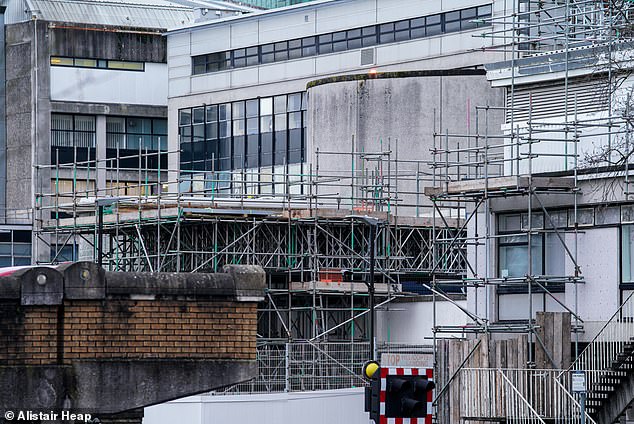
To critics, UHW increasingly resembles an antiquated death trap. Yet despite announcing in 2021 that a new, modern main hospital could begin construction in 2025, and be completed in 2028, the health board appears to have shelved the scheme
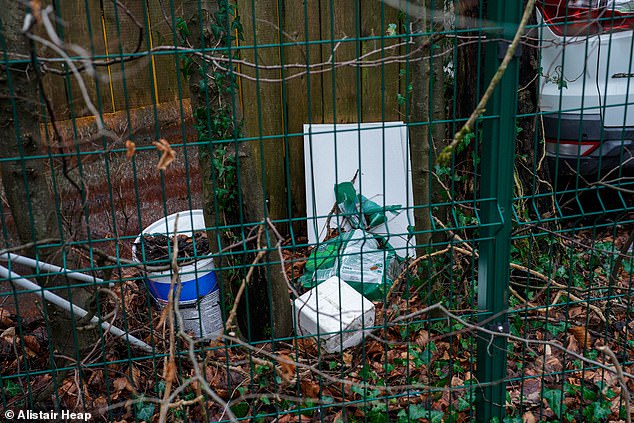
Even the grounds surrounding UHW are in a bad state, with rubbish strewn everywhere
Police weren’t asked to intervene in this ugly mess just once, either. It has emerged officers were called back to the unit in 2021 to investigate claims a disgruntled worker was deliberately sabotaging supposedly ‘sterile’ equipment intended for use in emergency operations.
It’s unclear how many patients were placed in danger. But, perhaps inevitably, there is now a growing political scandal about the manner in which these, and other, incidents were covered up.
To critics, it speaks volumes for the dysfunctional nature of the Welsh NHS, which has been run by Labour for more than a quarter of a century and, according to opposition parties, has for years underperformed on a host of key measures when compared with the rest of the UK.
Whether you agree with this or not is perhaps immaterial (though Welsh voters will have their say in May, when elections to the devolved government are held). Of more consequence to the 3.1million citizens forced to use the Welsh NHS is how an ingrained culture of impunity makes it virtually impossible to hold failing hospitals and health boards to account.
A case in point could be glimpsed at the Senedd, or Welsh Parliament, last Tuesday. Almost a fortnight after the damning report’s existence was revealed by Cardiff-based news outlet WalesOnline, the country’s hapless First Minister Eluned Morgan was forced to sheepishly admit to the fact that, despite trying, she’d so far failed to get hold of it.
‘We have asked the health board to provide us with a copy, and we are yet to receive that,’ she said.
That secretive body, which appears to have covered this scandal up for years, is the Cardiff and Vale University Health Board, which provides health services for the region. Like almost every failing public institution in Wales, it’s stuffed with Left-wing politicians, academics and Labour activists.
The chair is Kirsty Williams, the former leader of the Welsh Lib Dems. Other members include a Labour councillor called Susan Lloyd-Selby and a Unison trade union baron named Mike Jones.
The failures highlighted by the ‘Comprehensive Service Review’, meanwhile, appear to have been a decade in the making. The investigation was launched by the board’s chief executive Suzanne Rankin in early 2024.
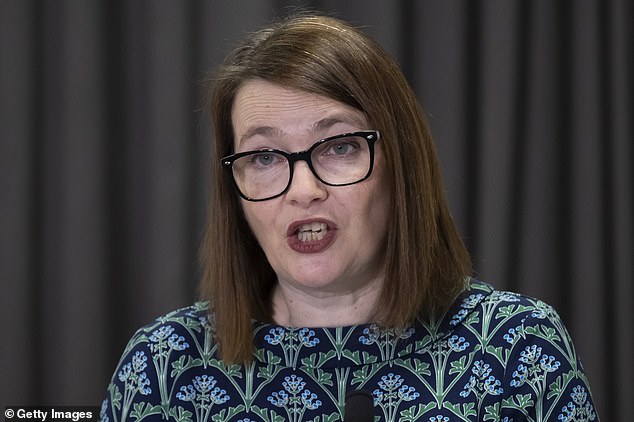
That secretive body, which appears to have covered this scandal up for years, is the Cardiff and Vale University Health Board. Like almost every failing public institution in Wales, it’s stuffed with Left-wing politicians, academics and Labour activists. The chair is Kirsty Williams, the former leader of the Welsh Lib Dems
She’d heard of ‘serious concerns’ about the unit. It wasn’t the first time, either: an inquiry in 2016 had apparently also suggested the place was utterly dysfunctional. But it has vanished from official records.
The 2024 probe saw a total of 65 people, of which 52 were ’currently employed’ in the unit, interviewed by two senior board executives, Emma Cooke and Helen Luton, over the course of roughly three months.
Ten ‘senior leaders’ who had been in charge of the facility over the previous eight years were then questioned about a number of incidents. Emails and other documents were also scrutinised.
Findings were then set out in a 13-page report. It shines a terrifying spotlight on a facility that has become a hotbed of ‘bullying, harassment, inappropriate behaviour and poor management’.
The workforce is divided into ‘two main cliques’, the review reveals. They clash in ways that are ‘inappropriate and impulsive’, as well as at times being ‘aggressive and threatening’. Staff have been accused of ‘losing their temper, throwing trays, shouting, getting in people’s physical space and hitting trolleys’.
On one occasion, an employee was allowed to keep his job despite carrying out an ‘alleged unprovoked assault’ on a supervisor.
‘It was dreadful’, a witness said. ‘We were signing out for the day when he dragged the supervisor from one side of the corridor to the other and pinned him to the wall. Other staff pulled him away, then he walked down the corridor kicking all the trolleys. The supervisor looked drained. Like a ghost.’
On another occasion, a male member of staff ‘allegedly dropped his trousers and flashed a young female colleague’, according to WalesOnline. Although a disciplinary investigation upheld the allegation, ‘it was put down as a work prank’, so he kept his job.
At times, patients in the 1,080-bed hospital were placed at risk. Take the 2021 incident, where police were called to the HSDU for a second time amid concerns that someone was sabotaging the unit’s work.
A manager told staff that ‘tray wraps’ covering more than 30 trays of surgical tools had, over the course of a fortnight, been ‘intentionally damaged by pushing a pen through them’, rendering them unsterile.
The culprit was seemingly targeting tools set aside for use at the weekend, when they were largely used in emergencies. For some reason, this incident was never made public.
Staff, once again, blame a culture of secrecy and cover-ups. The health board, for its part, appeared to believe there was no need for the people who might have to use its hospitals knowing about the whole thing, issuing a statement saying police involvement ‘had the desired outcome, as damage to the trays ceased’.
Central to this chaos, according to the official report, is a ‘breakdown in relationship’ between the two factions, and ‘a failure to act by managers’ who might be expected to sort it out.
Though, far from warring with each other, some staff have been sleeping together, as ‘there have been examples of supervisors having relationships with technicians that have impacted on the working environment for others’.
During the ongoing staff feud, vexatious complaints of misogyny have also been levelled at male workers, the report suggests.
‘Several men said they were mindful of the conversations they have around certain people, for fear it could be taken the wrong way – even talking about sport.’
On and on it goes.
Little wonder, then, that there is a wider culture of absenteeism at Cardiff and Vale University Health Board, which chews through more than £1.5billion of public money each year. On average, more than 6 per cent of its 18,000 employees are off sick at any one time, according to its last annual report.

Almost a fortnight after the damning report’s existence was revealed by Cardiff-based news outlet WalesOnline, the country’s hapless First Minister Eluned Morgan was forced to sheepishly admit to the fact that, despite trying, she’d so far failed to get hold of it
This at a time when waiting lists in this corner of Wales are rising. An astonishing 151,226 people, or roughly 30 per cent of locals, are on one, and 1,600 of them have been waiting for treatment for more than two years.
The HSDU isn’t the only department at UHW engulfed in scandal. Last year, a 22-page investigation into operating theatres revealed racism, theft and drug abuse were rife among staff, and made a series of allegations about patient safety.
It documented incidents in which anaesthetic practitioners ducked out of operating theatres during surgery to watch Netflix in a rest room, plus ‘several occasions where pigeons were found in trauma theatre or in the theatre corridor’. It said ‘the department’s repair and cleanliness standards are below what is expected for a modern theatre suite’.
Staff also felt there were ‘no consequences’ after an illegal recreational drug – believed to be methamphetamine – was found in an employee’s locker. At the time of the investigation the individual still worked at the hospital.
Elsewhere, a ‘senior leader’ was found to have made ‘inappropriate and racist remarks’, telling colleagues a group of Indian nurses required name badges because ‘they all looked the same’. Female staff were also unable to leave anything in the changing room due to the ‘regularity’ of valuables being stolen.
Unlike the HSDU probe, it wasn’t covered up, perhaps because the Press caught wind of its impending publication.
November, meanwhile, saw almost 300 doctors sign a letter saying morale at the hospital was at an ‘all-time low’ amid ‘persistent’ sewage leaks. A few days later, raw sewage was reported to have dripped into a waiting room.
To critics, UHW increasingly resembles an antiquated death trap. Yet despite announcing in 2021 that a new, modern main hospital could begin construction in 2025, and be completed in 2028, the health board appears to have shelved the scheme.
Coroners have heaped further criticism on the hospital in recent months after a series of high-profile inquests. They include the case of Lakshith Guptha Nalla, a four-week-old baby who died after being left unfed for four hours while lying on cold and damp sheets due to ‘persistent and gross understaffing’ of the neonatal unit.
Elsewhere, Gareth Idris Johnson, a 41-year-old father-of-three, suffered a cardiac arrest after maintenance problems led to him receiving substandard care after an operation. And Liliwen Iris Thomas died from a lack of oxygen 20 hours after being born when her mother was left ‘effectively comatose’ and unsupervised by midwives during childbirth.
Whether anything will be learned from these tragedies is anyone’s guess. Cardiff and Vale University Health Board did not respond to questions about why the ’Comprehensive Service Review’ was not made public, or why even the First Minister seems unable to get her hands on it.
However, it insisted the report has now been ‘shared with Welsh government officials’.
In a lengthy statement, the board added that five members of HSDU staff have faced disciplinary action in relation to its findings. One was dismissed, two ’redeployed’ elsewhere in the hospital, and two resigned.
‘We are satisfied that we have dealt with the very challenging [and in this instance] historical allegations robustly, fairly, equitably and with compassion,’ it reads. ‘Since the review concluded, leadership oversight, management arrangements and team culture have been strengthened.
‘Colleagues report more effective ways of working and a more positive team environment. While individual experiences can vary, this reflects the current position within the service.’
To put things another way, they seem to think this grotty scandal was properly dealt with and should now be consigned to the history books.
Whether patients who must use the largest hospital in Labour-run Wales agree is another matter.