Keir Starmer was involved in a landmark legal case that opened the door to hundreds of British soldiers being pursued for alleged war crimes, it emerged last night.
The Prime Minister worked alongside his friend Lord Hermer on a submission to judges hearing a 2007 human rights claim that eventually reshaped the law on soldiers in war zones.
The case ultimately led the Ministry of Defence to order fresh inquiries into deaths in Iraq.
Johnny Mercer, the former veterans minister, last night accused Sir Keir of ‘unleashing the witch-hunt against British troops’.
Sir Keir and Lord Hermer, now the Attorney General, made a legal submission in the case which urged the courts to order a fresh inquiry into a British soldier who had already been cleared twice of murder over the death of an Iraqi man in 2003.
Sir Keir acted pro bono as an intervener in the case on behalf of human rights campaigners, including Amnesty International and Liberty, it was reported last night.
Interveners have an interest in the outcome of a legal claim but are not direct parties to it.
The claim, known as Al-Skeini and others v Secretary of State for Defence, was brought in 2007 on behalf of the families of six Iraqis, who alleged their relatives had been unlawfully killed.
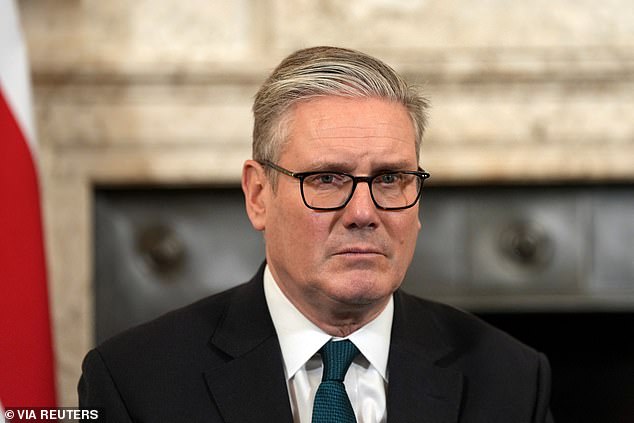
Sir Keir and Lord Hermer, now the Attorney General, made a legal submission in the case which urged the courts to order a fresh inquiry into a British soldier who had already been cleared twice of murder over the death of an Iraqi man in 2003
Downing Street said last night that Sir Keir did not represent the Iraqi families in the case, adding that his role was to ‘assist the court on points of law, not to advocate for either side’.
A spokesman added: ‘The Prime Minister… represented interveners, including the Law Society of England and Wales.’
The soldier involved in the case, Sgt Richie Catterall, was pursued for 13 years before a judge reportedly ruled that he had acted in self-defence.
‘I am gutted Keir Starmer helped bring this case against me,’ he told the Daily Telegraph. ‘He is now the Prime Minister and he owes me an apology.’
The case on behalf of the Iraqi families was brought by Phil Shiner. In 2024, he was convicted of fraud for dishonestly making legal aid claims and for paying intermediaries in Iraq to procure clients and evidence.
Sir Keir, then a senior human rights QC, and Lord Hermer did not represent Shiner or the families in the case.
The intervention by human rights groups, represented by Sir Keir and Lord Hermer, argued that the European Convention on Human Rights (ECHR) should be applied to British forces in Iraq.
Their submission read in part: ‘The interveners submit a relationship of power, control and protection existed between the UK and the inhabitants of that area of Iraq sufficient to establish jurisdiction under the ECHR.’
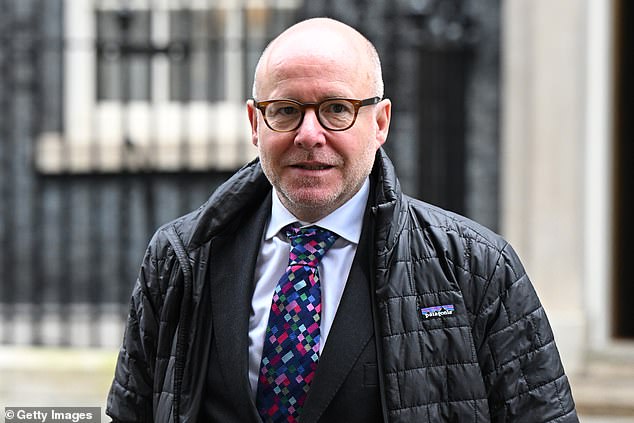
The Prime Minister worked alongside his friend Lord Hermer on a submission to judges hearing a 2007 human rights claim that eventually reshaped the law on soldiers in war zones
They argued that British troops were exercising effective control in parts of Iraq and the UK was therefore legally obliged to conduct fresh investigations under European human rights law.
This was rejected by the British courts in 2007, but the European Court of Human Rights overturned the British ruling in 2011, forcing the UK to reopen investigations into the deaths.
That triggered a cascade of criminal inquiries into British soldiers, many of whom had already been cleared. Hundreds were subjected to years of investigation.
A Downing Street spokesperson said: ‘As the Prime Minister made clear last week, he will never forget the courage, bravery and sacrifice made by British servicemen and women for their country.
‘During his career, the Prime Minister has represented British soldiers who were killed in action and were wrongly accused.
‘The Prime Minister did not represent the claimants in this case. He represented interveners, including the Law Society of England and Wales.
‘The role of an intervener is to assist the court on points of law, not to advocate for either side.
‘The Prime Minister was not involved in the subsequent case heard in the European Court of Human Rights.’