Anna* looks past me, out of my consulting room window, as she gathers herself.
I am still the only person who knows that her 30-year marriage is about to be over. She takes a deep breath. ‘Apparently, what he was offering is known as a “pity f**k”. Not a term I had ever heard.’ Now we hold each other’s gaze. My interest in Anna, as her psychoanalyst, matters deeply. She entrusts me with deep, humiliating feelings.
But Anna, 58, wants to rebuild herself. She is neither undesirable, boring nor a ‘nag’ as her husband has said. She hasn’t gone ‘to seed’ because she doesn’t dye her hair or do fat jabs.
Anna is a consultant radiologist, close to her two adult daughters and a carer to her elderly mother. She is also a private, proud, very ‘English’ woman. Feeling sexually rejected and unhappily married is not something she has been able to discuss with anyone before now, including her husband. However, she has decided that, unlike her mother and grandmother before her, she has had enough.
The Walkaway Wife ‘syndrome’ was coined by American therapist Michele Weiner-Davis and involves five stages, culminating in a woman leaving their spouse unexpectedly. Stage one is complaining. A wife voices displeasure and wants change; but her husband dismisses it as unnecessary.
Stage two, feeling unheard, she becomes even more frustrated and withdraws. Her husband does nothing to improve matters. By stage three she gives up trying to facilitate things, although she may make contemptuous comments.
At stage four, a quieter atmosphere descends alongside her increasing distance from him. Now, she stops making ‘demands’. Her husband might be pleased, believing the ultimatums for ‘improvement’ or ‘quality time’ are over. But she is actively planning her departure and has consulted a lawyer. Which brings her to stage five: she announces she no longer wishes to be married to her unsuspecting husband.
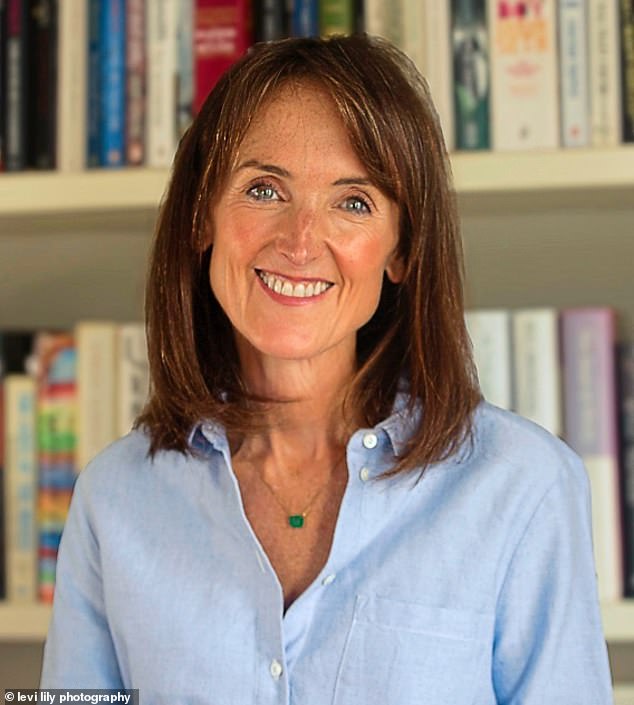
Juliet Rosenfeld has counselled Walkaway Wives
I am not a fan of ‘syndromes’ – a grouping of symptoms that are supposedly universal. A virtue of psychotherapy is that each person is treated as an individual. Everyone has their own unique biographical narrative. Marriages are as different as the individuals within them. Many go wrong and while fewer people divorce now, it’s because far fewer of us marry.
Anna in 2026 can make a choice. Tellingly, women of all ages are far more likely to initiate divorce than men, says the Office of National Statistics (ONS). Women in the UK are now better educated than men from primary school to degree level, which has changed the choices that they can make professionally and personally.
For millennials, that can include delaying or not having children at all – the ONS tells us that childbirth is at its lowest level ever recorded. Marriage is simply no longer a foregone conclusion: current projections suggest only three in ten people will be married by 2050. Cohabitation is on the rise, but so is single living – almost one in three households is a single person.
For women who were 65 in 2023, the average life expectancy is 87.5 years. Persisting with an unsatisfying relationship doesn’t outweigh the alternative any more – not when they have possibly two more decades of good health and better finances than previous generations. Anna’s husband didn’t betray her – in fact, he wanted to stay married – but she’d had enough: enough of not being in a close, fulfilling relationship.
During our sessions, Anna aired years of repressed frustration and sadness. Gradually, the tears came. She reflected on her early life with him. Medical school together had been hectic but rewarding. Bringing up the daughters, too. But both had long left home. Her husband’s sexual interest in her had diminished and he was obsessed with hobbies she had no interest in.
But Anna knew it wasn’t just about him. Reflecting, she told me she had lacked the courage to turn down his proposal at 28. She should have explored more alone, working abroad and actually – she added, looking away – ‘having more sex with more men. Maybe I will now’.
Divorce lawyer Brett Frankle, of Mills & Reeve, says of the Walkaway Wife syndrome: ‘There’s certainly a shift in the way people view divorce’
Divorce lawyer Brett Frankle of Mills & Reeve, whose clients I have worked with, says of the Walkaway Wife syndrome: ‘There’s certainly a shift in the way people view divorce. There isn’t the stigma there once was and there is no fault attributed to either party to a divorce in law. Women do think much more about their needs and wishes, rather than how others might view them, which enables plans to be drawn and thought given to the next steps and what people want from life.’
I am still the only person who knows that her 30-year marriage is about to be over. She takes a deep breath.
It’s so obvious but when couples don’t share how they feel – good and bad – being happy together is hard. Resentment that grows and isn’t explored doesn’t leave. In my work with couples, a fear of conflict is often present.
Though both spouses can feel miserable, talking is often abandoned. The reality of children leaving home and family life ending is dismissed as ‘empty nesting’ but for some couples it can be a devastating loss. Nothing fills the void and both spouses retreat. Curiosity is substituted by isolation for fear of an explosion or the unknown.
After trying her best over the years to rouse her husband into some kind of action, Anna gave up.
And men? Alan* in his late 50s had been left by his wife, as he saw it, with no warning whatsoever. He sat opposite me and talked about her ‘totally mad bolt’. He thought she was ‘incredibly selfish’ and ‘destroying the family’.
She complained that the menopause was bringing her down, and he ‘simply didn’t understand her’. As I listened, Alan explained he was happiest with his teenage boys, watching football. He sounded like a good dad, but not a man who wanted real involvement with his wife’s sadness. I felt he was not able to face up to his own disappointment either, defending himself with his secure paternal status, rather than as the emotionally lost man his wife saw, as did I.
In my work, I try to understand what unconscious processes are in play. In 1925, Freud wrote: ‘The great question that has never been answered and which I have not yet been able to answer, despite my 30 years of research into the feminine soul is: “What does a woman want?”’
The statistics and my consulting room suggest women aren’t prepared to settle as they once were. I wonder if lifelong monogamous relationships are truly feasible in a society that rightly places high value on personal and professional growth. Staying happily together is hard work and requires ongoing curiosity about the other person.
Mourning the loss of one person fulfilling your hopes and dreams, as paradoxical as it may sound, is essential in a couple.
The Walkaway Wife syndrome clearly has some truth to it, but perhaps the more important questions to ask are: why do we view lifelong monogamy as achievable? And why do couples find it so hard to talk about what they want?
* Names and details have been changed