A trainee paramedic who suffered from bipolar disorder is believed to have taken her own life after struggling to get support for her mental health, an inquest has heard.
Rebecca McLellan, 24, had 18 sessions with a psychotherapist through her work with East of England Ambulance Service who was so concerned about her that he offered more for free.
But when these ended, Miss McLellan said in a statement written before her death that she was ‘not once’ contacted by Norfolk and Suffolk NHS Foundation Trust, which provides mental health service, when she asked for help.
She went to the trust’s clinic near her home in Ipswich, Suffolk, and begged for help but was told police or security would be called if she didn’t leave.
In a final note to loved ones that was read out at the inquest in Ipswich, Miss McLellan said: ‘People can survive pretty much everything as long as they can see an end in sight.
‘Unfortunately for me, I cannot. All I can do is wait for the inevitable fall again.’
Miss McLellan was found dead at her flat on November 20, 2023, after colleagues became concerned that she had not turned up for work.
The three-day hearing, which began yesterday, has not heard the cause of death yet but it is believed she took her own life.
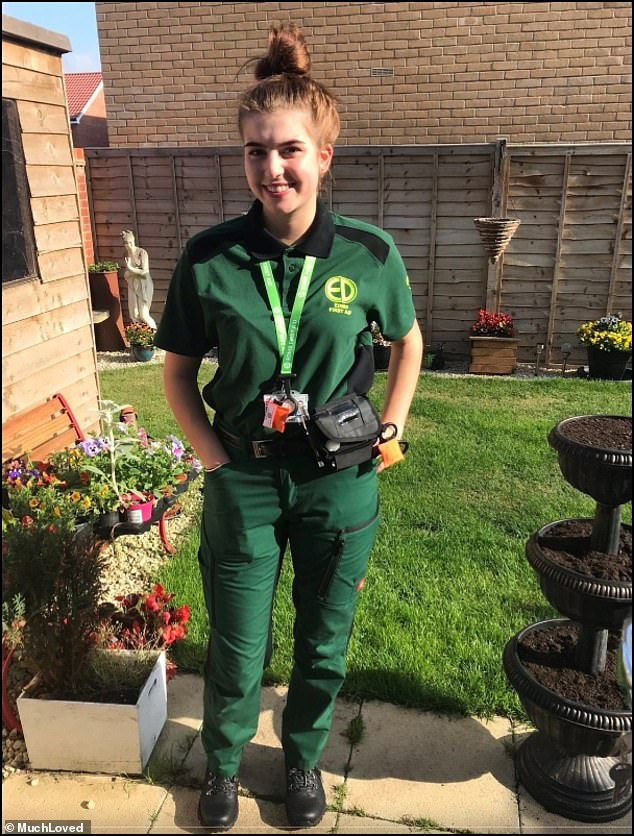
Rebecca McLellan, 24, had fulfilled her dream of becoming a paramedic but struggled with her mental health, her mother told her inquest
Addressing the coroner, Miss McLellan’s mother, Natalie, described her as a ‘sunny child’ who had always been happy and content.
An experience with bullying that forced her to change schools meant she always spoke up for people she felt were being treated unfairly and she was ‘kind and fiercely loyal’.
Mrs McLellan said her daughter had achieved her dream of becoming a paramedic but had struggled with her mental health.
She was eventually diagnosed with bipolar disorder, which typically has symptoms including extreme mood changes, manic episodes and low energy or depression.
‘In the last year of her life, we watched Becca become a shadow of herself,’ Mrs McLellan added.
Psychotherapist Darren Monsigneur, who had 18 sessions with Ms McLellan, said she had taken the diagnosis ‘very badly’.
He offered pro bono meetings at the end of the course as he considered her at ‘high risk’ of taking her own life, although she denied this at the time.
She went on to have four sessions with a consultant psychiatrist, who she saw every few weeks until the September before she died.
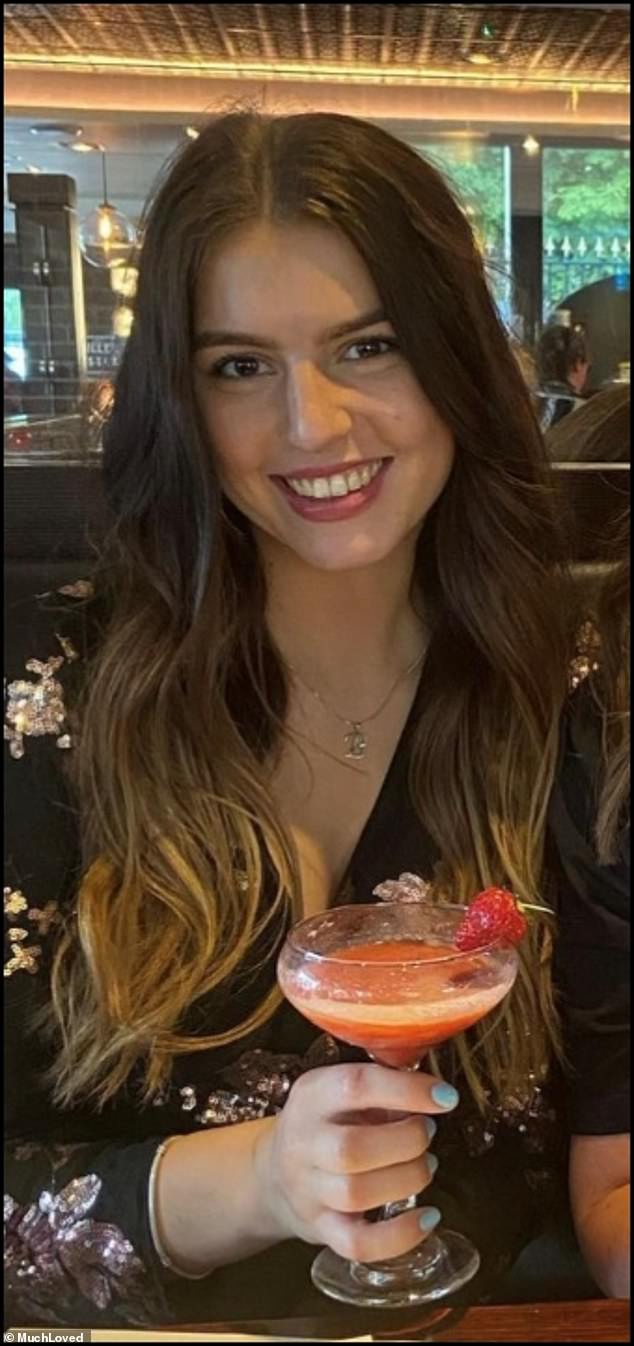
Miss McLellan had been a ‘sunny child’ who was always happy and content but took her diagnosis of bipolar disorder ‘very badly’
Miss McLellan revealed her ongoing frustration at the difficulty accessing further support in a handwritten letter that was read out at the inquest.
She complained that she was was ‘not once’ contacted by Norfolk and Suffolk NHS Foundation Trust (NSFT) after repeatedly calling them.
She was eventually phoned after her GP contacted them on her behalf and was promised an appointment would be made but this never materialised, she claimed.
Increasingly desperate, Miss McLellan went in person to NSFT’s clinic in Ipswich around two months before her death and said she would not leave until she had spoken with a mental health practitioner.
A receptionist apologised that nobody was available that afternoon before warning that police or security could be called if she didn’t leave.
The letter found at Miss McLellan’s home after her death added: ‘I miss the person I used to be. Unfortunately, that girl is long gone. I’ve been running this race for a little too long and now my legs are tired…
‘I know there are those out there who love me, and to those people I thank you from the bottom of my heart.
‘I love you all tremendously. Please know that I tried. I really did.’
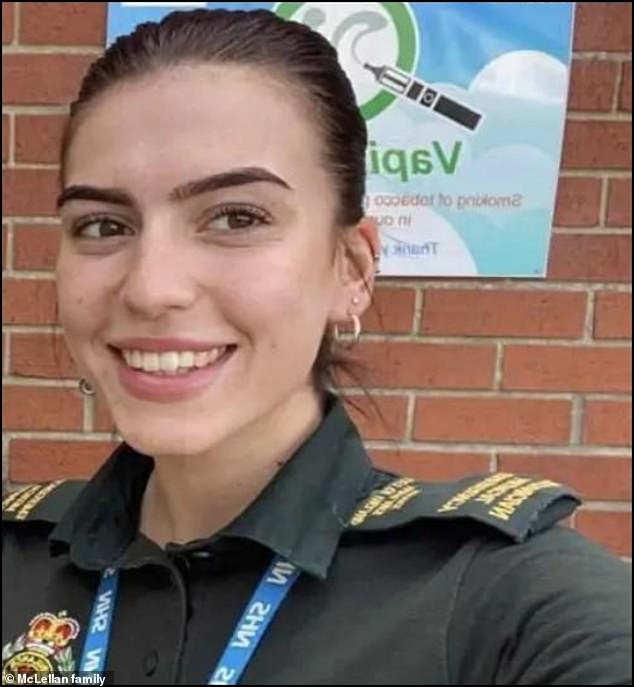
The paramedic had 18 sessions with a psychotherapist through her work with East of England Ambulance Service. He was so concerned about her that he offered more for free
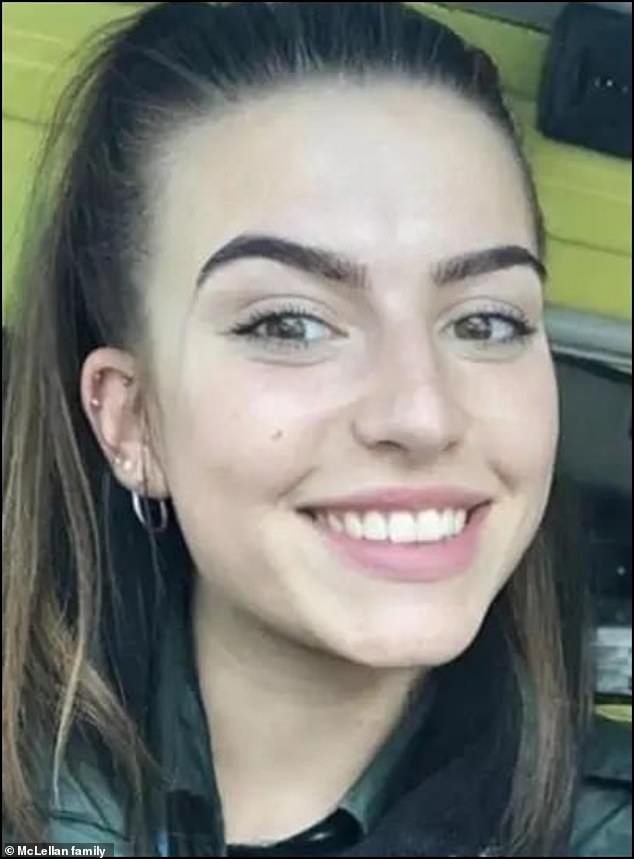
She went to the trust’s clinic in person near her home in Ipswich, Suffolk, and begged for help but was told police or security would be called if she didn’t leave
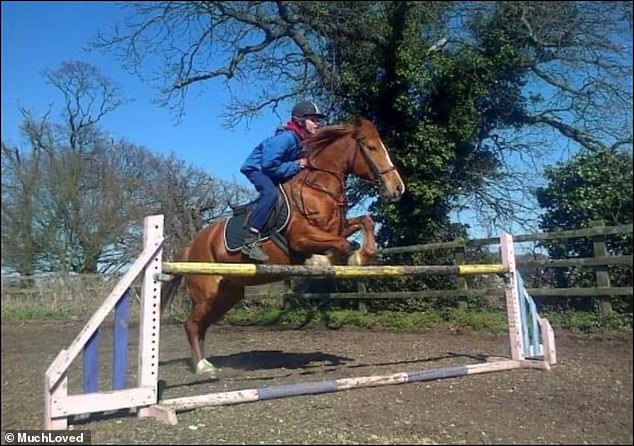
In a note tread out at the inquest in Ipswich, Miss McLellan said: ‘People can survive pretty much everything as long as they can see an end in sight. Unfortunately for me, I cannot.’
Speaking about her daughter’s death last year, Mrs McLellan claimed the mental health trust had ‘let my daughter down’ and she had been met with a ‘complete lack of empathy’.
Describing her daughter’s visit to the NSFT clinic, she said: ‘They said there was no one for her to see that day. She even offered to drive anywhere in Norfolk or Suffolk to see somebody that day.
‘They said nobody was available and they’d get someone to phone her. She said “I’m not going to leave”.
‘They threatened to call the police if she didn’t get out. She should have had that help.’
NSFT, which has been rated ‘inadequate’ by the Care Quality Commission four times in the past nine years, said in a statement at the time that it was investigating her death.
It added: ‘Learning from this investigation will help inform improvements, improve safety and reduce the opportunity for incidents like this to happen again.’
The inquest continues.