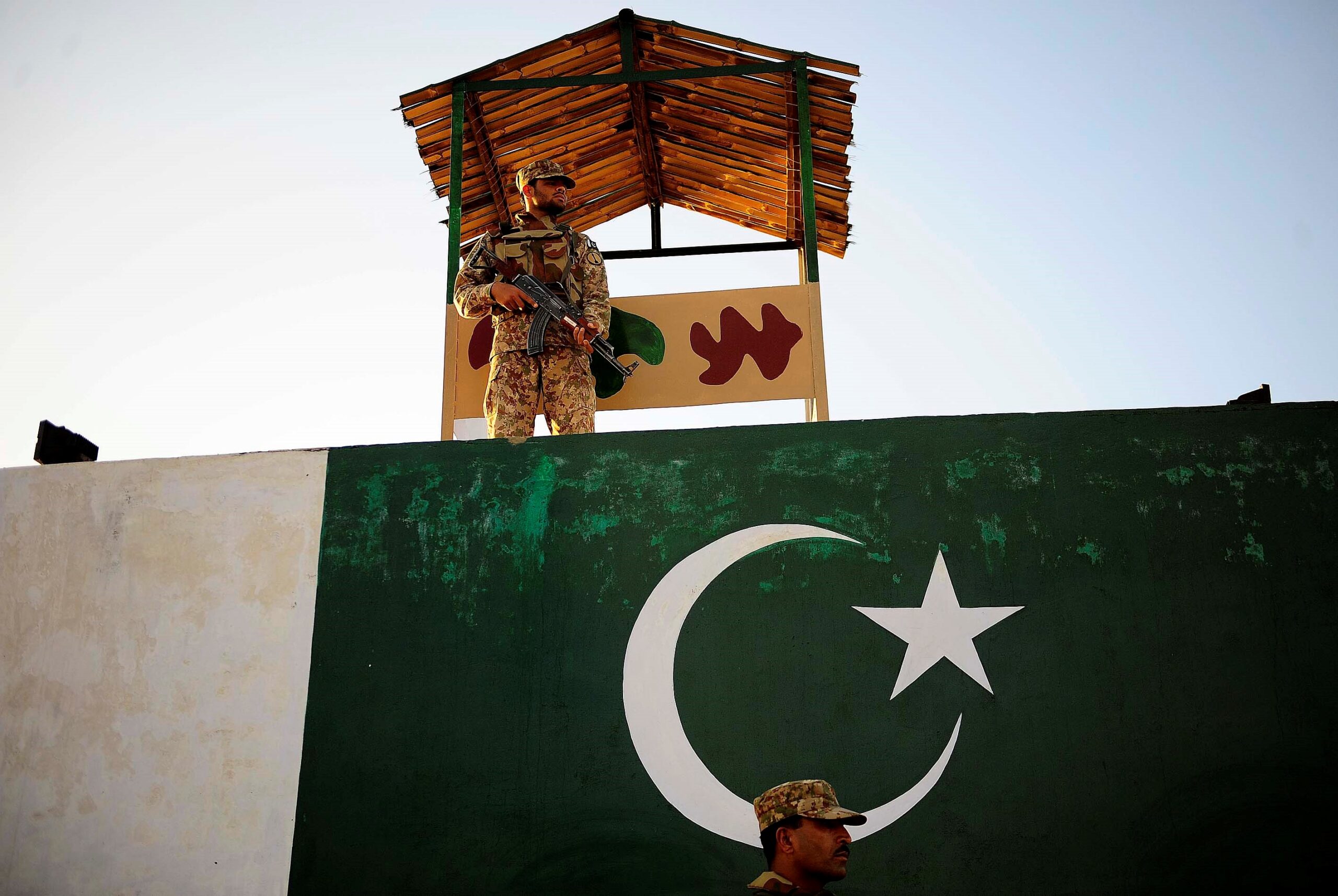
Pakistan has never been a country credited with strong civilian institutions or good long term thinking. The country is nominally led by the unpopular Shehbaz Sharif, who answers to the Chief of Defense Forces Asim Munir, who holds the real power. Sharif was empowered after his predecessor, Imran Khan, ran afoul of the general. Khan wound up in prison and Sharif wound up in charge. This wasn’t out of the ordinary for Pakistan. In the almost 80 years that the country has existed, more than 20 people have served as prime minister. Not one has completed a full term.
Despite this remarkable history, the country remains secure. While it is in some sense a basket-case, taking IMF after loan after IMF loan, the ability of various powers to use it as a conduit has served it well since independence. From alliance with America during the Cold War and Global War on Terror to sustained friendship with China, the country has had no shortage of foreign benefactors. These are ultimately alliances of convenience, serving partner countries’ interests—as illustrated in episodes like the U.S. funding the Afghan mujahideen via Pakistan—and sometimes overlapping with Pakistan in trying to destabilize India.
Beyond the periodic butterfly eyes from foreign powers, the Pakistani state has one tool at its disposal that has ensured its long-term survival even if not long-term success: its nuclear program. The country’s bombs were developed in the ’80s and ’90s, shortly after India developed their own. Pakistan has shared the knowledge beyond their borders already; the North Korean program was developed with their assistance. In light of the explosive end to the attempted nuclear negotiations between Iran and the United States, the country has become even more important as the sole power in the Islamic world with nuclear weapons.
In September 2025, the Pakistani government signed an agreement with the Saudi Arabian government to strengthen their alliance and in January of 2026, the Pakistani government announced plans for Turkey to join that alliance. The Saudis have a seemingly bottomless checkbook for weapons acquisition and a desire to project power in the Middle East. From watching Iran it has become abundantly clear that the path to do that is through a nuclear weapon. Ankara is also investing in military buildup, and with Israel telegraphing that it is likely to be in the country’s sights, the Turks have incentives of their own to secure better weapons. Pakistan has already demonstrated a willingness to play fast and loose with nuclear proliferation; why would they hold back when it comes to an alliance that the three parties see in civilizational terms?
Subscribe Today
Get daily emails in your inbox
The Saudis are in some sense seeing a long-term investment pay off. They host the largest Pakistani diaspora in the world, whose remittances are a significant part of Pakistan’s economy. There is a historical background as well; they funded seminaries in Pakistan for generations that have helped engender support for a more radical Islam in the country’s domestic politics. They’ve provided so much economic support that the country renamed one of the biggest cities in the Pakistani province of Punjab in their honor: Lyallpur was turned into Faisalabad in honor of then King Faisal of Saudi Arabia. In some sense, the alliance from last year was formalizing this arrangement. In another sense, the recent war makes that a lot more important.
Similar dynamics are at play with Turkey, even if the alliance is based more on defense than anything else. Ankara provides drones to Islamabad, including advanced ones like the Bayraktar TB2, and is looking at setting up factories for their domestic production within Pakistan. Given how important these weapons have been in recent wars, like those between Ukraine and Russia or Iran and the United States, Pakistan has a strong incentive to support Turkey’s industrial production and stand against those attempting to degrade it.
Given the extent to which nuclear power is the only real currency in the Middle East that prevents a country from being invaded, every country without a nuclear benefactor in their corner would be foolish to not pursue an alliance with a country that will either allow you to develop them or will credibly threaten to use them on your behalf. Luckily for the Saudis and Turkey, Pakistan fits the bill.