For years, Washington dismissed Libya as a chaotic sideshow—too messy to fix and too distant to matter. As America looked away, China moved in. Beijing understood what U.S. policymakers ignored: Libya is the strategic hinge of North Africa, a key energy hub on the Mediterranean, and home to critical resources that could reshape global power.
If stabilized, it is the one state capable of transforming the balance of power across Africa and the Middle East.
While Washington debated, China acted. In just two years, Beijing has launched one of its most aggressive Mediterranean expansions, centered squarely on Libya.
Plans for Tobruk include a $50 billion development scheme, a $10 billion refinery, a $20 billion high-speed rail line to Egypt, renewed diplomatic presence, and a direct freight corridor into the Mediterranean. Analysts warn these projects carry military and intelligence implications—giving China a corridor that touches Europe, Africa, and the Middle East.
None of this would surprise Cold War leaders.
Libya was once a cornerstone of American strategy. Wheelus Air Base was one of the most important U.S. facilities outside Europe. American firms like Occidental Petroleum flourished there under Armand Hammer, and Libya’s oil sector became one of the great success stories of U.S. energy diplomacy.
In 1962, President Kennedy even sent Air Force One to bring Libya’s Crown Prince Hassan to Washington—a gesture that showed just how close the partnership once was. But after the monarchy was overthrown by Gaddafi, Libya delivered only instability, migration crises, and strategic losses for the United States.
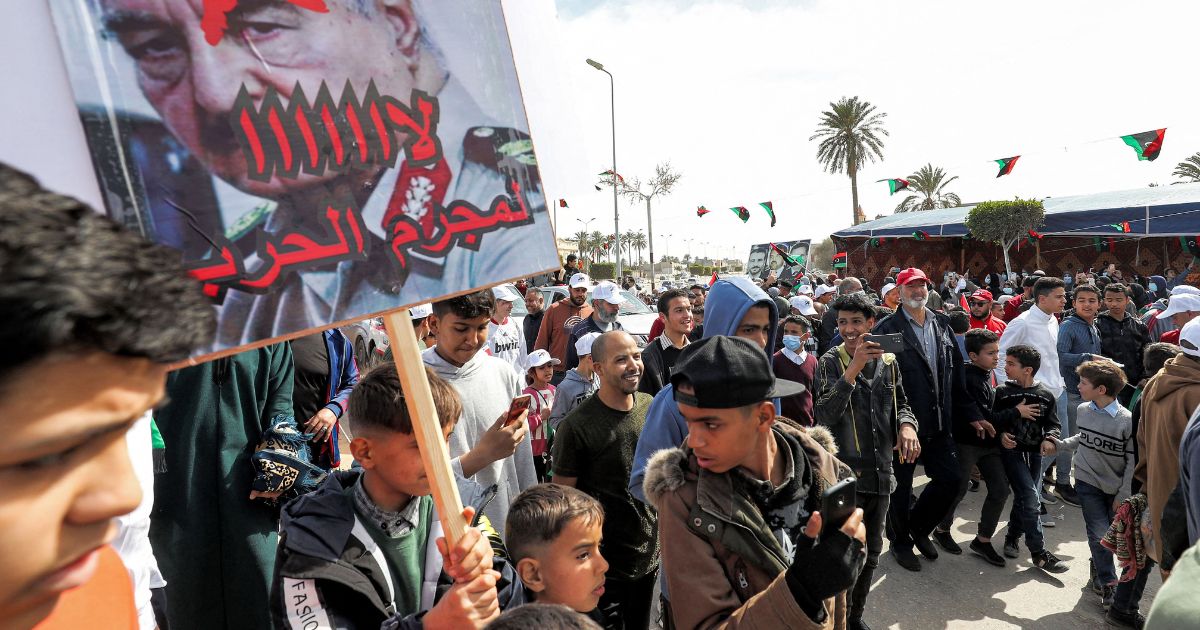
Today, something unprecedented is happening—something Washington still hasn’t fully grasped. Libya’s youth—nearly 60 percent of the population—are stepping into national politics with a unified demand: to restore the 1951 Independence Constitution and return to the constitutional monarchy under Crown Prince Mohammed El Senussi.
For them it’s not nostalgia—it is the only system that ever delivered unity, legitimacy, and functioning institutions. It provided a democratic framework with a constitutional monarch as head of state, offering stability in a deeply tribal society. Youth activists argue the constitution was never legally annulled and remains Libya’s last valid national framework.
This movement is entirely homegrown. It emerged from 18 months of national dialogue led by Crown Prince Senussi, much of it held in cities across Europe, bringing together Libyans from every region.
Today, those discussions have moved into the conference halls and streets of Tripoli, Benghazi, Misrata, Fezzan, and the western mountains. Women, youth, tribal communities, and civil society are aligning politically in a way not seen for decades.
For the United States, the stakes could not be higher. Libya holds major critical mineral reserves that could reduce dependence on China. It is an energy hub capable of stabilising markets and easing inflationary pressures.
It commands key Mediterranean maritime routes on NATO’s southern flank and controls billions in frozen assets that could fund national recovery. Influencing this Libyan stabilisation movement would also give Washington strategic leverage in the Sahel, where France—and now Russia—have lost ground to jihadist militias.
Stabilizing Libya and projecting American power southward would unlock vital resources and restore U.S. influence in one of the most critical geopolitical corridors in the world.
Beijing understands this. That is why it is moving aggressively. The United States once understood it too: Kennedy, Eisenhower, and Reagan all treated Libya as a keystone state. But 15 years of American disengagement created a vacuum—and China filled it.
A shift in Washington thinking is finally emerging. Ambassador Tom J. Barrack has argued that “what has worked has been benevolent monarchies,” noting that constitutional monarchies often provide the stability that fractured republics cannot.
His long-dismissed argument now aligns with President Trump’s evolving regional strategy. Another overlooked dimension is Libya’s role in Sudan’s civil war, where massive quantities of smuggled gold flow through Libyan territory directly into the hands of America’s rivals—especially Russia.
Helping Libyans stabilize their country would allow Washington to disrupt this gold pipeline, weaken Moscow’s finances, and push back against Russian influence on the Red Sea.
Libya’s youth have handed Washington something rare: a second chance. They are rallying around a democratic constitutional framework that predates the chaos, rejects foreign domination, and once anchored the closest U.S.–Libya partnership in modern history.
Failing to seize this moment would mean forfeiting a major geoeconomic arc stretching from the Mediterranean to the Sahel and across the Red Sea—one of the most valuable strategic corridors on Earth.
Libya is a winning hand. Washington should play it.
And the implications extend far beyond North Africa. A stable Libya strengthens America’s global posture—curbing China’s grip on rare earths, reducing Russia’s leverage in OPEC+, blocking the Belt and Road Initiative, and opening new opportunities across Latin America and the Middle East.
What succeeds in Libya could be applied in places like Iran and Venezuela, helping Washington counter both China and Russia simultaneously.
Libya is not a distraction. It is the key to restoring American power across the Mediterranean, Africa, and the global energy market. Under strong America First leadership that recognises allies, values stability, and confronts China head-on, the United States can rebuild a partnership it should never have abandoned.
The only question now is whether Washington will seize this moment—or let Beijing write Libya’s future instead.
The views expressed in this opinion article are those of their author and are not necessarily either shared or endorsed by the owners of this website. If you are interested in contributing an Op-Ed to The Western Journal, you can learn about our submission guidelines and process here.

Advertise with The Western Journal and reach millions of highly engaged readers, while supporting our work. Advertise Today.