HAVING video meetings over Zoom has become part and parcel of the way many people work.
But as anyone who has experienced the calls knows, you can sometimes find your mind wandering when you’re meant to be listening.
However, there’s a new Zoom-based brainteaser that might be able to help keep you slightly more engaged.
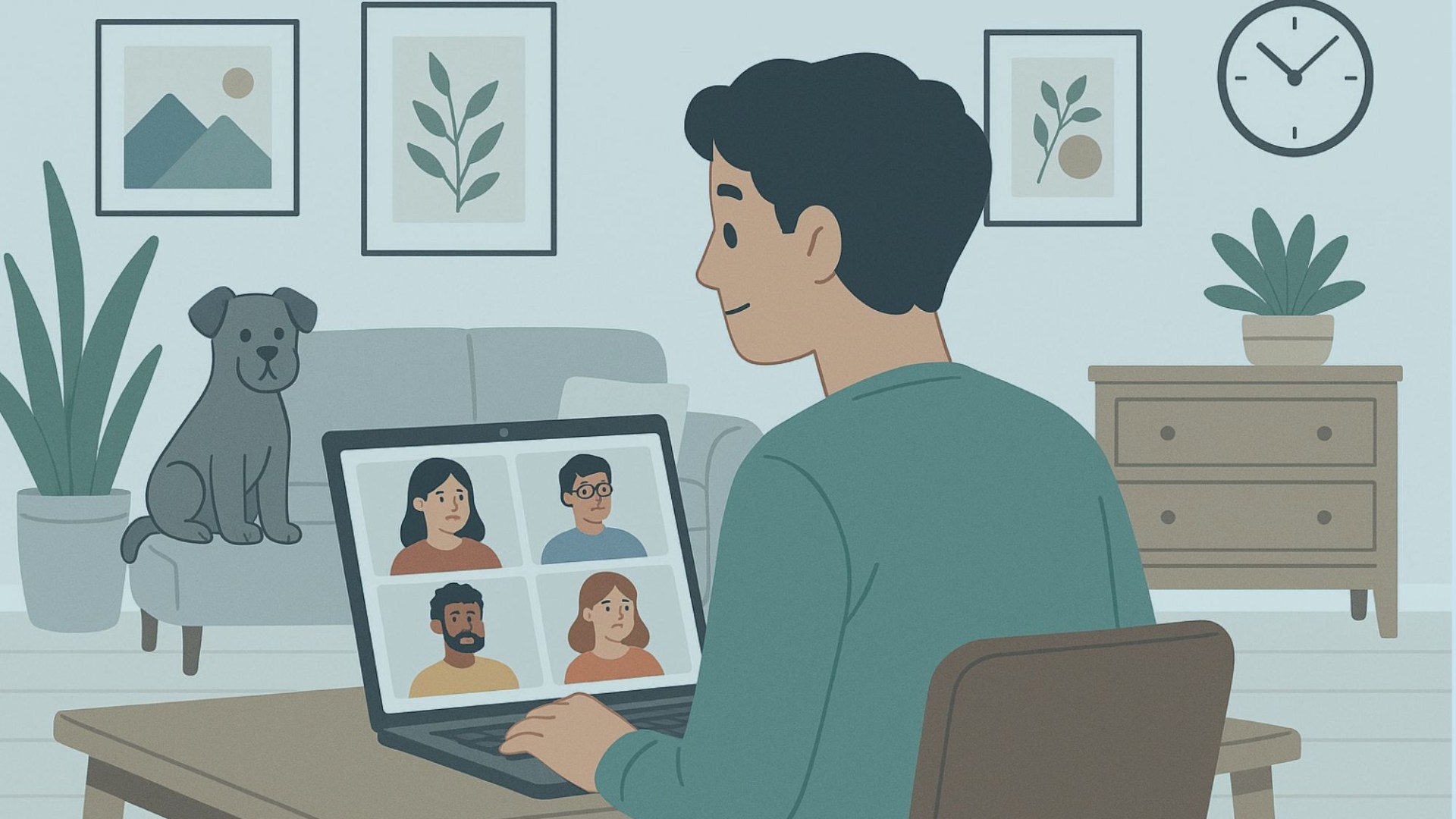
In the image, there are five spot the differences, which you’re challenged to find in just 15 seconds.
Some of them are pretty easy, while others are much harder to try and find.
To give it a go, place the portraits side by side, and try and spot all five of the differences.
Try more Brainteasers here


When you think you’ve found all five, scroll to the solution to check your picks, then pass it to a friend to see who’s faster.
“Spot-the-difference puzzles are sneaky in the best way,” Ty Letang, Founder of AmberWillo, said.
“When nerves spike, our attention narrows and we miss small cues, expressions, hands, or even things in the background, like a cat on the side table.”
And there’s an added, somewhat surprising, health benefit to doing such brainteasers too.
“Training yourself to stay present long enough to catch tiny details is a simple, repeatable habit that also supports clearer, more confident speaking,” Ty added.
First, look at the man’s laptop – do you see anything different there?
If your answer’s a no, you need to up your game.
Check out the pictures around the room to see if you can spot any changes to these, and have a look at the animals there too.
If you’re still struggling with the answer, we’ve listed out the five differences at the bottom of the article.
Brainteasers are purposefully designed to trick our vision and can be used as simple determiners of intelligence.
Using puzzles as a pre-sleep ritual
Dreams’ Sleep Expert, Sammy Margo, has shareed her expert advice on using brainteasers and optical illusions as pre-sleep rituals.
- Puzzle ‘pairing’ with scent
“Lightly scenting your space with lavender, chamomile or other scents while you puzzle creates a sensory link which your brain will start to associate with rest. Over time, the combination of the puzzle and calming scents may become a sleep cue in itself.”
- Try the ‘reverse puzzle trick’
“Instead of working towards completing a crossword or sudoku, deliberately stop just short of finishing. Leaving that last word or number undone, may trick the brain into feeling closure without over-engaging, avoiding the frustration that can keep you up.”
- Double it up with doodling
“If puzzles aren’t your thing, try doodling alongside them. The repetitive hand movements are soothing and combining it with a puzzle engages both logic and creativity – a surprisingly powerful wind-down for the brain.”
- Use mini puzzles as a ‘thought swap’
“Keep a pocket-sized puzzle book by your bed. When intrusive thoughts creep in at 2am, swap them for a quick and easy puzzle. It’s a gentle distraction that redirects your focus away from anxiety and back towards sleep.”
So you might want to try The Sun’s wide range of optical illusions created to stimulate the deepest parts of your brain.
Watch the video at the top of the page to test your speed when it comes to a spot the difference puzzle.
And there’s four more puzzles to solve in our video here.
What are the five differences?
- A cat has appeared sitting on the side table (top right).
- The plant has changed, it’s now a monstera (left side).
- The wall art print has changed (center top).
- The man’s sweater is now purple (instead of green).
- One Zoom participant has been replaced by his cat (on the laptop screen).