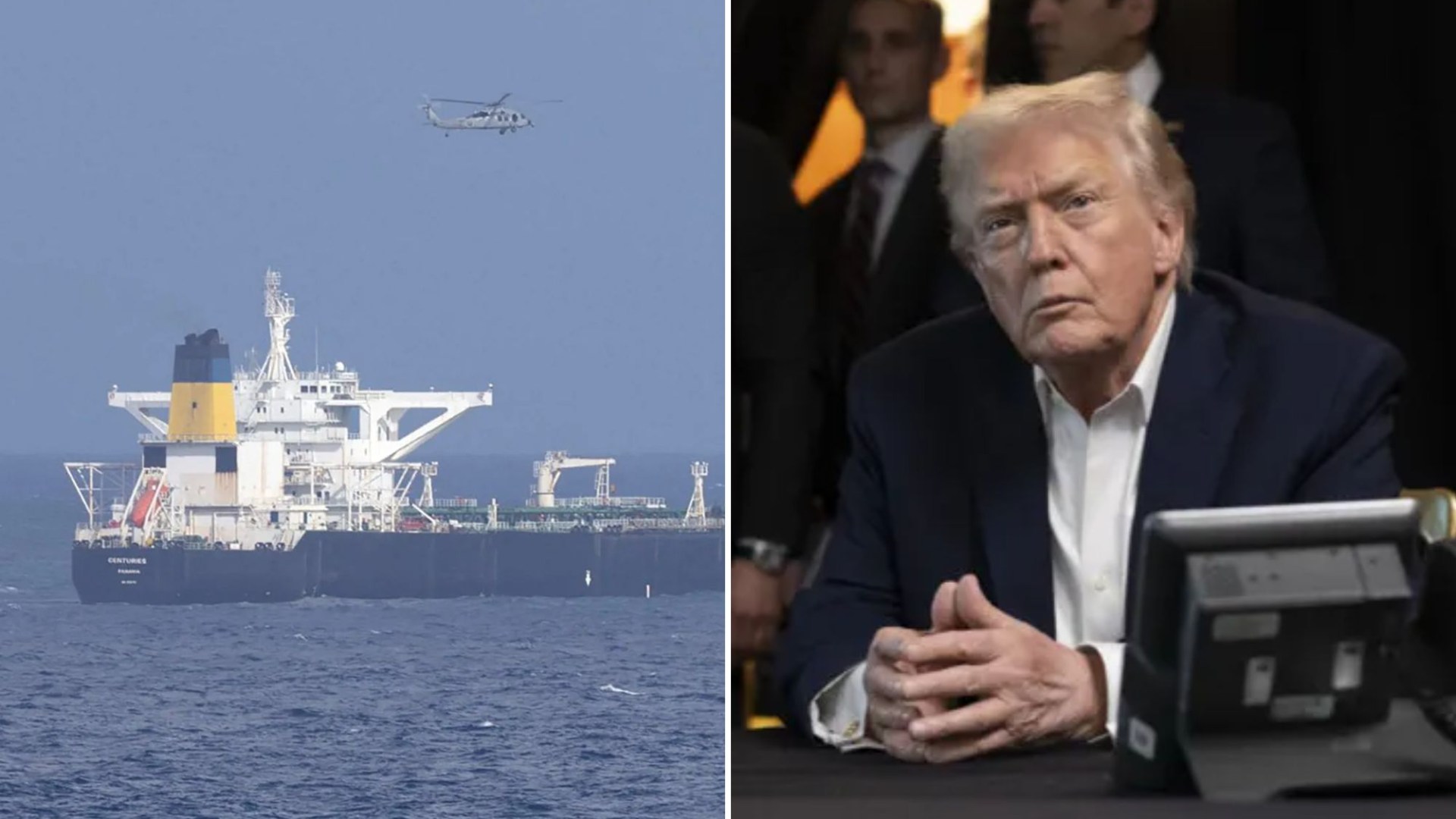
MORE than a dozen sanctioned oil tankers have fled Venezuelan waters defying Trump’s naval blockade.
The vessels – mostly loaded with Venezuelan crude and fuel – stealthily escaped the country’s waters by throwing off location trackers, making the ships appear to be thousands of miles away.
Flicking trackers into “dark mode”, the ships bypassed American naval forces, potentially risking US military action at sea.
The tankers – which had been in or near Venezuelan ports in recent weeks – all made a break for it before Saturday, according to satellite images and ship-tracking data.
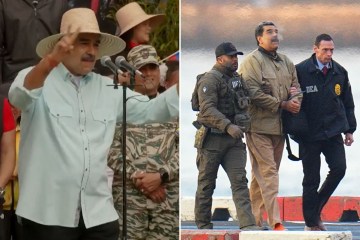
The move followed the American capture of President Nicolas Maduro.
Donald Trump imposed the blockade on Venezuela in mid-December, and has since insisted the oil embargo on the South American nation had remained in “full force” since Maduro’s extraction.

Despite this, the ship crews took the risky move to leave port.
At least a dozen were loaded with an estimated 12 million barrels of Venezuelan crude and fuel oil, according to the monitoring service TankerTrackers.com.
The remaining known escaped tankers were empty.
Fifteen out of the 16 identified ships have been marked under US sanctions for carrying Iranian and Russian oil.
Four of the departed vessels have been tracked by satellite data, sailing at an estimated 30 miles from shore.
The other 12 have not been found, still believed to be operating in dark mode.
Using a range of evasion methods, the ships have disguised their true locations as well as turning off their transmission signals.
One ship – the Aquilla II – obfuscated its location to show up in the Baltic Sea, sending incorrect signals, identifying itself as the Cape Balder.
The Bertha pretended to be off the coast of Nigeria, using the alias Ekta – the name of a decommissioned boat that was also painted on its hull.
Also using a fake name, The Veronica III purported to be DS Vector, sending a “zombie” signal to appear close to the west African country.
After making off from Puerto Jose on Venezuela’s north coast – also the country’s main oil terminal – the crude carriers appear to be travelling north-east.
All three tankers are believed to be laden with oil.
Another ship named Vesna – under the assumed name Priya – has already sailed hundreds of miles away from Venezuela.
The ship is travelling faster, as it does not appear to be loaded with oil.
Last tracked on Sunday, it was located 25 miles west of Grenada.
US Secretary of State Marco Rubio dubbed the blockade one of the largest “quarantines” in modern history.
He also claimed it was successfully “paralysing” the Venezuelan regime’s capabilities to generate revenue.
The Don has also spoken out, making claims that the US would “run” the country following the capture of Maduro.
His comments have sparked fears at prolonged foreign intervention.
Rubio has denounced these fears, saying Washington would only be involved to enforce an “oil quarantine“.
Since their escape, three of the tankers have been seen travelling closely together.
When loaded in December, their coordinates were mostly set for Asia, but they had been stuck in Venezuelan waters due to the blockade.
It remains unknown where the vessels are now headed.
According to the New York Times, the fleeing ships were all contracted by oil traders Alex Saab and Ramón Carretero.
Both companies are under US sanctions for being known close associates with the Maduro regime.
Saab was imprisoned in 2021 in the US, however was released two years later following an exchange deal with the Biden Administration.
Samir Madani, co-founder of TankerTrackers.com, told The Telegraph that experts had anticipated the blockade would be broken “by overwhelming it with an outbound flotilla heading in various directions from various terminals.”
“That appears to have been the case over the past 36 to 48 hours.
“If this were a navy versus navy blockade, there would have been an exchange of fire, but these tankers are laden with oil,” he said.
He continued, saying the risk may have been considered worth taking, even if some were seized.
Venezuela has the largest proven oil reserves in the world.
The country’s storage facilities were near capacity, leaving it little time to move the highly sought after fossil fuel.
When declared in December, the US blockade had brought the country’s exports to a standstill.
US forces have since intercepted three tankers attempting to escape with sanctioned Venezuelan oil.
Trump’s troops seized the Skipper in a helicopter-driven assault, as the vessel was on its way to China.
A second boat – the Centuries – was boarded but not seized on December 20, while Bella 1 is still being chased by US forces.
Oil exports are Venezuela’s main source of revenue, with China being its biggest customer.
It accounts for an estimated four per cent of the imports, averaging 600,000 barrels a day.
Venezuela’s interim government, led by newly sworn in Delcy Rodriguez – the oil minister and vice-president, will be in desperate need of the income to finance spending and secure domestic stability in her country.
At least four of the tankers were cleared by Venezuelan authorities to leave their waters in dark mode, according to Reuters.
It remains unknown whether the move was in direct defiance of Trump, after he announced that China would still be receiving Venezuelan oil.
If found to be a direct violation, it could be the earliest act by Rodriguez’s transitional government to oppose the Trump administration.
Tiziano Breda, senior analyst for Latin America for conflict monitor Acled, told The Telegraph that the ships movements “[indicated] a coordinated attempt to evade the blockade”.
“High level figures in the regime were likely involved,” she said.
“But in the context of the chaos of transition, it is unclear whether some figures are taking advantage or it is a more organic decision from the new leadership to actively defy Mr Trump.”
Chevron is the only US oil major authorised to export Venezuelan crude under the embargo and sanctions.
It resumed its exports on Monday following a four day pause, according to shipping data.
No Chevron tankers had sailed since New Year’s Day, two days prior to Trump’s strike on Venezuela.