A federal appeals court went out of its way last week to shoot down a federal judge’s ruling in a case regarding Department of Homeland Security operations in the old stomping grounds of former President Barack Obama.
And the Obama-appointed judge who found herself in the appeals court crosshairs probably won’t be forgetting it anytime soon.
It was a lecture that constitutional law professor Jonathan Turley called a “haymaker” to the activist jurist.
The Seventh Circuit just delivered a haymaker to Obama-appointee Judge Sara Ellis for her efforts to limit federal enforcement of immigration laws. It accused her of “effectively establish[ing]” herself “as the supervisor of all Executive Branch activity in the city of Chicago.”
— Jonathan Turley (@JonathanTurley) March 8, 2026
The judge in question is Judge Sara Ellis, nominated to the bench in 2013 by that old Chicago pol Obama.
In October, according to the appeals court decision Thursday, she issued a wide-ranging injunction against the DHS’s use of crowd-control techniques as part of Operation Midway Blitz, the Trump administration’s crackdown on illegal immigration and crime in Chicago.
The ruling amounted to a “a sweeping preliminary injunction regulating all federal immigration enforcement efforts districtwide,” the appeals ruling stated.
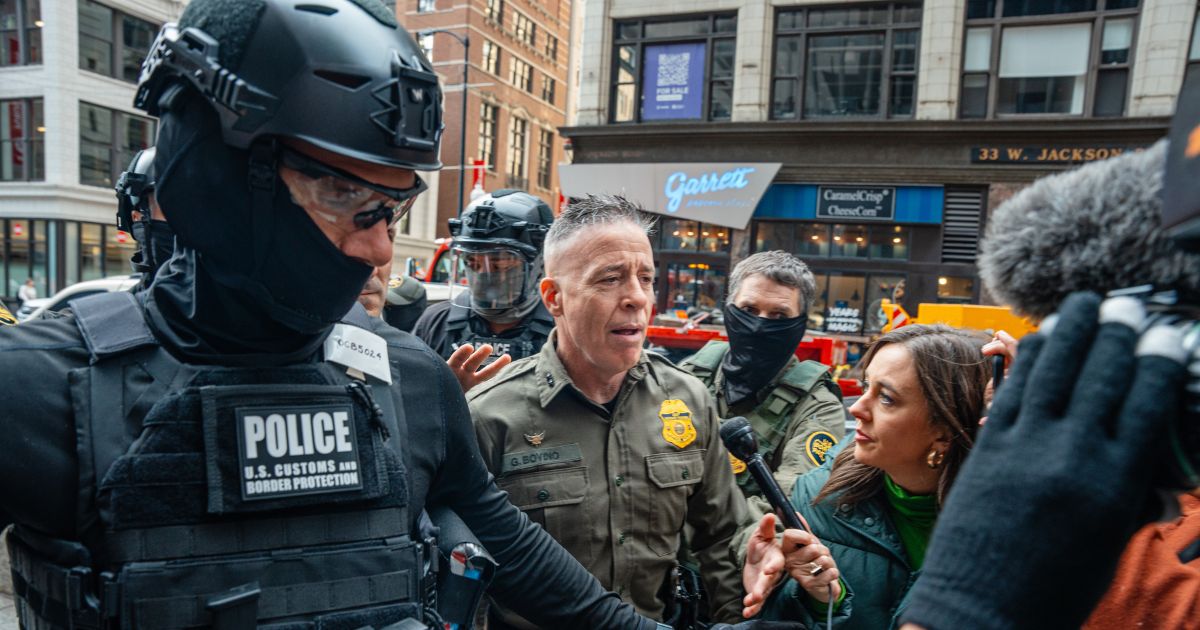
As part of it, Ellis ordered the then-head of DHS operations in Chicago, Gary Bovino, to appear before her daily to explain the agency’s compliance.
In November, she issued a novelistic 233-page ruling (that started with a paean to Chicago writer Carl Sandberg) supporting her injunction and excoriating, at length, the DHS and its personnel.
As the court-oriented website Legalnewsline summarized in a piece on Friday:
“In her ruling, Ellis famously sided almost entirely with the anti-government position, blocking ICE and Border Patrol agents associated with the now-ended ‘Operation Midway Blitz’ and other immigration enforcement operations from using physical force or riot control weapons or even from ‘issuing a crowd dispersal order’ requiring so-called protestors ‘to leave a public place that they lawfully have a right to be.’
“The order prohibited federal agents from ‘using hands-on physical force such as pulling or shoving to the ground, tackling, or body slamming’ anyone ‘who is not causing an immediate threat of physical harm to others …’
“The order also granted those claiming to be journalists the right to remain in an area undisturbed, even after an otherwise lawful dispersal order was given.”
The Trump administration appealed, and the appeals court stayed Ellis’ ruling while arranging to hear the case in full.
But things took a turn in December when the plaintiffs in the case — protesters and journalists who accused the DHS of violating First Amendment and Fourth Amendment rights — asked Ellis to dismiss their case — allegedly because clashes from Midway Blitz had died down in the Chicago area and the point was “moot,” legally.
As Legalnewsline noted, however, the motive was far more likely that the plaintiffs knew the appeals court would not be as malleable as Ellis, and didn’t want to lose a precedent-setting case.
The Justice Department also wanted the appeal dismissed, but under a deliberate legal strategy that would have kept its points intact.
In the end, Ellis tried to dismiss the case but did so “without prejudice,” meaning it could be activated again. That was apparently contradictory to the wishes of all parties involved.
And that was too much for the appeals court to let go.
The three-judge panel on the case is made up of the district’s Chief Judge Michael Brian Brennan, Judge Michael Yale Scudder, who made up the majority in the 2-1 ruling, and Judge Frank Easterbrook, a Reagan appointee, who dissented.
(Easterbrook’s dissent maintained that if both parties were willing to dismiss the case, it should have been dismissed.)
“The practical upshot of the district court’s decision is that the named plaintiffs and members of the class can refile in federal court tomorrow and try to reimplement the injunction anew,” the appeals court ruling stated.
And the court wasn’t going to let that happen — which meant ruling on a case that would have otherwise almost certainly been dismissed.
In other words, Ellis’ handling of the case was so “constitutionally suspect,” crossed so many lines, and set up so many potential future dangers, that the appeals court felt it necessary to go out of its way to head off problems down the road.
And it ruled resoundingly against the Obama-appointed judge who was in charge.

Advertise with The Western Journal and reach millions of highly engaged readers, while supporting our work. Advertise Today.