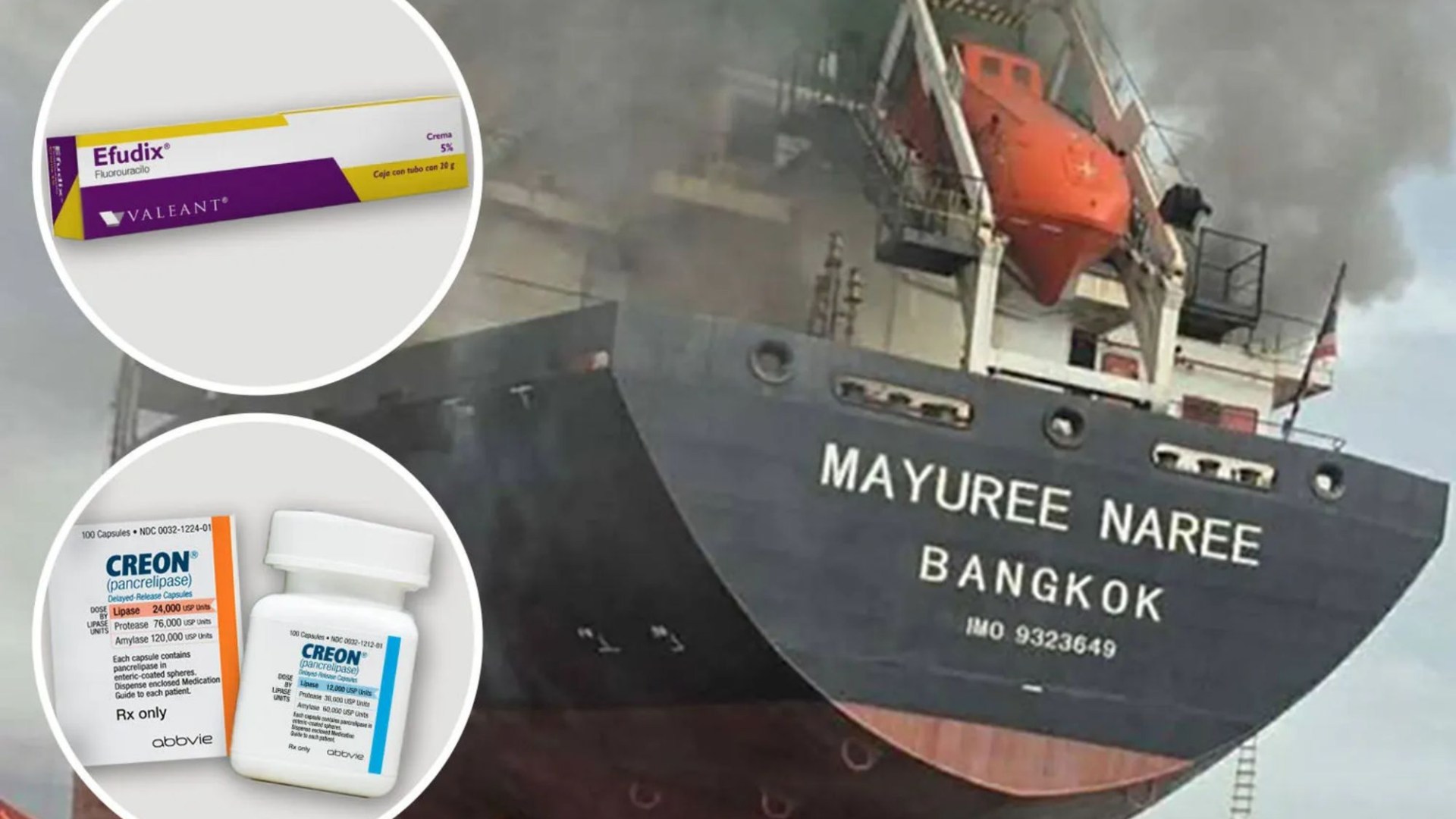
VITAL cancer drugs could be at risk of running out in “days or weeks” as the Middle East war rages on, health bosses warn.
The continued conflict “poses a significant risk to future UK medicine supplies”, they said, with life-saving chemotherapy drugs and generic medicines used by the NHS on the line.
This is because cancer drugs tend to have a short shelf life, making them vulnerable to supply chain disruption.
The Government has said “there are currently no shortages of medical products or medicines reported as a result of conflict in the Middle East”.
But experts warned that medications already hard to source in recent months – such as painkillers, antidepressants and hormone replacement therapy – could be hit by further disruption.
Cancer medications such as Efudix have also experienced supply issues.
Read more on drug shortages
The topical chemotherapy cream, which is used to target and destroy cancerous and precancerous cells on the skin, was in short supply last year.
Dr Leyla Hannbeck, CEO of Independent Pharmacies Association, said this and other vital cancer drugs may become harder to get hold of “in the coming days or weeks”.
“In addition to Efudix, Creon – for pancreatic cancer – has been in short supply for a long time and has been rationed,” she told The Sun.
“Bendamustine and several other chemotherapy medicines are in short supply at the moment.
“We expect this to get worse in the coming days or weeks unless the government gets its plans together.”
A Department of Health and Social Care spokesperson told The Sun: “We are working closely with industry partners to help ensure the continued supply of medical products, and we actively monitor emerging threats to supply resilience.
“There are established processes in place to manage disruption across the health and social care sector, including holding significant buffer stocks and the procurement of alternative products where necessary.”
The Middle East conflict kicked off when the US and Israel carried out strikes on Iran on February 28, before rippling more widely across the region.
Mark Samuels, Chief Executive of Medicines UK, also warned that patients in the UK may soon begin to feel the effects of the war.
“The continuing conflict in Iran, and the wider instability across the Middle East, poses a significant risk to future UK medicine supplies,” he said.
“While we are not currently seeing exceptional shortages, manufacturers are facing sharp increases in transportation costs, particularly for air freight.
“Shipping – the primary route for most medicines – is also under strain due to the effective closure of the Strait of Hormuz, creating knock‑on pressures across global supply chains.
“The impact on patients and health systems is likely to be felt in the next few weeks.”
The Strait of Hormuz is a vital trade route and a hub for oil and gas exports, which has been blocked by Iran.
Traffic through the waterway has plummeted with more than 2,000 cargo ships blocked from passing through the key maritime passage in recent weeks, according to the International Maritime Organization (IMO).
Any lengthy blockade of the Strait could cause UK energy bills, the price of goods and inflation to soar, which also choking global medicine supply chains.
“Medicine production requires long‑term planning, and the current uncertainty makes it increasingly difficult for manufacturers to operate with confidence,” Mark went on.
“Off‑patent medicines run on high efficiency and razor thin margins and account for 85 per cent of NHS prescriptions.
“This means they are the frontline treatment for everything from cancer care through to mental illness.
“Any prolonged crisis that drives up operating costs will disproportionately affect these manufacturers and risks leading to supply shortages or increased costs for the NHS.”
Generic medicines are sold after a brand-name drug’s exclusivity licence expires and typically cost around 70 to 90 per cent less than their branded equivalents.
It comes after NHS England boss Sir Jim Mackey warned the health service could run out of medicines and critical supplies like syringes and gloves because of the Middle East war.
During phone-in on LBC Radio, Sir Jim said he was “really worried” about the consequences of the conflict, given that the NHS has already been hit with “shocks” to key supplies “in the last 12 to 18 months”.
He explained that the NHS has different levels of supply for different products and will only hold a few days’ worth of some at a time, due to short shelf life.
So if one of these products is affected by supply issues amid the Middle East war, it could run out within “days”.
The NHS head said: “In every area, we’ve got enough to get through for a reasonable period… so generally, a few weeks.
“Because things perish and it costs money to store and various other things go out of use, you can’t hold years and years of supply, generally dependent on the product we keep a reasonable period.
“Some of that is held centrally, some held locally.”
Asked whether in some instances it would be “weeks worth of supply”, Sir Jim replied: “Yeah, it could be days for some products.”
He added that there was a team in place “to focus on where the risks might be through the supply chains”.
Cancer drugs tend to be particularly vulnerable to supply disruptions as they have a short shelf life, Prashant Yadav, senior fellow for global health at the Council on Foreign Relations, recently told Reuters.
Dr Hannbeck previously said the crisis would have a knock-on effect on already stressed global supply chains, delaying transport and making raw materials “harder to source”.
The UK imports about three quarters of its drugs, but even those that come from the EU or closer to home are often made from materials shipped from countries such as China or India.
In a letter to the health secretary, she said disruption to international trade could make an already difficult situation “far worse” for community pharmacies under strain from the fragile global supply chain.
“Any disruption to these supplies increases production costs and slows manufacturing, which quickly translates into lower availability on pharmacy shelves,” Dr Hannbeck said.
This could affect “essential treatments that millions rely on daily”, she added, including common blood pressure medicines such as propranolol, and cholesterol treatments to prevent heart attacks and strokes.
A live drug shortage tracker by industry reference guide MIMS suggests there are currently 122 drugs in short supply in the UK.
Why is drug supply to the UK being affected by the Middle East war?
“Medicine supply chains are less like a straight pipeline and more like a spider’s web,” say Jack Janetzki and Lisa Kalisch Ellett from Adelaide University, in Australia.
“Their strength depends on every strand of the web being intact.
“One strand might be a factory in India. Another could be a shipping route through a conflict zone. Another is a wholesaler in Australia.
“If one strand breaks, the system does not collapse immediately, but it weakens.
“When several strands are disrupted at once, the effects ripple across the network.
“War can disrupt this web in multiple ways. Shipping routes may be blocked or delayed. Air transport can be restricted. Access to raw materials may be limited. Manufacturing can slow down.
“War is one risk. Natural disasters, pandemics and even panic buying can all place additional pressure on supply.
“When these pressures happen at the same time, shortages become more likely.
“We rely on such a complex system because of costs and efficiencies.”
Both Australia and the UK produce many of their medicines overseas because it is cheaper, the experts explain.
“The system also relies on what’s known as ‘just-in-time’ supply. Stock is replenished regularly rather than stored in larger quantities.
“This keeps medicine prices lower, but also means there’s less room for error when disruptions occur.”
Source: The Conversation
Henry Gregg, chief executive of the National Pharmacy Association said: “We’re not currently seeing shortages of medicine directly linked to the conflict in the Middle East, but pharmacies are seeing disturbing spikes in prices which can be an early indicator of challenges.
“The Department of Health has issued unprecedented numbers of price concessions designed to cope with price surges, which are likely exacerbated by this current situation.”
The DHSC issues price concessions for medications when their price surges in the market.
This increases the amount pharmacies are paid to order certain drugs, where NHS reimbursement to pharmacies has been outstripped by a cost increase.
In March alone, the Government issued 197 price concessions for drugs, but it’s not possible to know if this is connected to the Middle East war.
Henry added: “It’s clear that medicine prices are soaring for pharmacies, as this crisis unfolds with the government issuing an unprecedented number of price concessions in an attempt to cover the growing price of many essential medicines.
“Government price concessions are 120 per cent higher than they were at the same time last year.
“We expect this continue if this situation is prolonged, if the cost of raw materials and other aspects of the manufacturing process increases.
“Pharmacies are already facing a medicine supply crisis before the conflict started, and although we are not currently seeing a direct impact on supplies we have been warning for years of growing issues in an increasingly fragile supply chain.”
There also fears about supply of cancer drugs elsewhere in the world as a result of the conflict.
The Iranian government said this week that Israeli-US strikes had hit one of the country’s largest pharmaceutical companies in Tehran, which produces anaesthetics and cancer drugs, as reported by Al Jazeera.
Meanwhile, Reuters reported that pharmaceutical routes in the Gulf had also been disrupted.