Jobs are suffering the longest downturn since the financial crisis as the rise of robots and Labour’s tax raids deter employers hiring.
The purchasing managers’ index (PMI) revealed that private sector job losses accelerated at the start of the year even though firms saw an upturn in overall performance.
The data, from financial firm S&P Global, highlighted squeezed profit margins as well as ‘fragile market conditions and efforts to boost productivity through automation’ as reasons behind the employment downturn.
Separately, a new economic forecast predicted that unemployment will surge this year to the highest level since 2015.
The latest figures could give rise to fears that the increasing use of robots and AI will mean jobs fail to benefit from an upturn in the economy.
It follows a warning from the International Monetary Fund last month that the rise of AI is ‘like a tsunami hitting the labour market’.
And it could represent a long-term concern at the Bank of England, which is on Thursday expected to leave interest rates on hold but will deliver its verdict on wider economic trends in its quarterly report.
The PMI survey showed that in the services sector – which dominates the UK economy ranging from bars and hotels to law firms and accountants – employment numbers have fallen every month since October 2024.
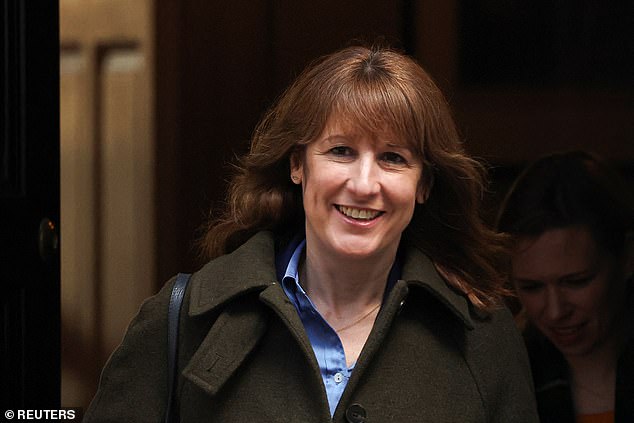
Firms are being squeezed by Chancellor Rachel Reeves’ raid on employer national insurance, steep rises in the minimum wage, and a raft of new workers’ rights
It is the longest period of job shedding for 16 years. Things were last this bad in 2009, when the economy was being battered by the global financial crisis.
Now, firms are being squeezed by Rachel Reeves’ raid on employer national insurance, steep rises in the minimum wage, and a raft of new workers’ rights – all of which have made it costlier to employ people.
Wednesday’s PMI report showed the services sector posted a reading of 54.0 in January – on a scale where the 50-mark separates growth from contraction.
That was the best reading since last August as firms recovered following the uncertainty that had been created late last year in the run-up to the Chancellor’s late November Budget.
But the report also said growth was being held back by global uncertainties.
Tim Moore, at S&P Global Market Intelligence, added: ‘There were again gloomy signals for the UK labour market outlook as staff hiring decreased at a steeper pace in January as firms looked to offset rising payroll costs.’
Meanwhile, the latest forecast from the National Institute of Economic and Social Research (NIESR) suggested unemployment will peak at 5.5 per cent this year, the highest level since the three months to July 2015.