- WHY BRAINS NEED FRIENDS by Dr Ben Rein (Quercus £25, 256pp) is available now from the Mail Bookshop
The brain, Ben Rein writes, is the only organ in the human body ‘that gets lonely’.
As the American neuroscientist points out, all the others simply work when healthy. It would be absurd to suggest that they might be in some way, even metaphorically, friendless.
The brain is different. ‘It craves the company of others. Without this, it fails.’
Connection with others is good for our health. Rein quotes studies in which people who have frequent interactions with friends and family report greater wellbeing; those with ‘unmet social needs’ score lower in the tests. Even brief encounters – conversation in a coffee shop, chitchat with a neighbour – can increase our happiness. Interactions, Rein notes, are ‘natural mood-boosters’.
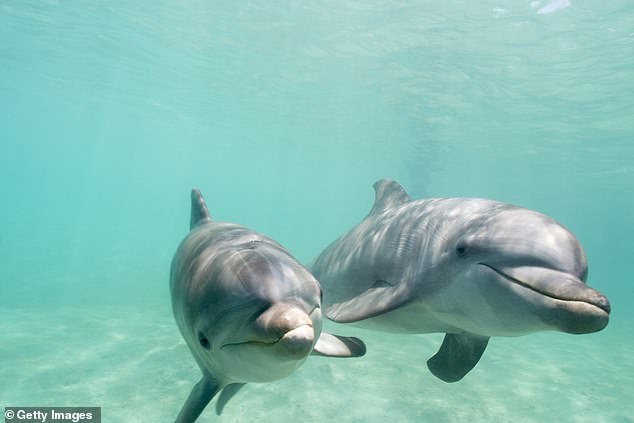
Selfless: Dolphins would rather be generous and give a prize to another dolphin that keep it for themselves
He goes further, arguing that the strength or weakness of our social lives might influence how long we live. He quotes one study which followed 300,000 people over, on average, seven and a half years. During that time, some of the subjects passed away.
It emerged that people with weaker social relationships were 50 per cent more likely to die in the course of the study. In other words, social isolation is roughly twice as dangerous for an individual as being obese. If this weren’t bad news enough, isolation is ‘one of the strongest known predictors of suicide’.
And perhaps the worst news is that we are living in a world where we interact with others less and less.
For the majority of humanity’s time on Earth, our brains were shaped by face-to- face contact. That may no longer be true. There are many reasons for this but Rein emphasises the influence of social media.
There is growing evidence that too much time spent on social media can be harmful. Get rid of smartphones, as they did in more than 400 schools in Norway, and students’ mental health improves. Bullying fell by 43 per cent. Even restricting phone use to half an hour a day for a couple of weeks has been shown to reduce anxiety and depression.
Use, or overuse, of social media can also be blamed for an apparent reduction in our empathy for others.
Animals can also feel empathy and connection with others. Rein cites a charming experiment in which bottlenose dolphins could choose between selfishly taking a reward for themselves or giving another dolphin a reward and earning one themselves. The dolphins mainly preferred to be generous, particularly when the other one was of the opposite sex.

Contagious: Your own heart rate can rise when you see others in distress
Humans can experience ‘emotional contagion’, where feelings can pass from one person to the next. In one study, researchers looked at a firewalking ritual in a Spanish village in which residents cross hot coals in their bare feet. It found spectators’ heart rates rose in tandem with those braving the coals.
Emotional contagion provides evidence of what Rein calls ‘our innate drive for togetherness’. He believes we might be ‘slipping deeper and deeper into isolation’ and that this represents a grave danger.