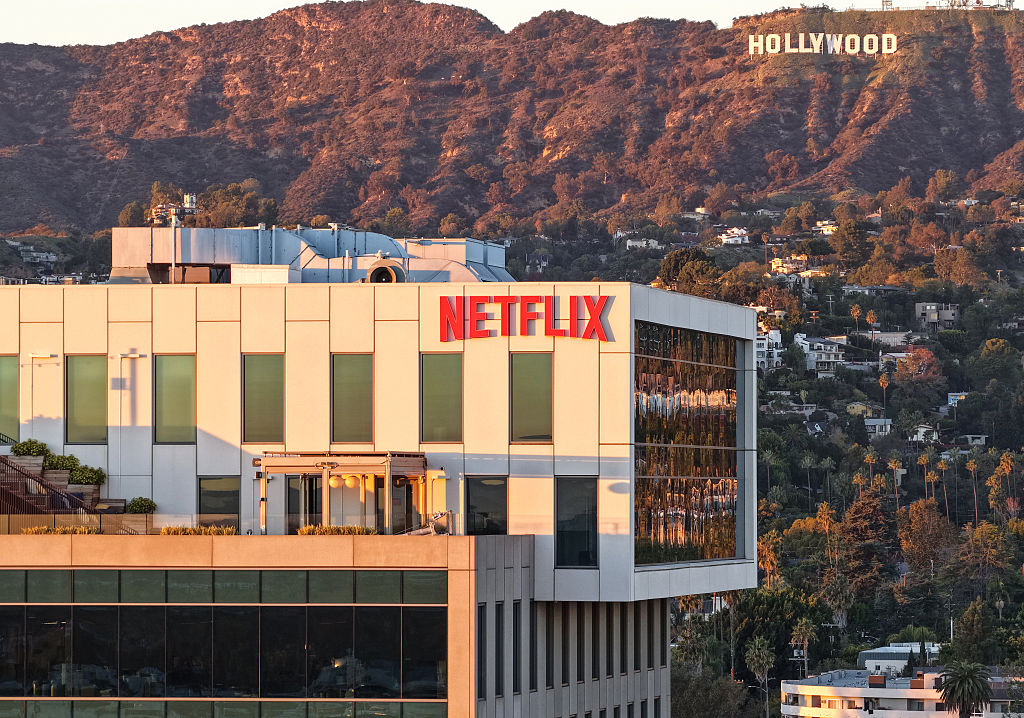
On Sunday, President Trump sounded an alarm that polite society has been conditioned to ignore. Netflix, already the dominant player in American streaming, is now seeking to swallow Warner Bros. Discovery, a move Trump warned “could be a problem” if allowed to proceed.
It was an understated way of saying something obvious: We have spent a decade fretting about Big Tech monopolies and now face the prospect of nothing less than a monopoly on storytelling.
This is not merely another corporate merger in a consolidating entertainment landscape. It is the further fusion of Silicon Valley’s mid-2010s ideological monoculture with Hollywood’s older, more entrenched progressivism.
I am generally sympathetic to social media platforms. Even with their lurch towards censorship between 2016 and 2022, their technology was inherently disruptive of the liberal establishment. Though their own “trust and safety” departments were filled with modern-day Stasi, the platforms inexorably rumbled to their logical conclusion: the end of legacy media dominance and the postwar liberal moral framework it guaranteed.
Netflix, by contrast, is a vertically integrated studio and online distribution system. This results not in democratization, but an algorithmically turbocharged version of the same cultural gatekeeping Americans rejected when they cut the cord.
Netflix’s bid for Warner raises traditional antitrust concerns. The merger combines Netflix, the number-one streaming service, and Warner Bros. Discovery, including HBO Max, the fourth-largest, as well as two megastudios. But the deal is not happening in a political vacuum. In fact, many prominent MAGA-aligned commentators see the ideological stakes as unmistakable.
Jack Posobiec summarized what he calls Netflix’s “Obama-industrial complex”:
[BLOCK]Netflix signed their Obama deal in 2018 and put Susan Rice on the board. Then, Rice went to the Biden Admin. In 2023, Susan Rice rejoined the Netflix board. In 2024, Netflix signed a massive expansion of their Obama deal.[/BLOCK]
Former Rep. Matt Gaetz (R-FL) called for blocking the merger, noting it would result in “the most massive content distributor lashing to a massive content producer /catalog,” which “will create a homogenized, woke nightmare for the media landscape.”
One need not adopt the most dramatic version of these arguments to recognize the danger: An entertainment empire already shaped by progressive ideological preferences is positioning itself to become the single most influential cultural institution in American life.
Hollywood’s Worldview, Now With a Silicon Valley Delivery System
The Hill recently reminded readers that AT&T sold WarnerMedia to Discovery in 2021. Trump publicly suggested that CNN should be sold because of its bias and mismanagement. That was a warning about media credibility; today’s warning is about cultural hegemony.
What makes Netflix distinct is not merely its size, but its ideological consistency. Even as Trump’s second term pushed Big Tech away from the excesses of DEI—Microsoft retreating from its partnership with NewsGuard, Meta unwinding its fact-checking and speech-policing infrastructure, Google’s YouTube loosening its content-moderation policies—Netflix moved in the opposite direction, reaffirming its DEI policies just weeks into the Trump administration as the rest of Silicon Valley abandoned such woke shibboleths.
Moreover, while Silicon Valley at least pretended to repent its post-2016 lurch towards censorship, Netflix doubled down on the woke moral framework, one in which dissent from progressive orthodoxy on race, gender, or immigration is treated not as disagreement but deviance.
It is epitomized by Netflix’s founder and chairman, Reed Hastings. Hastings has given millions of dollars to Democratic candidates. Hastings is, of course, free to support whatever political causes he wishes, but he has tried to blacklist Trump supporters from Silicon Valley.
When they both served on Facebook’s Board in 2016, Hastings tried to remove Peter Thiel over his Trump endorsement. Hastings claimed that Thiel’s support for Trump was not a mere difference of opinion, but “catastrophically bad judgment.” Ultimately, Mark Zuckerberg defended Thiel and made the case for ideological diversity.
The Antitrust Problem No One Wants to Acknowledge
Antitrust is not usually a culture-war issue, but here the economics and ideology intersect.
Subscribe Today
Get daily emails in your inbox
Netflix is already the largest streaming service in America, with over 81 million subscribers. Amazon Prime Video trails at roughly 75 million, with HBO Max at around 58 million.
If Netflix absorbs Warner Bros. Discovery, the combined behemoth would dwarf every competitor. The new entity would have nearly 50 million more subscribers than its nearest rival. Yes, Americans often bundle services, but a merger of two of the biggest players unmistakably reduces consumer choice. That’s a clear-cut antitrust issue.
President Trump was right to say the merger “could be a problem”—and that’s putting it mildly.