NATO is weighing up sweeping new air combat rules that could make it far easier for its pilots to shoot down Russian fighter jets amid rising tensions with Moscow.
Defence chiefs are in talks over a single, unified rulebook for engaging enemy aircraft in a move that could allow Russian warplanes carrying ground-offensive attack missiles over allied territory to be treated as legitimate targets.
According to a source briefed on the close-door discussions, the ‘weaponry and trajectory’ of an aircraft would determine whether it poses a threat.
The proposals are expected to be discussed by defence ministers at a NATO meeting in Brussels on Wednesday, as European allies grow increasingly concerned about aggressive Russia flights and drone incursions near their borders.
NATO leaders – including Donald Trump – have voiced support for taking tougher action against Russia aircraft violating alliance airspace.
However, several member states remain wary that such a move could risk direct confrontation with the Kremlin.
General Alexus Grynkewich, NATO’s Supreme Allied Commander Europe, has privately pushed for a ‘unified, single air and missile defence system’ to streamline the alliance’s response to potential Russian provocations, sources say.
The proposal would strip away so-called ‘national caveats’ – the differing national rules that currently govern how each country’s pilots can engage threats – and hand NATO’s top general greater freedom to respond decisively.
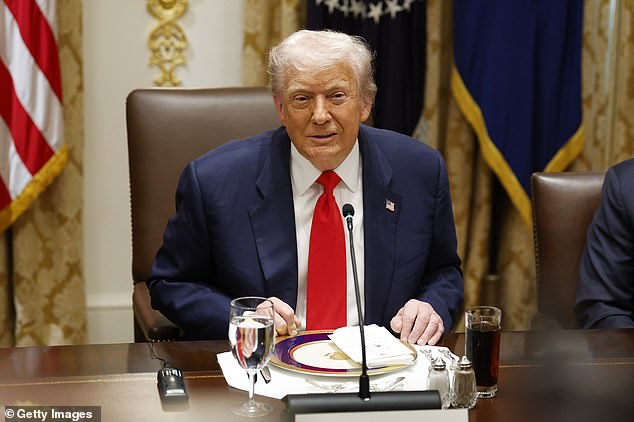
NATO leaders – including Donald Trump – have voiced support for taking tougher action against Russia aircraft violating alliance airspace
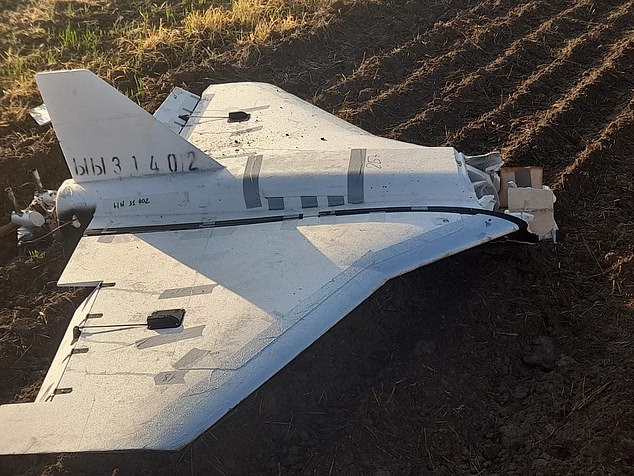
Up to four of the 19 Russian drones were shot down by Polish and NATO aircraft – the first time Kremlin drones have been downed while flying above a NATO territory, in September 2025
At present, member states operate under widely varying rules of engagement.
Some require pilots to visually confirm targets before opening fire, while others permit action based purely on radar data.
The inconsistencies have prompted behind-the-scenes debate about what conditions would justify shooting down a Russian jet over NATO territory.
Last month, the alliance was forced to hold two emergency Article 4 meetings following Russian incursions in Estonia and Poland.
In one incident, three Russian MG fighter jets entered Estonian airspace, prompting Italian F-35s to scramble in response.
The Russian planes were ordered to leave and escorted to international airspace in what insiders describes as a ‘textbook’ response.
General Grynkewich decided against authorising weapons fire after intelligence reports showed the MiGs were armed only with air-to-air missiles and had made no attempt to target NATO fighters.
However, NATO officials have discussed scenarios in which such aircraft could be shot down – for instance, if they carried air-to-surface weapons or followed an aggressive flight path.
Another challenge facing General Grynkewich is the patchwork of overlapping air-defence operations currently active on NATO’s eastern flank.
Three separate missions – Eastern Sentry, launched after Russian drone violations over Poland, Baltic Sentry, operating since January, and the alliance’s Ukraine training mission – all have their own air-defence components.
Dozens of NATO countries contribute to these missions, each with its own rules of engagement.
A senior diplomat described the arrangement as a bureaucratic ‘headache’ for the Supreme Commander.
Germany, Spain, and Italy are said to be among the more cautious nations in the alliance, despite playing significant roles in these operations.
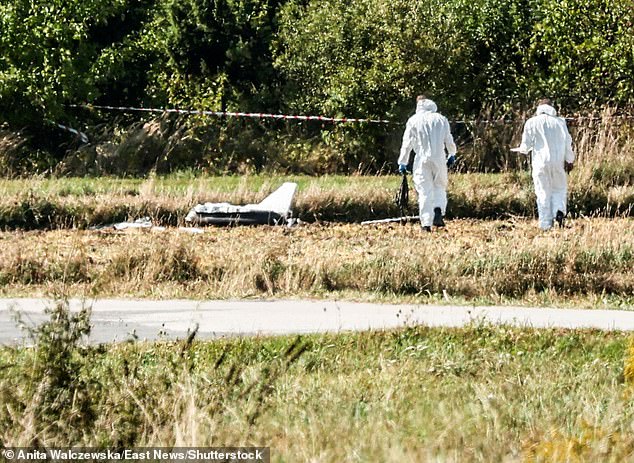
Parts of discovered drone are seen in the village of Mniszkow in central Poland, where one of the Russian drones that breached Polish airspace was discovered on September 10, 2025
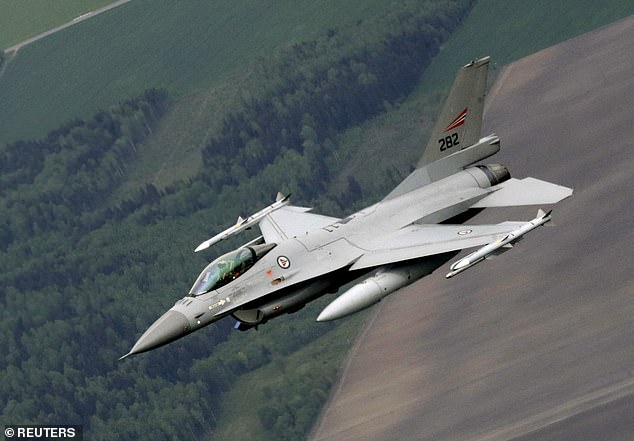
A Norwegian Air Force F-16 fighter jet (file image). NATO scrambled the jets to its Eastern flank following Russia’s attack on Ukraine
‘Trying to create a more unified, single, integrated air and missile defence system makes sense, and in order for him to do that, he needs to get rid of as many national caveats as possible,’ one senior NATO diplomat told The Telegraph.
‘We all have to look sharply and critically at whether those caveats still make sense.’
Defence ministers will also consider merging the three air-defence mission to give General Grynkewich more operational flexibility.
NATO Secretary General Mark Rutte said the plans would ‘further strengthen our deterrence and defence posture, including in light of recent incidents’.
Estonia – backed by other Baltic nations – is leading calls for NATO’s existing air-policing missions to be upgraded to full air-defence operations.
But several countries are pushing back, arguing that such a move should be reserved for wartime conditions since it would involve closing civilian airspace and authorising the downing of any Russian jet that enters without warning.
Raimond Kaljulaid, who chairs Estonia’s delegation to NATO’s parliamentary assembly, dismissed that cautious approach.
He said that if force is only used when there is a direct military threat, then this is a sign of weakness, as ‘you are in effect saying that under certain conditions violations of our airspace will have no consequences’.
‘Instead, our public position should be that we have the right to respond in a manner that we see fit and Russia should know that perhaps next time our reaction will be something else,’ he added.
‘This idea that our reaction is dependent on the way the Russians are acting – threatening or not – could basically imply that you can also drive a tank across the border if it poses no immediate threat. Of course that is ridiculous. We either have borders or we don’t.’
In June alone, NATO aircraft including F-35s and F-16s were deployed 29 times to intercept Russian activity over the Baltic Sea, according to Denmark’s military.
Meanwhile, Moscow appears to be escalating its war preparations.
A new Russian law expected to pass parliament this week will allow up to two million military reservists to be mobilised for combat in Ukraine – even during peacetime.
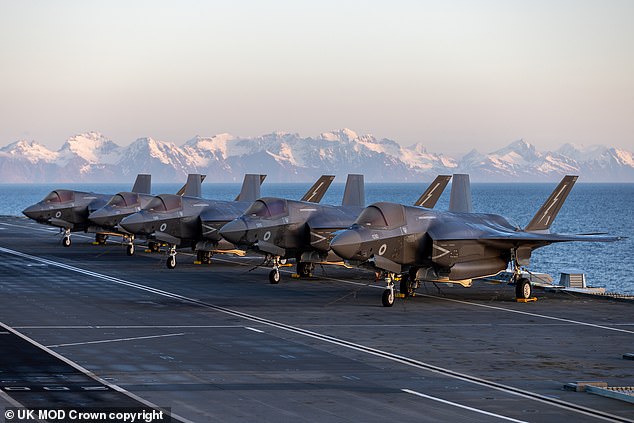
F-35 jets lined up on HMS Prince of Wales flight deck (file image)
The amendment sidesteps the need to declare martial law, potentially sparing the Kremlin another unpopular mobilisation drive like the one in September 2022, which sent tens of thousands of men fleeing the country.
Britain, meanwhile, is ramping up support for Ukraine.
Defence Secretary John Healey will tell NATO allies in Brussels that the UK has already delivered 85,000 drones this year – and expects to exceed its target of 100,000.
He will reveal that London has invested £600million to speed up drone production and delivery to Kyiv, urging allies to ‘ramp up drone production to outmatch Putin’s escalation.’
Mr Healey will also confirm that RAF Typhoons will continue flying under NATO’s Eastern Sentry mission for the remainder of the year, at minimum.