The National Trust has been accused of turning a picturesque beach in Dorset into a ‘horrific eyesore’ after its decision to remove sea defences exposed an old rubbish tip.
Engineers removed the structures at Middle Beach in Studland last September to ‘allow nature to take its course’.
The beach was beloved by Enid Blyton and Studland was the inspiration for Toytown in Noddy.
The controversial decision by the conservation body was part of a ‘managed retreat’ policy which aimed to allow water to reclaim the land.
However the move has accelerated coastal erosion and exposed a rubbish dump buried in the sandy bank behind the beach.
As a result, tons of rubbish has been washed onto the sand, including lethal asbestos sheeting which could pose an environmental health risk.
The erosion also unearthed a Victorian toilet block which was filled to the brim with decades worth of dumped plastic, glass and rusty metal.
National Trust volunteers are now undertaking daily clean-up operations to try and handle the amount of waste.
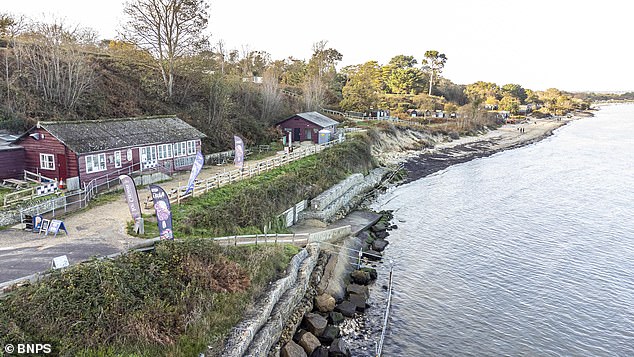
The picturesque Middle Beach in Studland, Dorset, pictured before the changes with its sea defences
After the National Trust removed sea defences the water eroded the beach uncovering an old rubbish tip
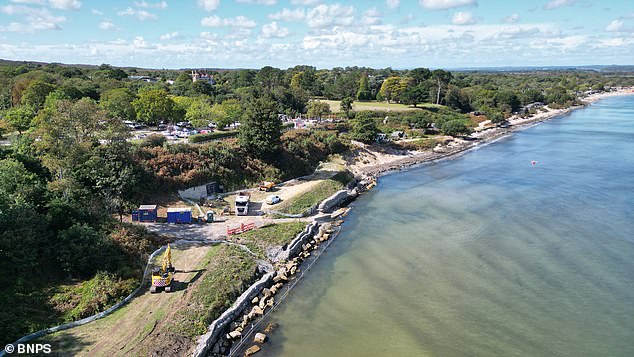
Workers pictured at the beach removing the sea defences to allow nature to ‘take its course’
In 2023 the Trust demolished Britain’s oldest beach cafe on top of the small cliff despite overwhelming opposition against the move.
Although the building was 60ft back from the edge, the organisation claimed it was at risk of falling into the sea and so had to be razed to the ground.
Nick Boulter, chairman of Studland Parish Council, said: ‘It’s horrible. All that waste which has been dumped into the sandy bank for the past 50 to 100 years is coming out of the cliff, creating an eyesore.
‘I’ve heard that the poor National Trust volunteers are down there every day filling 10 bags of plastic waste.
‘For £100,000 to £200,000, we told them they could have replaced the gabions.
‘We warned them that if they didn’t, then this rubbish would reappear.
‘Now, when you go down to the beach there are warning signs saying it is “dangerous”.
‘The worrying thing is we’ve not had any bad storms yet so it could get much worse.’
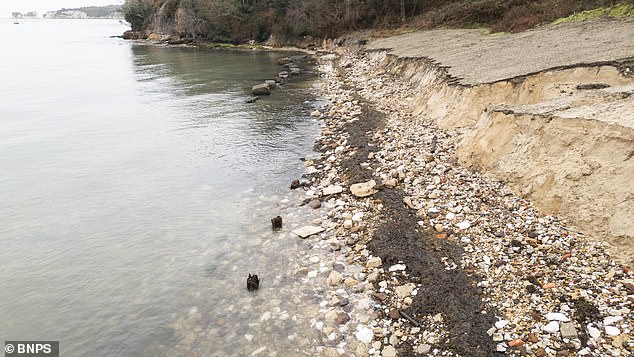
Tons of rubbish has been washed onto the beach including lethal asbestos sheeting which could pose an environmental health risk
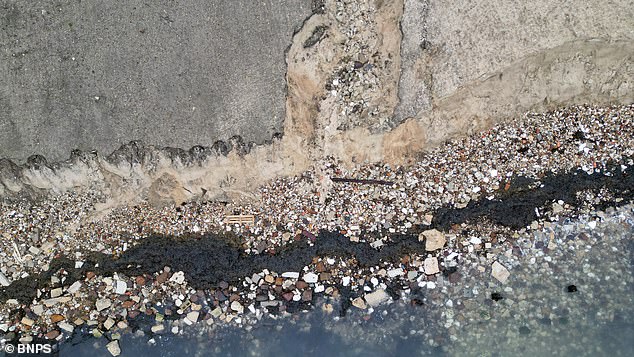
The policy has accelerated coastal erosion and exposed an old rubbish dump buried in the sandy bank
Andrew Parsons, a local resident and a civil engineer, said: ‘It is absolutely appalling. I don’t know what their agenda is. It’s not what they are supposed to be doing.
‘If it was a building site and this waste was unearthed Environmental Health would come down on them like a ton of bricks.
‘The National Trust are doing this stupid process of returning it to nature when they should be preserving buildings like the old cafe.
‘Anybody could have seen this would happen and they have shown an incredible lack of foresight.
‘The sea defences would have stopped this from happening for decades.
‘This is what people are paying their National Trust subscriptions for.’
The sight of the beach covered in old rubbish has sparked outrage among locals on social media.
Phil Morgan said: ‘Now you have all the plastics cement rubble being washed into the sea.’
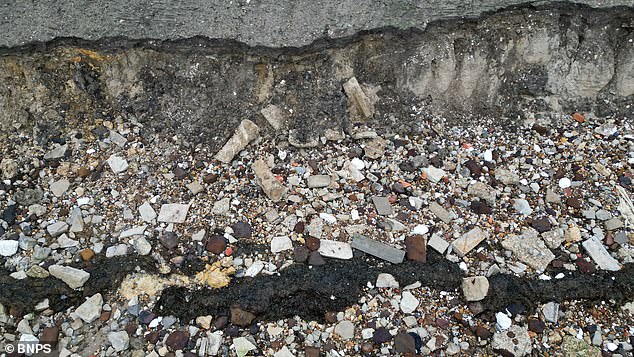
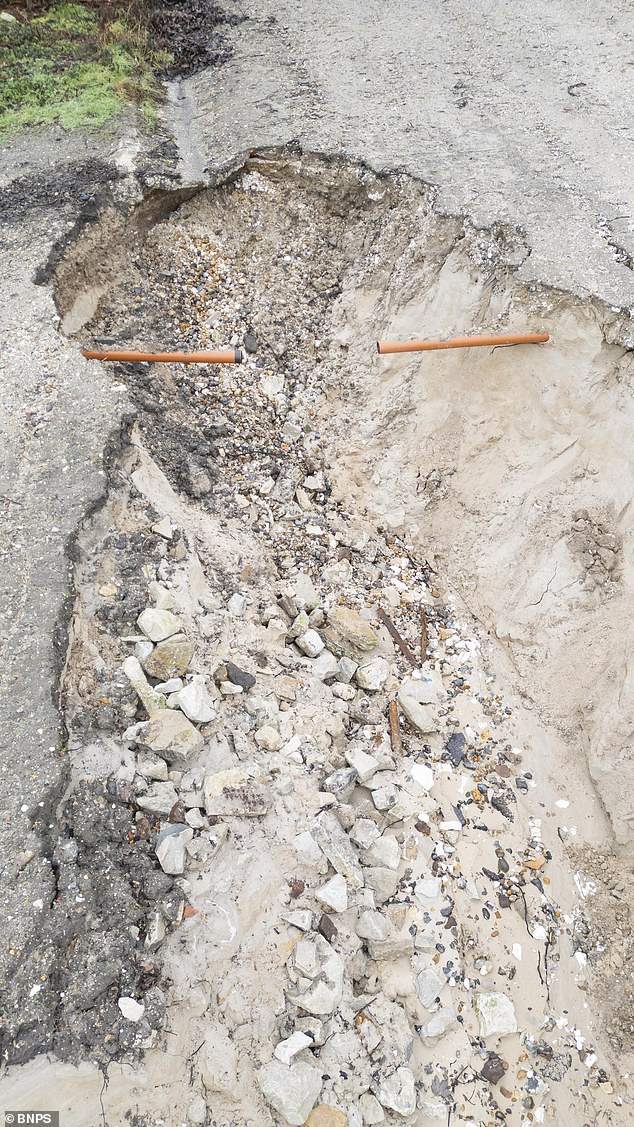
Old building bricks, tiles and an exposed pipe are seen at the beach after it was eroded away by the sea
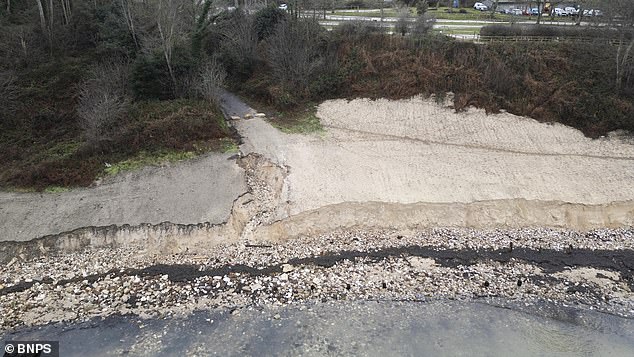
The decision was part of a ‘managed retreat’ policy which aimed to allow water to reclaim the land
Lynda Essex said: ‘Most places are reinforcing beach defences. Why were these removed? I hope the NT do a rapid clean up job, before the sea takes all that rubbish.’
Helen Gulliford said: ‘Why has the NT let this happen, thought they were supposed to protect Studland.’
The National Trust said that sea defences such as gabion baskets would not have been effective against the rising tides and could have collapsed posing a risk to the public.
Sarah Coggins, the National Trust’s coast & marine adviser, previously said: ‘Holding the cliff in place with a hard structure like gabion baskets means that the shoreline is not naturally aligned with the coast.
‘Removing the artificial structures will allow the beach to replenish itself using sandy material from the cliff.
‘Over time, it’s predicted that this will result in the formation of a sandy cove, with more beach for people to enjoy.
‘The effects might look extreme at first, but projections show that over the next 20 years or so the cliff will realign to become a gentler slope.’
The National Trust said they have closed Middle Beach for safety reasons while the clean-up continues.
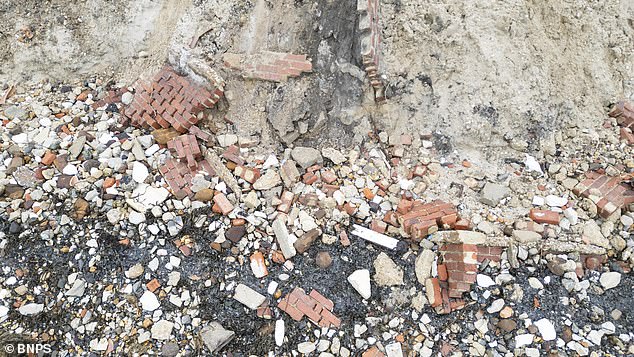
Bricks from the Victorian toilet block were unearthed by the erosion from the sea
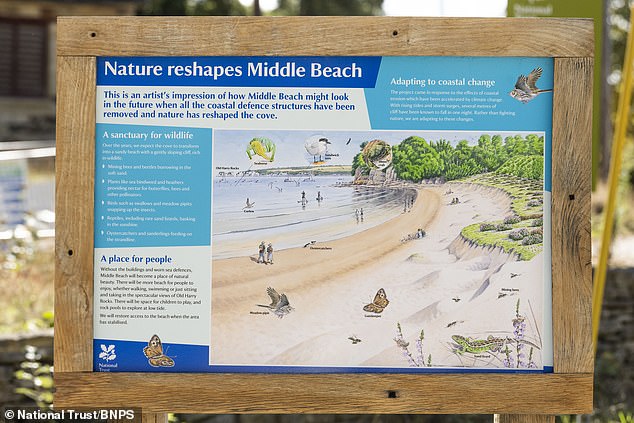
A noticeboard at Middle Beach has imagined how it may look after removing the sea defences
Tracey Churcher, National Trust general manager for Purbeck, said: ‘We had a specialist contractor remove some asbestos sheeting early on in the process, and are continuing to undertake daily cleaning of the beach to remove rubbish.
‘The plan is to assess the situation after the end of the winter storms – let winter do its thing – and then see what more we need to remove of the rubble and what can safely stay.
‘In the meantime, we’re keeping Middle Beach closed for safety.
‘There are items being revealed by the erosion, which may be unexpected, like sharp glass and jagged bits of rusty metal.
‘We don’t want anyone including children or dogs, to hurt themselves.’
When asked about the potential environmental health hazard, a spokesperson for Dorset Council said: ‘This is on private National Trust owned land, so you would need to speak to them in the first instance.’