NASA has shared a surprising list of movies it considers among the most scientifically accurate ever made.
The films span nearly a century of cinema, from silent-era classics to modern blockbusters and were praised for respecting real scientific principles rather than relying on fantasy.
According to NASA and NASA-affiliated scientists, accuracy is not about predicting the future perfectly, but about portraying science, scientists and technology realistically.
Movies like Gattaca and Jurassic Park earned recognition for their grounded treatment of genetics, DNA and complex systems.
Others, including Contact and The Day the Earth Stood Still, made the list for their realistic depictions of space exploration, radio astronomy and extraterrestrial contact.
Even early science-fiction films, such as Metropolis, released in 1927, and the 1929 Woman in the Moon, were praised for their societal and ethical consequences of advanced technology and rocket science.
NASA has noted that these movies take science seriously, showing careful experimentation, skepticism, and problem-solving rather than magical solutions.
Together, the list highlights how some of Hollywood’s most enduring science-fiction stories were built on ideas that remain scientifically sound decades later.
Gattaca (1997)
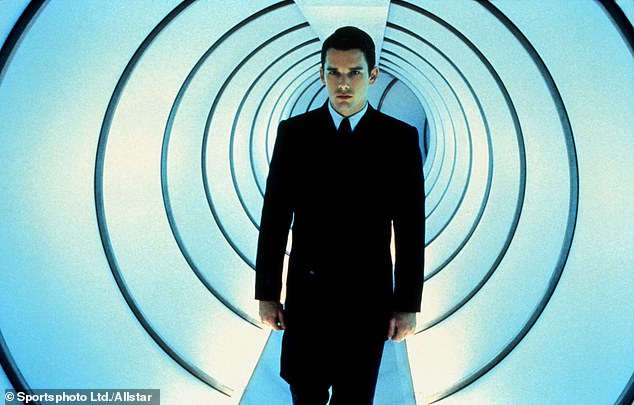
Set in a future where people are judged by their DNA, Gattaca follows a man born without genetic enhancements who dreams of traveling to space
Set in a future where people are judged by their DNA, the story is about a society that is divided by genetics, with ‘Valids’ (genetically engineered) holding privilege and ‘In-Valids’ (naturally born) relegated to menial jobs
Vincent Freeman (played by Ethan Hawke), an In-Valid, assumes a Valid’s identity to achieve his dream of space travel, confronting discrimination and uncovering a murder mystery along the way, exploring themes of destiny versus determination and the human spirit’s power over biology.
NASA praises Gattaca for its realistic portrayal of genetics and DNA-based discrimination.
While the technology is speculative, the film accurately reflects how genetic testing works and raises plausible ethical concerns about gene selection, privacy, and human enhancement, issues scientists still debate today.
Contact (1997)
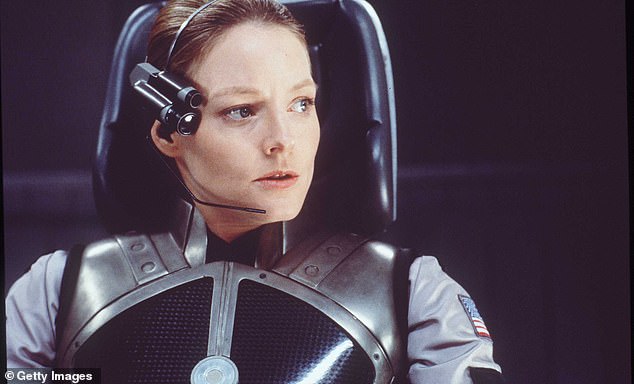
Jodie Foster plays the astronomer who detects the alien signal in Contact
A radio astronomer, played by Jodie Foster, discovers a signal from an intelligent alien civilization.
As scientists work to decode it, the film explores humanity’s first contact with extraterrestrial life, balancing hard science with questions of faith, politics and belief.
Contact is often cited as one of the most scientifically accurate space films ever made, as it was based on a novel by astronomer Carl Sagan.
NASA has highlighted its realistic depiction of radio astronomy and SETI research, scientific skepticism and peer review, the politics and funding challenges behind major space projects and the way scientists search for extraterrestrial signals as being shown with exceptional realism.
Metropolis (1927)
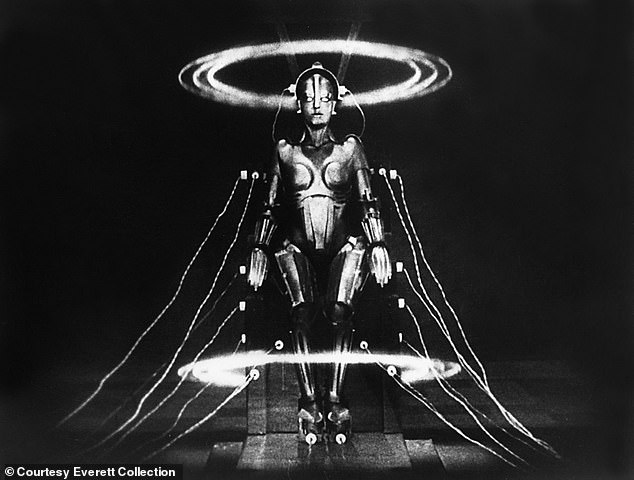
In a futuristic city divided between wealthy elites and exploited workers, a powerful industrialist creates a human-like robot to maintain control. Metropolis examines automation, artificial intelligence, and the dangers of unchecked technological power
This German expressionist sci-fi silent film is set in a futuristic city divided between opulent elites and a downtrodden working class.
The film follows Freder, the privileged son of a powerful industrialist, who falls in love with Maria, a worker who speaks out for the oppressed laborers running the city’s machines.
His awakening exposes deep class divisions and leads to chaos sparked by a robotic double of Maria, ending with a call for compassion to bridge the gap between those who control society and those who keep it running.
Despite its age, Metropolis is praised for its forward-thinking view of technology, automation, and artificial intelligence. NASA has noted how the film accurately anticipated ethical concerns surrounding machines replacing human labor and the social consequences of advanced technology.
The Day the Earth Stood Still (1951)
This film is a classic science fiction film about an alien visitor, Klaatu, who lands in Washington DC, accompanied by a powerful robot named Gort.
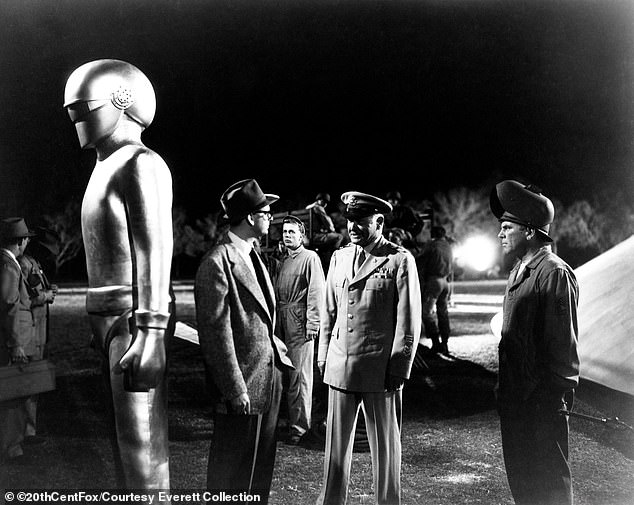
In The Day the Earth Stood Still an alien visitor arrives on Earth with a warning for humanity about violence and nuclear weapons. Rather than focusing on invasion, the story centers on diplomacy, global responsibility, and the consequences of technological aggression
He delivers a stark ultimatum to humanity: abandon violence and nuclear weapons or face destruction by an interstellar force, echoing Cold War fears about war, peace, and survival.
NASA has pointed to this film’s serious treatment of extraterrestrial contact, portraying aliens as advanced but logical beings rather than monsters. The movie emphasizes science, diplomacy, and global consequences rather than fantasy-driven invasions.
Woman in the Moon (1929)
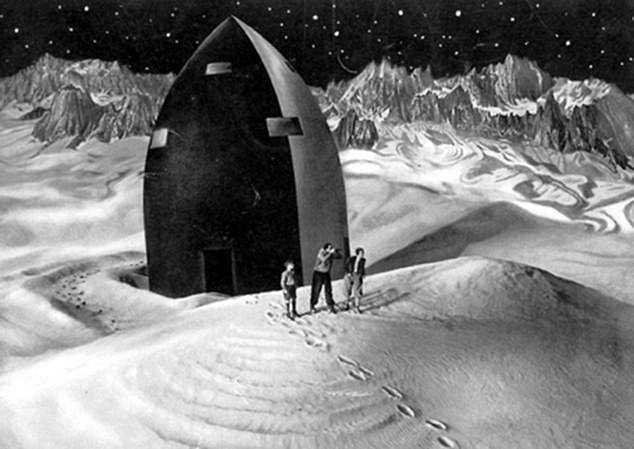
This early science-fiction film follows a privately funded expedition to the moon in search of gold. Woman on the moon realistically portrays rocket launches, space travel, and weightlessness decades before real lunar missions occurred
Woman in the Moon (Frau im Mond) is a German silent sci-fi film about a mission to the moon driven by greed for its gold.
The film features a love triangle and pioneering depictions of space travel, like countdowns and zero gravity, ultimately exploring themes of ambition, materialism and love amidst a backdrop of espionage and adventure.
The Thing from Another World (1951)
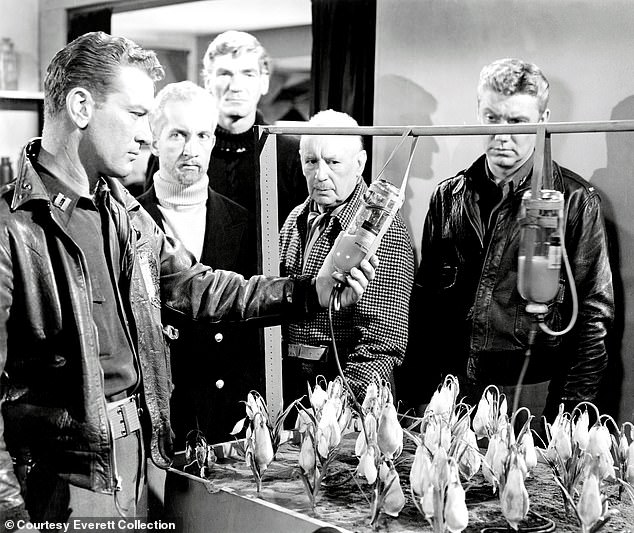
In The Thing from Another World, scientists and military personnel in the Arctic discover a frozen alien life form. As the creature is thawed, the group must rely on scientific reasoning and experimentation to understand and stop the threat
This is a classic black-and-white science fiction horror film about scientists and Air Force personnel at a remote Arctic outpost battling a bloodthirsty, plant-like alien discovered frozen in ice.
As the creature is thawed, the group must rely on scientific reasoning and experimentation to understand and stop the threat.
Jurassic Park (1993)

Jurassic Park is about a billionaire who uses advanced genetic technology to clone dinosaurs from ancient DNA and opens a theme park filled with living prehistoric creatures. When the system fails, the film explores chaos theory, human error and the limits of scientific control
This groundbreaking Steven Spielberg-directed sci-fi adventure film is about a billionaire’s theme park of cloned dinosaurs on a remote island, which goes disastrously wrong when a security failure allows the prehistoric creatures to escape and hunt the visitors.
While cloning dinosaurs is fictional, NASA scientists have praised Jurassic Park for its accurate explanation of DNA, genetics, and chaos theory.
The film correctly shows how small variables can lead to catastrophic outcomes in complex systems, a real scientific principle.