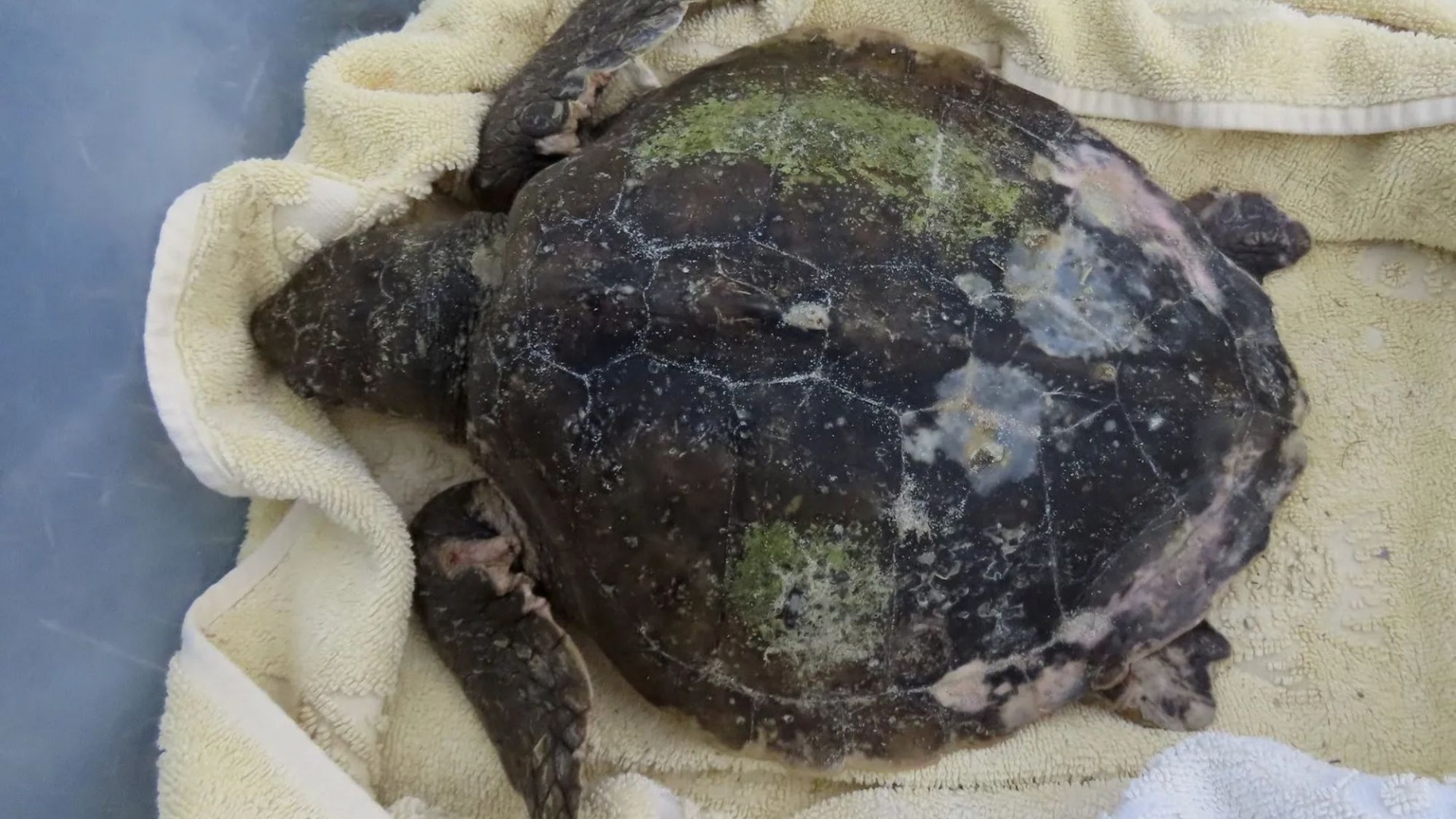
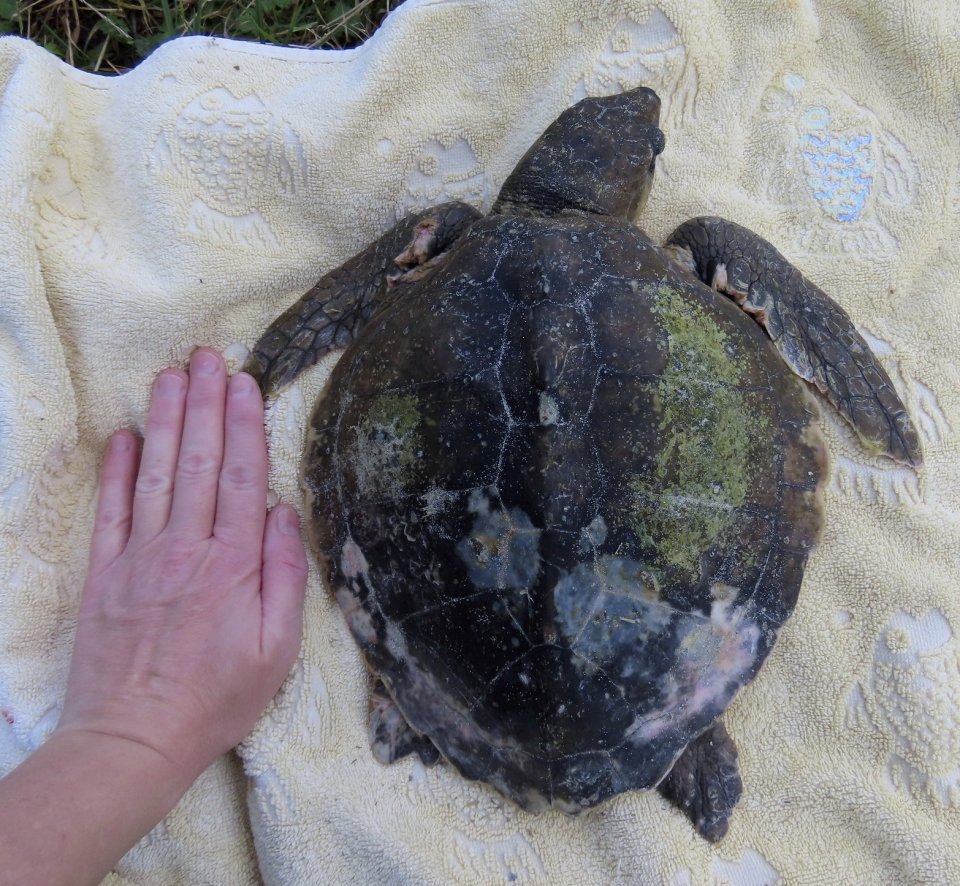
ONE of the rarest sea turtles in the world has washed up on a Scottish beach, thousands of miles from home.
The Kemp’s Ridley turtle was rescued from the Isle of Tiree on Sunday, suffering from a state of shock from the icy water.
A very long way from home, the turtle journeyed across the entire North Atlantic Ocean before she was found.
The rare and critically endangered sea turtle – normally found in the east coast of the US and Mexico – was picked up at least 3000 miles away from her natural habitat.
Hayley Douglas, an Isle of Tiree ranger, was the first to respond to the emergency call.
She believed the turtle was blown off course due to the strong winds from Storm Amy.


Douglas took the turtle home to warm her back up, cautious not to send the animal into further shock.
“Turtles aren’t native to our shores – but there have been a few turning up in the last few weeks, mainly due to weather,” she said.
“The big problem we have when they do come to shore is that our waters are a lot colder.
“They will either have passed away from cold water shock, or will be suffering from cold water shock, which is what’s happened with this particular turtle.”
Hayley said it was “incredibly important” to take the warming process very slowly.
“[The turtle] was placed in a box with a towel and kept in my porch as my house was too warm for her,” she said.
“It’s around a two degree temperature increase at a time that they can handle.”
The rescued turtle is now on her way to the SeaLife Centre in Loch Lomond, where specialist staff will continue to care for her until she is returned to the wild.
There are an estimated 7000 to 9000 nesting female Kemp’s Ridley turtles in the wild.
The species received endangered status in the 1970s.
Haley said the “most important thing to do if someone finds a turtle like this is to not put it back in the water, because it will die”.
“Secondly, do not heat it up to quickly,” she added.
“Phone the British Divers Marine Life Rescue, who will be able to arrange care and give advice to members of the public.
Hayley added that people should “keep an eye on the beach”.


“Because you never know what could turn up after a storm,” she said.
“This could happen anywhere along the coast, so people should stay aware.”