Following last week’s landmark addiction ruling against Google and Meta, the Trial podcast’s Caroline Cheetham has interviewed Ellen Roome, a mother who blames social media for the death of her teenage son.
Roome, 49, has spent four years fighting Silicon Valley in both the UK and US courts, demanding tech giants take responsibility for the dangers their products pose to children. In January she was awarded an MBE for her extraordinary campaigning.
In April 2022, after spending a day at the races in Cheltenham, Roome entered the bedroom of her 14-year-old son Jools to find him not breathing and unresponsive.
Little over an hour earlier, Jools was wrapping up a normal day spent having fun with his best friend Monty, the pair caught laughing as they said their goodbyes on the family’s CCTV cameras.
A 23-minute inquest into Jools’s death could not find any evidence the teenager was suicidal. Roome is convinced her son was exposed to harmful content on social media in that final hour, content she believes directly led to his death.
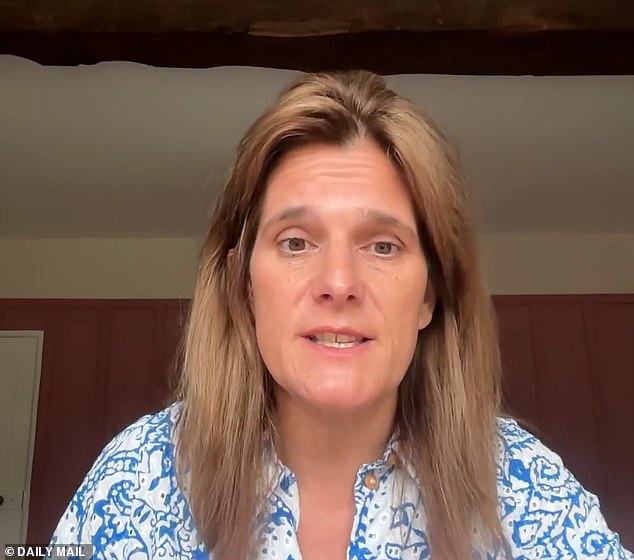
Following last week’s landmark addiction ruling against Google and Meta , Caroline Cheetham has interviewed Ellen Roome, a mother who blames social media for the death of her son
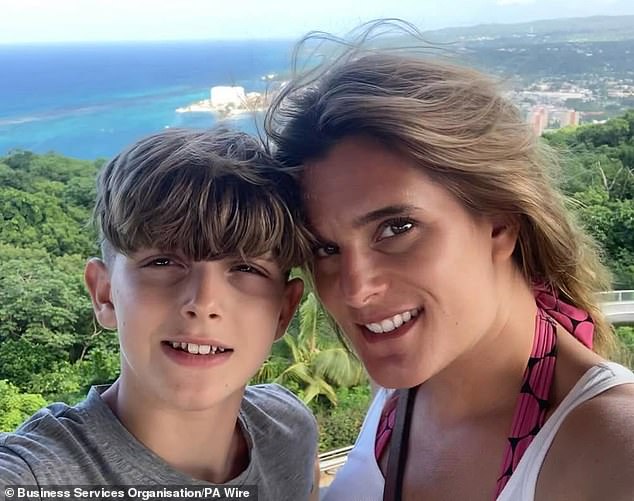
Roome is convinced her teenage son was exposed to harmful content on social media in his final hours, content she believes directly led to his death
Despite being his mother, social media companies told her she had no legal right to access his data.
‘It was a lovely, sunny day,’ Roome recounted.
‘I rang Jools, he had been playing football. He had been playing on a boat. He’d used our fire pit. I told him we had marshmallows in the cupboard.
‘At 8:46, you can see he says goodbye to his friend on our cameras. He is laughing and tells them: “See you later.”
‘I rang him again and said I would be back in half an hour. I was actually a little later, it took me about an hour to get home.
‘I phoned him at 9:56 three times. He didn’t call back, but I didn’t have any reason to suspect there was a problem.
‘I walked in the door, went straight up to his room, expecting him to be gaming and asking me, what’s in the fridge. That wasn’t the case. When I walked in, he had ended his own life.’
Roome believes her son did not deliberately intend to end his own life. She tried to gain access to his search history and social media accounts, only to be blocked by the platforms.
She said: ‘You can see on our camera, he does not look sad, miserable, depressed – he is literally laughing.
‘Monty had been with him all day. He had no suspicions, nobody had any suspicions.
‘A normal 14-year-old child does not end their life for no reason at all. As a parent, you go through every single possible scenario. Was he being blackmailed? Was it some kind of challenge gone wrong?
‘There were some things that made it seem that he definitely did not intend to end his own life. I thought there was something we had missed and his social media was never looked at properly.’

Roome said bereaved parents have been given ‘hope’ by the recent landmark ruling against Meta and Google, which found them liable for designing their platforms to addict children
Roome has succeeded in changing UK law. An amendment to the Crime and Policing Bill, known unofficially as Jools’ Law, requires social media companies to preserve the data of deceased children. Previously, that data could vanish from a device within as little as 30 days of inactivity.
However, as Jools’ case was closed before the law was introduced, it does not apply to her. She is currently applying to the High Court to reopen his inquest, a legal step that would allow her to pursue his social media data through the courts.
Separately, she is suing TikTok in the United States, a case that could force the platform to hand over what Jools was shown in his final hours.
Roome said bereaved parents have been given ‘hope’ by the recent landmark ruling against Meta and Google in the US, which found them liable for deliberately designing their platforms to addict children, with a Los Angeles jury awarding $6 million in damages.
However, she warns the UK is at risk of falling behind in legislating against social media harms, calling on the government to act now rather than wait for more children to be harmed.
Roome said: ‘These companies feed children harmful content. They do not take any accountability for what our children have seen or are still seeing. It just has to change.
‘The UK really needs to step up. I wholeheartedly support Lord Nash’s amendment in the House of Lords to raise the age of access to 16.
‘Why are we waiting for more children to be harmed and die? I cannot get my head around it.
‘Why don’t the government just take it away? These companies need to make it safe, and then we can consider giving it back.
‘If it was a toy, a car, it would be removed, fixed and then delivered back when it was safe.
‘We are not doing that with social media, but we have proved the product is faulty. They need to fix it.’
For help and support, call the Samaritans for free from a UK phone, completely anonymously, on 116 123 or go to samaritans.org
Listen to the full interview by subscribing to The Crime Desk. Subscribe today for access to the Trial+ podcast, ad-free listening and a host of other member benefits.