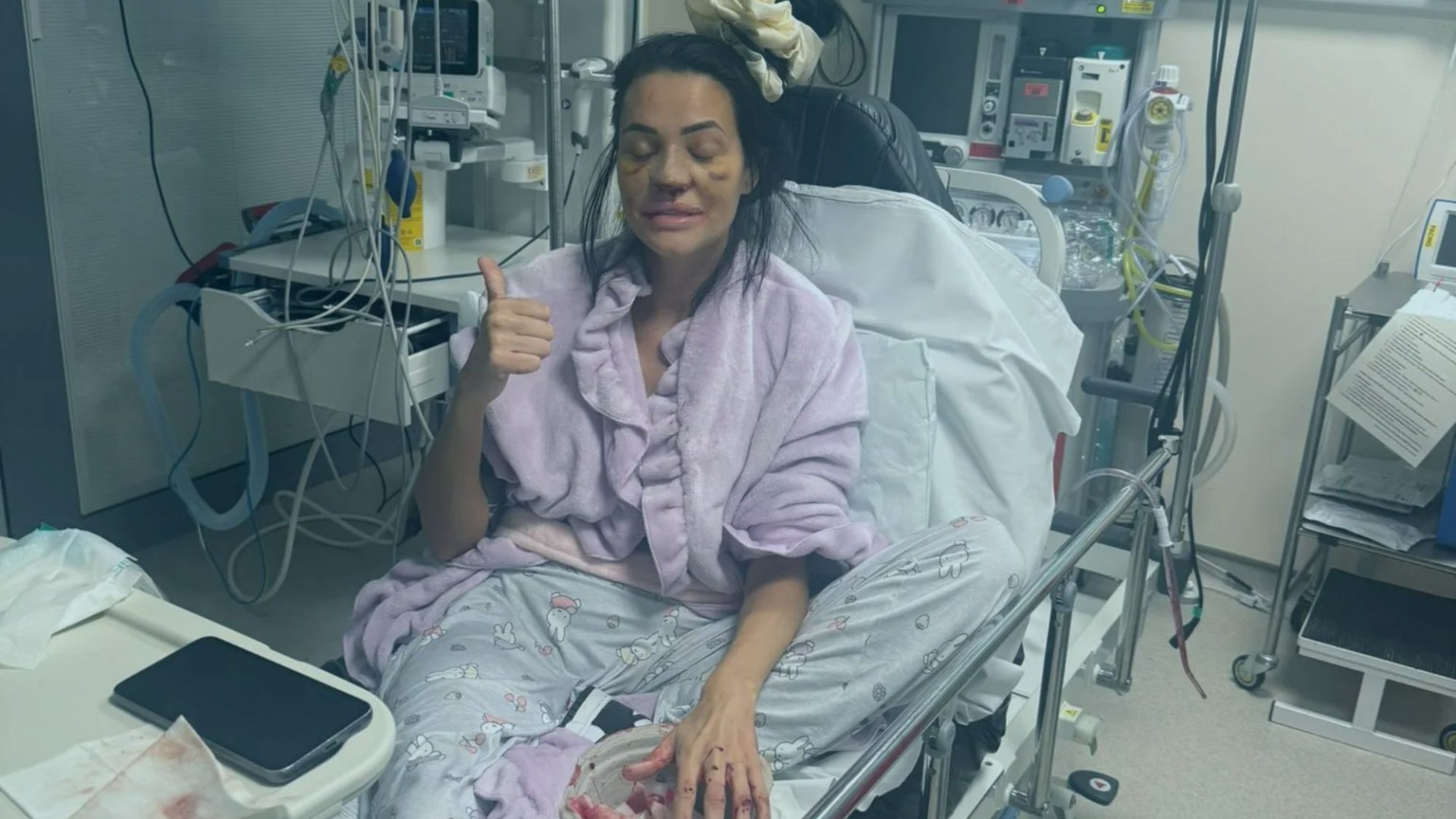
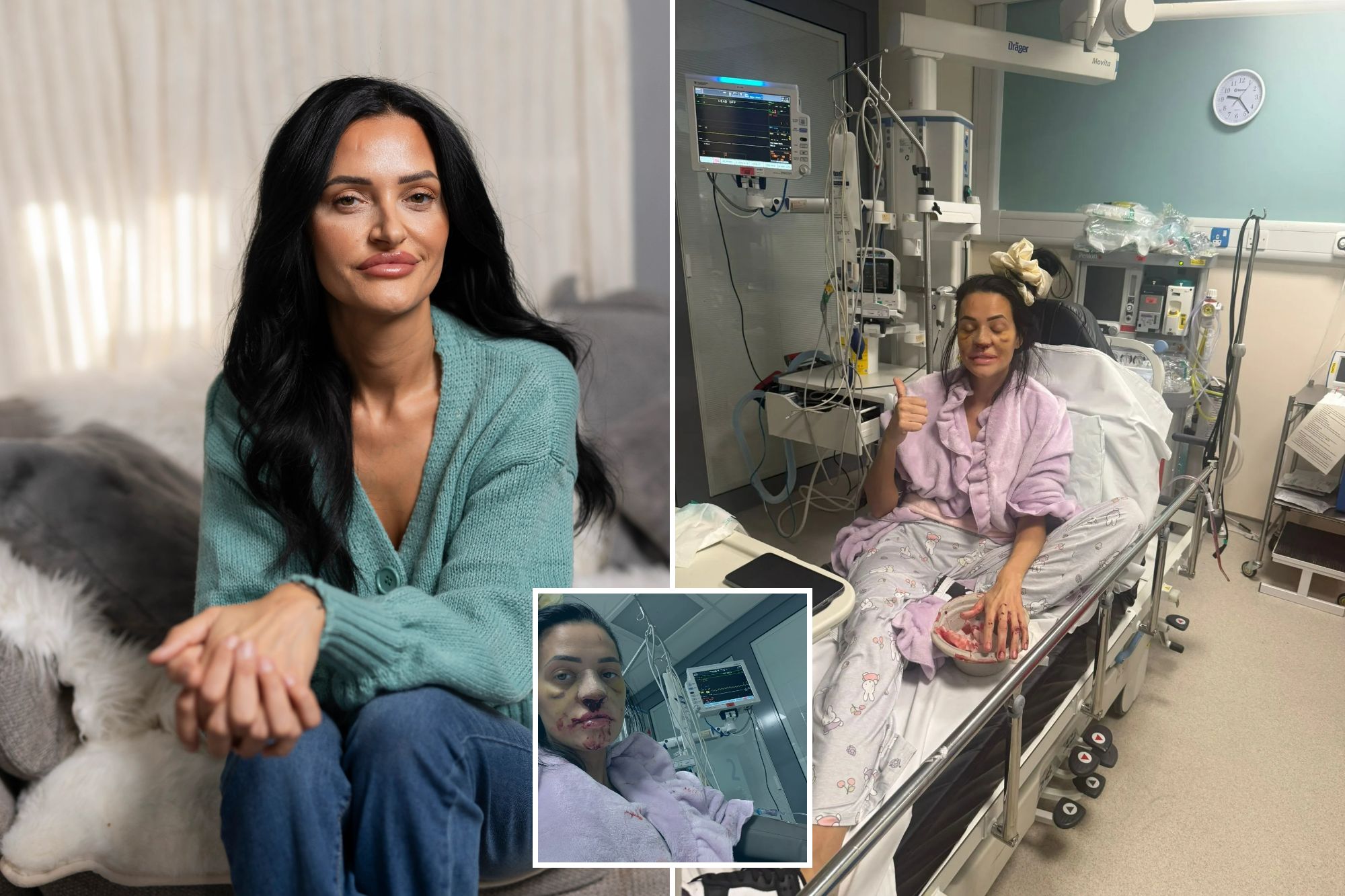
WAKING from surgery, benefits influencer and mum-of-three Whitney Ainscough smiled and gently touched her nose – not yet knowing the horror which was about to unfold.
The controversial 32-year-old social media star had opted for a three-in-one surgery ‘package deal’ on January 16 at a clinic in Turkey.
For £12,000 she’d had her breasts enlarged from a size 34C to a 34E, her teeth shaven down and crowns fitted and her nose re-shaped.
It had seemingly gone well with the ‘Turkey teeth’ procedure happening first and the five-hour breast and nose jobs occurring separately during a five-hour operation.
“I woke up and felt great,” says Whitney, who made her name after boasting about being on benefits but still buying posh goodies to the chagrin of her 1m Instagram, TikTok and Facebook followers.
“My t**s looked amazing and I didn’t feel groggy. I had always hated my nose, since I was a kid, and had even been bullied about it online so thought ‘this is brilliant’.”
Read more in cosmetic surgery

But just days later on January 22, after a five-hour flight home from Turkey to Manchester Airport, her nose started dripping blood.
“I raced to the loo on the plane,” she says. “It was really weird as it had been fine up until then.
“But I wasn’t overly worried because I thought some bleeding was to be expected and I could stem it at that stage. It was basically just a nose bleed.”
Whitney, who is semi-dating influencer and Worksop caravan dweller Jonathan Stone, 31, who accompanied her to Turkey, says on arriving home to Rotherham, South Yorks., she cleaned her nostrils with a sterilising spray as recommended before she headed to bed.
But she woke repeatedly in the night to find things had worsened considerably – with her nosebleed not stopping, clogging her mouth with blood and leaving her unable to breathe.
“Blood was coming out of my nostrils in clumps,” says Whitney, mum to Cora, 14, Addison, eight, and Adley, four.
“I felt so iffy,” she says. “I kept spitting out blood and more would drip down. I was filling bowls with it.
“It was coming from the back of my nose. I couldn’t breathe or swallow.
“I could barely breathe as clots of blood dripped from the back of my nose into my mouth.”
At 6am she was downstairs when Addison walked in to see her cough up a huge “slug like” blood clot.
“It looked like a chilli pepper,” she says. “He ran to his room, thinking I was dying. Cora was terrified too, she was crying because there was so much blood.”
At that point she called her mum, Louisa Longdon, 52, to look after her children and Jonathan drove her to Rotherham Hospital. “At A&E, I was triaged and admitted as a patient,” she says.
There she filled the beige kidney-basin like hospital bowls with blood. “It just kept pouring out,” she says. “It was horrific. It was like The Exorcist and I felt like a monster. I felt awful. I was so weak and fragile.”
She was also given painkillers and tranexamic acid, which breaks down blood clots.
A consultant, in discharge papers seen by Fabulous, diagnosed her with post-surgery epistaxis – or nosebleeds.
The NHS says you should go to A&E if a nosebleed lasts longer than 10 to 15 minutes, the bleeding seems excessive, you’re swallowing a lot of blood, the bleeding started after a blow to the head, you’re feeling weak or dizzy or you’re having trouble breathing.
What happened to Whitney?
A doctor’s view:
Dr. Hasan Ozan Kurt from https://clinichub.com/, told Fabulous: “Bleeding from the nose after rhinoplasty sometimes happens – people call it epistaxis.
“Flying or moving around too soon might increase the chance. This does not happen often, yet surgeons and medical teams understand it can occur. Nasal areas stay sensitive at first. Blood vessels take time to calm down and behave normally. So, until that process finishes, small issues like nosebleeds may appear now and then.
“Soon after surgery, taking a flight might raise bleeding risks because of how pressure shifts mid-air, since humidity is low in planes, while staying seated for long adds risk.
“Because of these concerns, we recommend that overseas patients avoid flying until their doctor says it is safe and enough time has passed for full healing.
“Bleeding happens. Get a doctor fast. Use medicines like tranexamic acid – they work well after surgery to stop too much blood loss. When it’s sudden or heavy, treat it like a real issue. People facing this are best stepping into a clinic right now.
“If you’re from the UK thinking about having surgery overseas, here’s what helps: pick places that care more about solid medical steps than hurrying you along. Make sure they explain what comes next after treatment clearly – no hidden surprises. Don’t book that flight too soon; give yourself proper time to heal. Doing well isn’t just about the operation itself – how you recover matters just as much.”
According to academic papers, this is a rare complication of rhinoplasty. Whereas some bleeding is common, the amount Whitney suffered is very unusual.
She continues: “I was astounded as I honestly didn’t think a nosebleed – which is something you think that kids get – could cause all this blood.
“I have been told to wear pads in my nose to stem the bleeding and the medication they gave me worked.
Blood was coming out of my nostrils in clumps.
Whitney Ainscough
“My main worry is my nose will be ruined but I don’t think it will be.
“I do think I should’ve waited in Turkey longer… I want other people to know that and realise it is a danger to fly home too soon.”
Her views are echoed by the NHS. In guidance online, they say: “You’ll need to rest after any surgery.
“Air travel and major surgery increase your risk of a blood clot, which can be life threatening.
“It’s recommended you do not fly for five to seven days after procedures such as breast surgery and liposuction [and] seven to 10 days after facial cosmetic procedures or tummy tucks.
“Air travel should be avoided until your nose is fully healed, as the air in the cabin can dry out your nose and cause bleeding.”