For many midlife women, me included, brain fog, hot flushes and insomnia are minor inconveniences compared with the pernicious mental health difficulties that also come with menopause.
One inexplicable morning in your 40s, you wake up to find you have undergone an Eeyore-like personality transplant.
Just the other day, a perimenopausal friend told me she feels like throwing herself under a bus most days. Rather than scrambling for the Samaritans’ number, I gave her a shrug of solidarity.
Women are 40 per cent more likely to experience depression during perimenopause, according to a study by University College London.
At 53, I thought I’d be over the worst of it, but it seems not. In my seven-year battle with the menopause, I’ve tried everything: HRT, creatine, meditation, lion’s mane, acupuncture and even a (legal) magic mushroom therapy retreat.
They all help to some degree, but the ’shrooms were the biggest game-changer. For a while after the retreat, I remembered who I was before my oestrogen went on strike.
Sadly, the effects wane over time. Two years on, the menopausal funk has returned.
I frequently toy with going back for round two, but it’s quite an undertaking. By digging deep into my psyche and dragging difficult issues to the surface, the mushroom ‘ceremonies’ aren’t what you’d call a laugh.
If only there was a way of getting that post-retreat glow without the disruption caused by taking a massive dose of psychoactive drugs.
Well, there just might be.
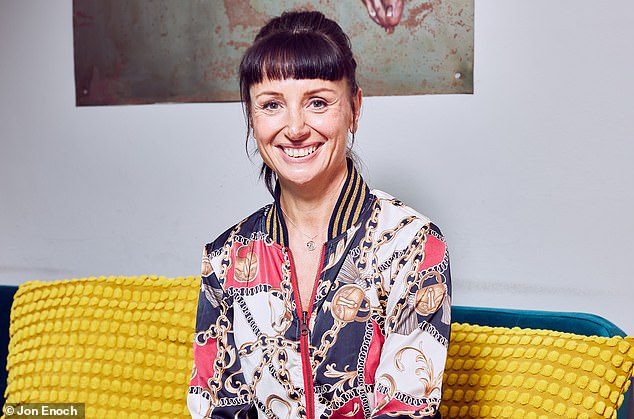
At 53, I thought I’d be over the worst of it, but it seems not. In my seven-year battle with the menopause, I’ve tried everything, says Helen Down
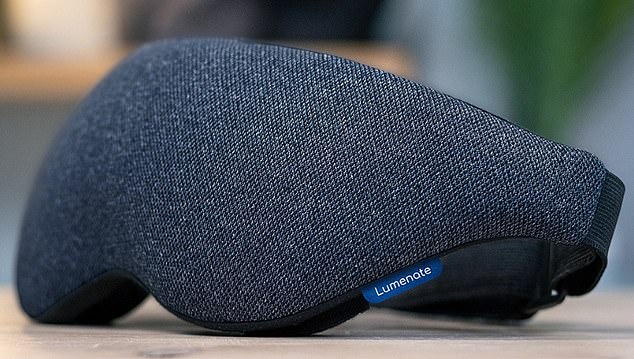
Essentially an eye mask, the Lumenate Nova encourages ‘psychedelic meditation’ using flickering light sequences
Earlier this year, I heard about Jennifer Aniston’s new way to de-stress. Essentially an eye mask, the Lumenate Nova encourages ‘psychedelic meditation’ using flickering light sequences. Launched earlier this year and costing £130, Lumenate Nova relies on an integrated stroboscopic white light. When paired with the Lumenate app, the light flashes in time with a soundtrack to sync brainwaves into an altered state of consciousness.
This isn’t woo-woo pseudoscience, but a principle called ‘neural entrainment’.
By using different light sequences with various frequencies and brightness levels, the brain can be guided towards different states. You can select sessions according to whether you’re seeking relaxation, exploration or sleep, with each one ranging from five to 20 minutes.
Guided sessions are scripted by Dr Graham Campbell, a psychiatrist specialising in psychedelic therapy research who is Lumenate’s creative director. The scripts are often read by actress Rosamund Pike, and her soothing voice alone is enough to put me in a more relaxed state.
Unguided sessions feature emotionally charged soundscapes and remixes.
Once I’ve chosen a session, I settle on the sofa with the mask on, hit play, close my eyes and let the kaleidoscopic visuals wash over me. The light will work its magic even if your mind strays.
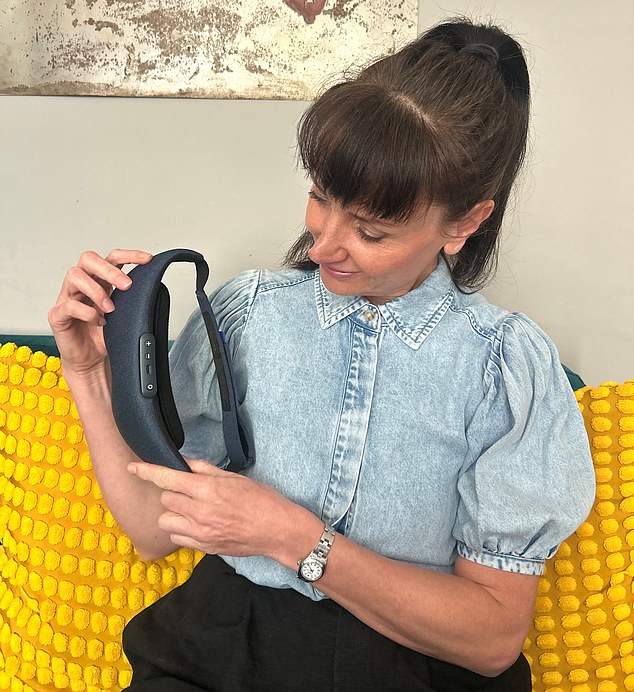
The first time I tried it, it took a couple of minutes to get used to the intensity, but I soon eased into it
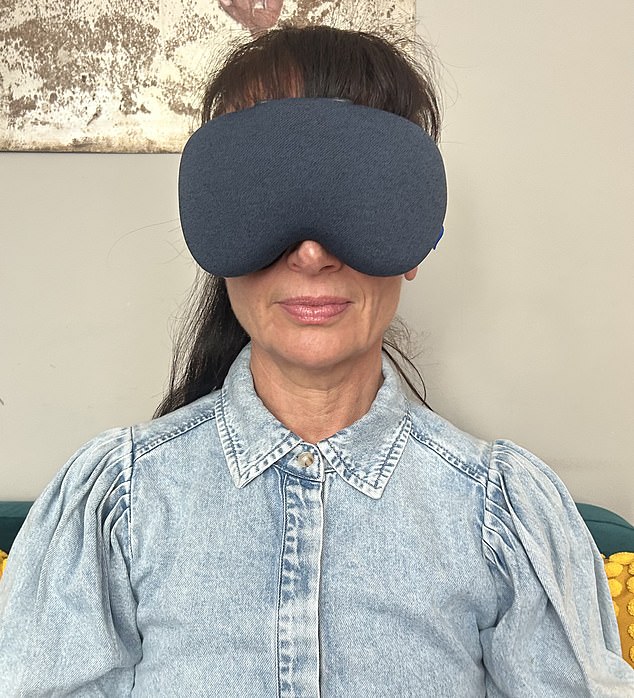
By the end, my mask was filled with cathartic tears, a much-needed release of pent-up emotion
A 2024 study found audio-visual stimulation is as good as or more effective at improving mood than breath-focused meditation.
A mere ten minutes can create a feeling of euphoria akin to a runner’s high.
The first time I tried it, it took a couple of minutes to get used to the intensity, but I soon eased into it. By the end, my mask was filled with cathartic tears, a much-needed release of pent-up emotion.
It’s hard to describe the experience, as the visuals are unique to each individual. For me, the sensation is one of travelling at speed through a shadow-strewn forest on a bright day. It’s a cleansing reset not dissimilar to the feeling I got with magic mushroom therapy.
Researchers are finding that psychedelics and audio-visual stimulation have shared neural mechanisms.
When the brain reaches a psychedelic state, it’s better able to let go of the habitual thinking patterns that exacerbate depression.
Lumenate doesn’t claim to be a treatment for depression but I’m not alone in reporting a feeling of positivity after each session. In fact, so many users experience an uplift that researchers are investigating strobe light therapy’s effect on depression.
What about the menopause’s physical symptoms?
Sleep is often one of the first casualties, but Lumenate can help. Designed to guide the brain towards frequencies associated with the early stages of sleep onset, the app’s Sleep Better section is popular.
But what about that other menopause bete noire, brain fog? ‘Although there’s no formal research into this,’ said Lumenate’s co-founder, Tom Galea, ‘we often hear our users describing the experience as a “brain rinse” or a “mental reset”.’ But alas, he told me, he’d be surprised to see a link with hot flushes.
Although it’s not a silver bullet, the psychedelic meditation that comes via flicker therapy is helping me to see the light in menopause’s darker moments.