Opening my back door to put the bins out earlier this week, I felt something tiny and winged land on my shoulder.
I batted it away, only to feel another touch down on top of my head. Another swooped on to my T-shirt; yet another scuttled down my arm. Looking up in disgust, I saw that the doorframe, both inside and out, was crawling with ladybirds.
There were hundreds of the red-and-black beetles, swarming over the walls, floor and ceiling. I slammed the door shut, only to watch yet more squeeze through cracks in the timber and start amassing in black, pulsating clumps around my utility room. It was like something from a horror film, akin to an Alfred Hitchcock thriller: The (Lady)Birds.
Living in the Suffolk countryside, I’ve had to get used to creepy crawlies invading my personal space: spiders the size of my palm; stag beetles marching up the front drive; flying ants filling the air like dust clouds.
But this ladybird invasion was like nothing I’d seen before.
Upstairs in our bedroom, where I’d foolishly left a window open, it was even worse. I found a cluster in the lampshade, several crawling across my pillow (said pillow has since been boil-washed, twice) and, on closing the blind to block out the winged intruders, several hundred that had been hiding inside flew into my face.
At the sound of my shrieking, my two young sons rushed upstairs, armed with long-handled feather dusters, which they used to beat them back outside (gently, I hasten to add).
It turns out we were far from alone. The neighbourhood WhatsApp groups were soon buzzing with panicked messages about the ladybird offensive, and there have been countless reports of similar incidents in households nationwide.

Living in the Suffolk countryside, I’ve had to get used to creepy crawlies invading my personal space, says Sarah Rainey
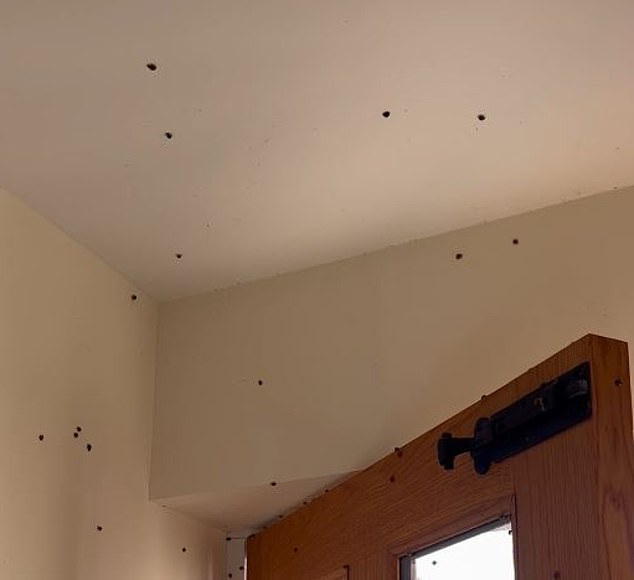
In our bedroom I found a cluster in the lampshade, several crawling across my pillow and, on closing the blind to block out the winged intruders, several hundred that had been hiding
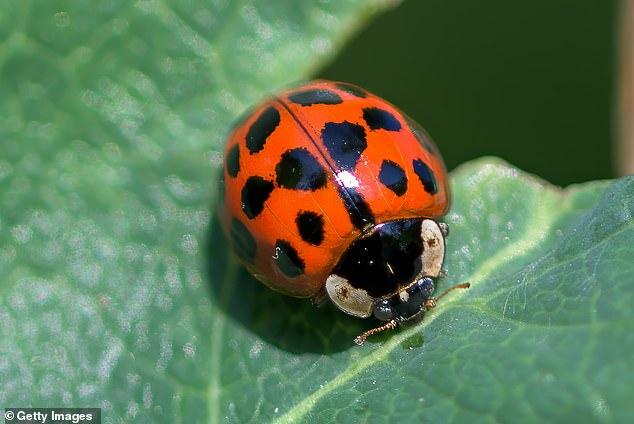
Stephen Wales of Hertfordshire-based Bespoke Pest Control says that unexpected ladybird invasions are essentially down to insect hibernation (known as ‘diapause’)
So what caused this unexpected invasion? Stephen Wales of Hertfordshire-based Bespoke Pest Control tells me it’s essentially down to insect hibernation (known as ‘diapause’).
‘As the weather turns chilly, ladybirds begin clustering inside our homes to hunker down for winter,’ he explains. ‘It’s their way of surviving the cold snap.’
Ladybirds are ectothermic – they can’t regulate their body temperature – so if they want to survive wintry conditions, they need to find somewhere warm.
Unlike seven-spot ladybirds, which are native to the UK and typically hibernate in leaf litter, the culprits are mainly harlequin ladybirds, black or brown-bodied with varying numbers of spots, which originally come from Asia and prefer to sneak indoors.
And the reason there are so many this year? An unseasonably hot, dry spring and summer, the warmest on record, which led to a surge in the insect population.
Effective as the feather dusters were, Stephen advises: ‘The gentlest way to move them along is with a vacuum fitted with a soft brush head. Gently suck them up, then empty the bag somewhere green and away from the building so they can find a proper spot outdoors.
‘If you prefer a natural deterrent, a spritz of citrus or clove oil around entry points works well without resorting to harsh chemicals.’
But don’t squash them, says Oliver Famili, owner of London-based Gold Pest Control. ‘They release a yellow fluid that can stain – and attract more.’ The ochre splodges on my bedroom carpet are proof of this.
If you’re unbothered by having sleeping ladybirds as housemates all winter, you can also leave them be. They won’t do any long-term damage – and they’re carnivorous, so can help control garden pests when they do wake up.
At our house, I’ve invested in some super-strength citrus spray and vowed not to open the windows again until spring.
‘Seal gaps around windows, vents, and doors,’ advises Oliver. ‘Regularly clean window frames and sills, and install fine mesh screens where practical.’
A friend tells me not to worry – a swarm of ladybirds, she says, is known as a ‘loveliness’. They’re also, according to the old wives’ tale, a sign of good luck. Trust me, when your house is invaded by hundreds of the tiny blighters, it’s anything but.