Perhaps the simplest way for me to begin telling the emotionally fraught story of my relationship with my mother is to reveal that, despite her death occurring three months ago, I still have no idea if she was buried or cremated.
I didn’t even know where her remains lay – until I received her death certificate this week.
My mother, Alessandra, was 84 when she died in December. She had been in hospital for days without me being told. I only knew she was ill when my brother texted me to tell me she’d had a stroke and a cardiac arrest. The last time we had contact was when our father Giancarlo died in 2009.
An hour later he texted me again, to say she was dead. On reading his message, I cried, more out of shock than anything.
But in the immediate days and weeks after her death, I only felt numb. I loved my mother and, throughout my life, deeply desired her affection and approval. However, as will become achingly clear, ours was a love eroded by complexity and pain.
To the outside viewer, my childhood had been picture-perfect: every creature comfort of an upper-middle-class family was available to me and my two brothers – my late brother Gianluca, four years my junior, and Alexander, who is 12 years my junior.
Behind closed doors, though, there was an emotional sterility to my mother’s interactions with me – I never once remember her embracing me, for example.
Possessions meant more to her than affection. Spoilt, selfish and all too happy to relish my northern Italian father’s business success, she placed greater store on her gorgeous jewellery collection than on our relationship.
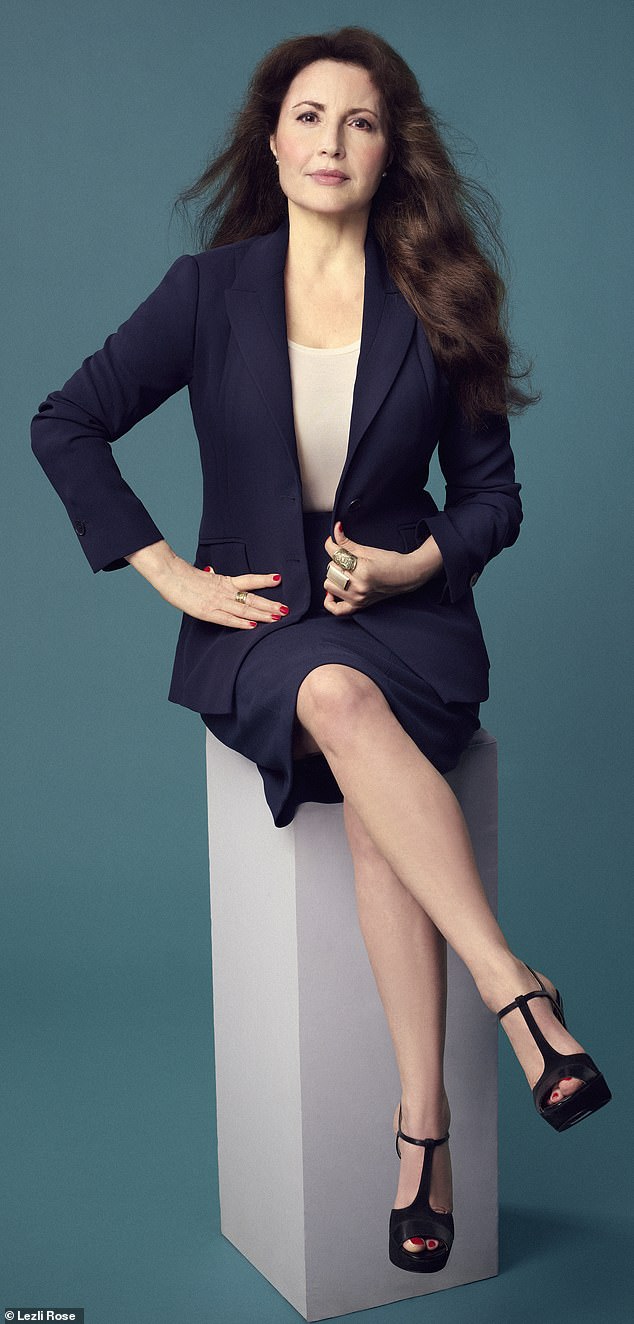
In the immediate days and weeks after my mother’s death, writes Antonella Gambotto-Burke, I only felt numb
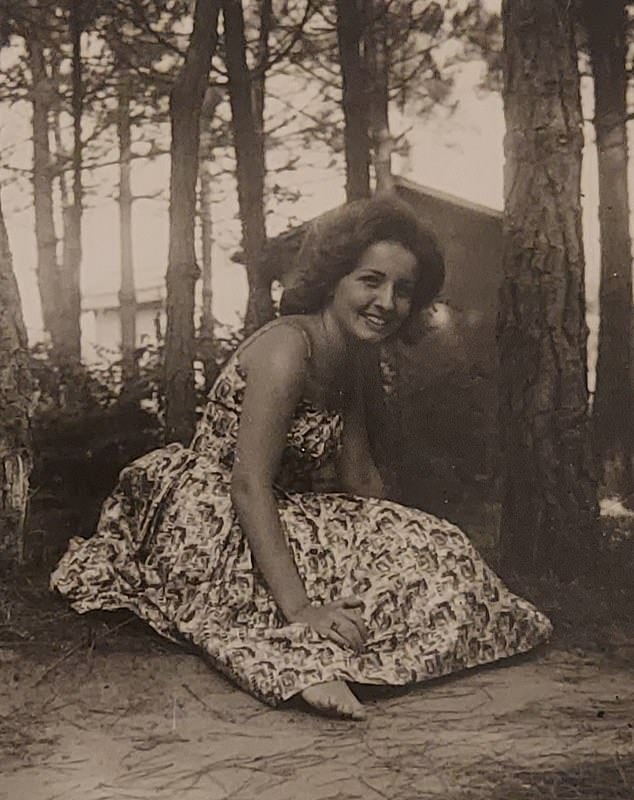
There was an emotional sterility to my mother’s interactions with me – I never once remember her embracing me
Before a short period of contact we had last year, we had not spoken for 15 years, an estrangement that began in 2010 when she calmly admitted that she had never loved me, after I pressed her to admit it. ‘I just didn’t feel it,’ she said.
These words were spoken with an audible measure of relief, as if dropping a mask she had worn for decades, and leaving me in quiet devastation.
However distressing this behaviour was, it was not her greatest betrayal. When I was 11, in 1976, I took my father a cup of coffee in bed, only for him to sexually assault me.
While at the time I didn’t quite understand what was happening, I knew it was very wrong. I can only describe the moments after this as feeling like the world had suddenly been somehow muffled, smothering me.
This, after all, was the father I had always idolised, a brilliant businessman known for his extraordinary mind. And I had, up until that moment, been his favourite. The pride he took in me and in my academic achievements was all too apparent.
He had never before been inappropriate with me, but my parents’ 12-year marriage was in trouble – my mother had caught him drinking champagne late in the office with a beautiful young employee with whom he had clearly fallen in love. She had started talking of divorce but didn’t have the strength to go through with it. My father, a Catholic, would never have left of his own accord.
I walked to the kitchen and immediately told my mother what he had done. She violently shook me by the shoulders and said I was lying; I swore I wasn’t.
What would I have to gain from such a lie? Besides, I never lied: the epitome of a strait-laced teacher’s pet, I had never put a foot out of line or caused trouble at home. I remained numb to her reaction. Nonetheless, she chose to believe my father, not me.
To have done otherwise would not only have entailed her taking responsibility for her own life and ours – something she had no wish to do – but also to lose the status accorded to upper-middle-class wives.
Raised in poverty in post-war Italy, my mother had emigrated to Australia aged 19, where she met my father, who was a decade her senior. Money, to her, symbolised security and belonging. And so she always ensured she made my father feel important, behaving in a childlike way around him. He was the centre of her world, not her offspring.
After that night, her primary concern was that I tell no one of what had happened to me – in particular, ‘her’ relatives. My self-esteem was so damaged by her indifference towards me it didn’t even occur to me these relatives were also mine.
Her parents, whom I loved deeply and who also lived with us, were never told anything beyond the fiction that I was a ‘difficult’ child who made her life a misery.
Not long after that terrible incident with my father, I became bulimic – something I have written about before, but have not had the emotional strength to publicly link to my father’s abuse of me. In fact, writing about my bulimia in the Daily Mail in January made me realise just how much my relationship with my parents has impacted on my entire life.
Looking at my eating disorder with hindsight, I suppose all I wanted was to return to the child I had once been. I hated my developing body, disguising it with baggy shirts and even baggier jumpers, trying to make myself less appealing to my predatory father. Before I found a sensitive therapist in my early 20s, I self-harmed and even tried to kill myself. Aside from warning me to keep quiet, my mother and I never again discussed what had happened to me.
My father, for his part, indulged in a continued and highly disturbing sexualisation of me as I went through puberty – suggestive comments in the guise of ‘jokes’, looks that I still struggle, at 60 years old, to think about to this day.
And his inveterate womanising became more blatant – not in front of my mother, but in front of me. When I was in my early teens, I will never forget him attempting to seduce an air hostess during a flight to Europe, and my efforts to sabotage it: discussing my mother and baby brother at home. He was enraged.
Faced with all this, aged 16, I moved in with my 21-year-old boyfriend. There was nowhere else to go. I worked two part-time jobs (one in market research, the other in a bakery) and travelled for hours to go to school. It was either leave home or lose my mind.
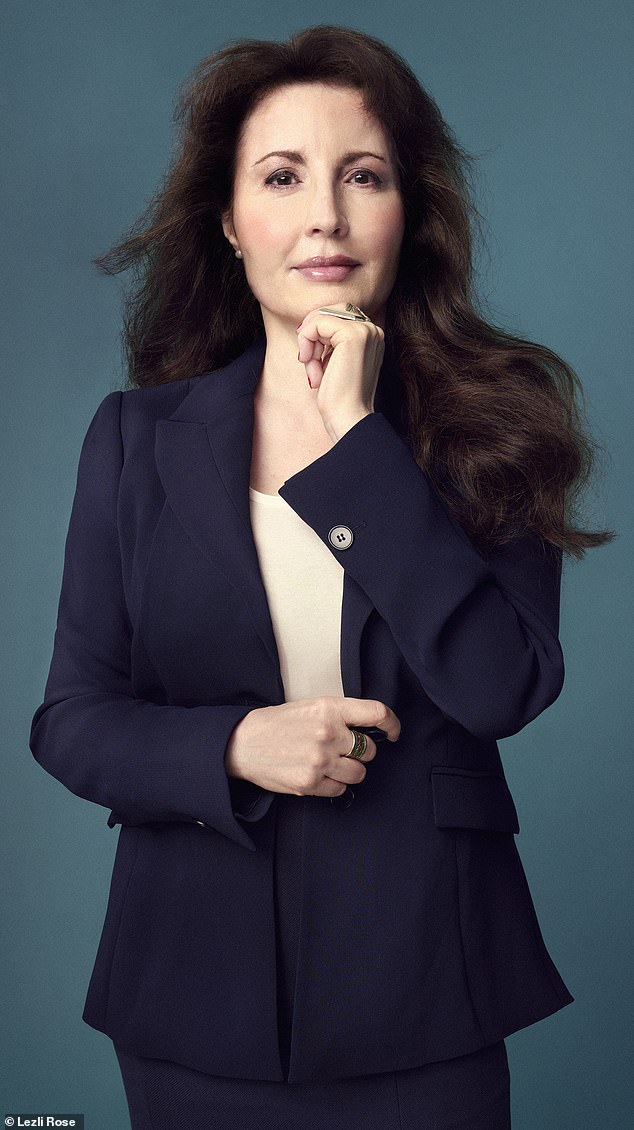
Over the years, my mother poisoned my brothers against me, telling them I was ‘crazy’ and a ‘liar’
Over the years, my mother continued disseminating the myth that I was the problem. She poisoned my brothers against me, telling them I was ‘crazy’ and a ‘liar’ – she did this as insurance in the event that I would ever try to talk to them about it. She was terrified that if the sordid truth about our family came out, it would result in her public humiliation.
At my father’s funeral, she refused to have me in the family pew, allowing my brother’s girlfriend to sit in my place. I sat near the back with my only uncle, whom she detested.
Her manipulation of my late brother Gianluca only worked for a few years – he and I resumed our intense closeness in adulthood – but my younger brother remains estranged from me. I have never met his children, my niece or nephew.
Meanwhile, my father’s behaviour became ever more erratic. He had a psychotic breakdown in 1986 – he was 53; I was 20. Institutionalised for paranoid schizophrenia, he was ferried to hospital in a straitjacket after a neighbour, on hearing his screams, called the police.
Like his abuse, my mother refused to acknowledge his psychosis or its affect on us all. He was ‘just stressed’, she said.
None of this can have been easy to deal with.
And yet and yet and yet.
I still don’t understand how she could have traded our equilibrium for status. She knew of his abuse and did nothing – the very opposite: she continued placing me in harm’s way. She knew of my bulimia, and never helped. She could see how depressed I was, and how angry, and not only offered no comfort but called me ‘crazy’. She lied and lied and lied, ostensibly to protect my father but really for her own benefit. Such is the evil that can go on in families.
Even after my most serious suicide attempt – London, December, 1986; I’d relocated two years earlier – she didn’t bother visiting. This wasn’t because she couldn’t afford it but because, clearly, she blamed me for ‘seducing’ her husband . . . at the age of 11. It was easier for her to dismiss his transgressions. I was disposable, after all; he paid the bills. I have seen the same dynamic in other toxic families, where victims or whistleblowers are abused, lied about and marginalised to protect the same crime.
No longer able to cope with the depression resulting from the madness and cruelty of our family home, Gianluca took his own life at 32, a devastating event. Little surprise, then, that as I married myself and had my own child – a daughter, now at university – I relied entirely on my beloved friends for emotional sustenance.
I didn’t even tell my parents about my wedding or pregnancy; they discovered it through a newspaper article I’d written and contacted me. I told them, not unkindly, that I wanted nothing to do with them.
When my father was dying, I was again contacted, and went to see him on his deathbed, my then three-year-old daughter accompanying me. This was the first time my parents had met her.
My mother, never extravagantly maternal, made a superficial fuss but the interest in her granddaughter was never really there. There, as my father lay dying, he said – this was as close as he ever got to an apology – ‘I wasn’t a good man’. His passing felt like a formality; to me, he’d died all those years ago.
The following year, 2010, the schism between my mother and me became total when she confessed she’d never loved me. We weren’t arguing, but I finally wanted the truth from her, so that’s when I asked her outright during a phone conversation. In a strange way, her honesty came as a relief, however painful.
The older I become, the less I understand her willingness to stand by such a dangerous, emotionally disordered man. This became ever clearer to me as I raised my own daughter. If anyone hurt her, I would be capable of anything.
The ripples of my upbringing echoed through my own mothering. My daughter was home-schooled in part because I was so protective of her. As she grew older, she never understood why I was so cautious of her being around men.
Last year, a friend of my mother’s contacted me through social media to inform me that she now had dementia and resided in a care home. Even though I was 59, the child in me rejoiced at the thought of again hearing her voice, and I immediately called her.
She seemed happy to hear from me. She denied having dementia – it was clear she was embarrassed by her diagnosis.
Despite all that had happened, my heart went out to her. I sent her copies of photographs I had of her parents and relatives from the 1940s and 1950s. I encouraged her to talk about her childhood. Her reaction appeared to be one of intense gratitude – this was new, I thought. She spoke of my father once, only in passing. Their marriage of 45 years seemed to have mostly faded from her mind.
Amusingly, my first husband – whom I divorced in 2016 – had vanished from her recall; I joked that I wanted the same magic eraser. Every day, she asked for my new fiance Gavin’s name. Could she have a photograph? Oh, he was so handsome!
She spoke about her little dog, Coco, who now lived, she said, with the woman my brother had once hired to care for her. The horrors of my early life were never mentioned. I felt no need to bring anything up; there was no point any more.
It was weeks before I realised my mother had never asked me anything about myself, about my feelings. The focus was, at it had always been, on her own needs. When I told her I’d made a career pivot and had just recorded my first album, my mother, a promising singer in her youth, said, in a pitying voice: ‘How can you be so intelligent and yet think that you could ever achieve anything like that at your age?’
During calls, she began to cut me dead to talk to someone else and abruptly hang up to do other things.
These behaviours weren’t related to her dementia; she had always been like this.
The same feelings I’d had as a teen began rippling to the surface – a near-asphyxiating sense of inertia, a bleakness, a desperation at feeling so unloved. After a few weeks, I stopped calling her, texting that I was having difficulty processing the complex feelings and memories that contact between us had triggered.
This was the closest I could bring myself to discussing my father’s abuse of me. Then, for the first time, I wrote that I forgave her for everything.
In response, she tried to call; I didn’t answer. There was nothing more to say.
Why did I forgive her? Because in the end, I felt sorry for her. She had lived a lie.
During our last call, she had told me how embarrassing it was to be the only resident whose children didn’t visit her.
Her last months, then, were ones of loneliness, powerlessness, and shame. This still hurts me to think of. She was my mother, after all.
A month or so after her death, I dreamt she called to me from a platform at St Pancras station in London. She was on her way somewhere, she said, and asked if she could take her little dog with her. I replied she was in the wrong place, that only the dead waited there.
‘But I am dead,’ she said.
At these words, I began to sob in my sleep, loudly and discordantly. My fiance, alarmed, ran up the stairs. Still half-asleep, I could not stem the tears. I sobbed for hours, there in his arms in the dark, finally realising I’d lost a mother I’d never really had.
Follow Antonella at mamaftantonella.com.