This article is taken from the October 2025 issue of The Critic. To get the full magazine why not subscribe? Get five issues for just £25.
Back, as the song says, in Indiana, I await, with detachment unique in my university, the new college football season. To understand Notre Dame’s commitment to faith and football you need to know that we have about 300 masses every week — and more when we play at home. By beating the Protestants at their own game, we became American Catholics’ honorary, collective alma mater.
On game days, over 70,000 fans make pilgrimages from every state of the union. Celebrities, high-rollers and top-line performers for the half-time show scream in on private jets. The campus becomes half-fairground, half-fairyland, noisy with revellers, bagpipes, popping corks and clattering beer-caps, and bright with bandsmen in comic-opera uniforms.
A lot of seriously silly flummery precedes the game: the Stars and Stripes are raised, the Constitution is read, an Air Force squadron flies past in salute. Our team marches amidst adoring throngs from the basilica to the stadium.
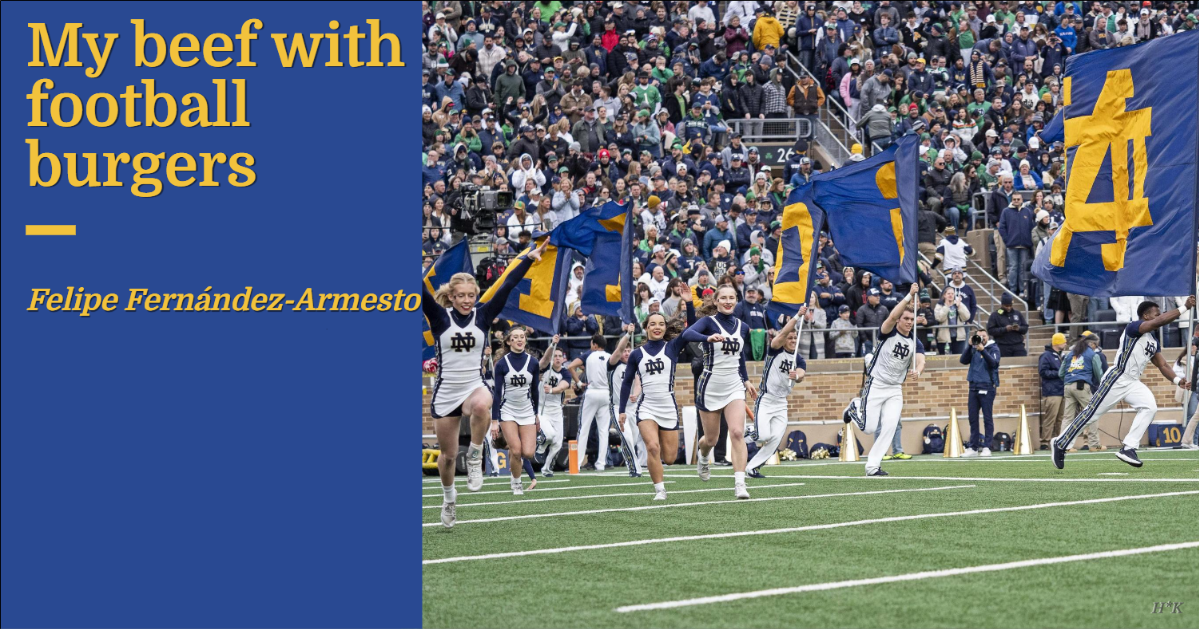
The university band — nearly 400 strong, out of about 8,000 undergraduates — leads the players onto the field, with cheerleaders stepping daintily. Ours are demurely dressed in unglamorous green: their moral superiority over the typical visitors’ swimsuit-style scanties and provocatively jaunty bolero-jackets will, we hope, presage victory.
“Cheer, cheer for old Notre Dame,” sings the crowd. “Shake down the thunder from the skies!” Win or lose, when the game is over, the bells ring out for yet another mass, with their unchanging, unworldly, unaffected rhythm.
None of it worries me. I’m used to it. What I can’t get used to are the burgers: dozens of student-run kiosks serve them, along with bratwurst and hot dogs. The charities they support differ — from abandoned dogs to unmarried mothers — but the burgers are all the same.
The Knights of Columbus offer penitentially chewy steak sandwiches, but everywhere else the menu is unvarying and the products as uniform as the bands’ attire — only less colourful and more anodyne, until smothered in mustard or ketchup.
Fans’ indifference to flavour and texture is a clue, I suspect, to understanding the appeal of a new and disturbing trend: “cultivated” meat — a form of processed mush, lab-generated from animal stem cells and mixed with soy and who-knows-what-else.
Adulterators exploited it first to replace traditional dog-food, and now, increasingly, to resemble steaks and chops for human consumption. It threatens to take over the biggest market for meat by imitating burgers.
I am grateful for one change that has made the monster welcome in Frankenstein’s kitchen: unashamedly carnivore consumers seem increasingly to echo this column’s revulsion from the folly and fakery of vegan meat-substitutes.
But lab-grown, flesh-based cultivars are even more mad: a vegan-free alternative to meatless meat. From ersatz meat we are turning to ersatz ersatz meat.
As with the veggie-meat lobby the justifications for the new trend are unconscionably artificial: artificially moral and artificially ecological. Traditionally raised meat is only minimally unhelpful to the environment and utterly unprejudicial to the soul.
Hamburgers, like the souls of meat-eaters, are redeemable. Cheap versions, like those the charity-minded students inflict on their game-day customers, have given them a bad name. If you come to Notre Dame to watch American football, do what the cognoscenti do: reward the students and renounce their burgers.
Bring your own, with a portable, hickory-wood and charcoal barbecue to grill them on.
Typically, English eaters think that ground beef needs egg and bread to bind it, but if the meat is of good quality — grass-fed, decorously marbled, unpolluted by hormones or glutamates — and lovingly, carefully pressed into shape, it will stay that way without additives.
The best cooking methods are heretical: I film the raw burgers with olive oil for perfect caramelisation over intense but almost smokeless heat. Seasoning — in my case, with garlic salt — must be postponed until after cooking.
I see the appeal of coatings of grilled onions and peppers or such American exotica as peanut butter or ketchup. But a well-cooked burger is sufficiently unctuous on its own.
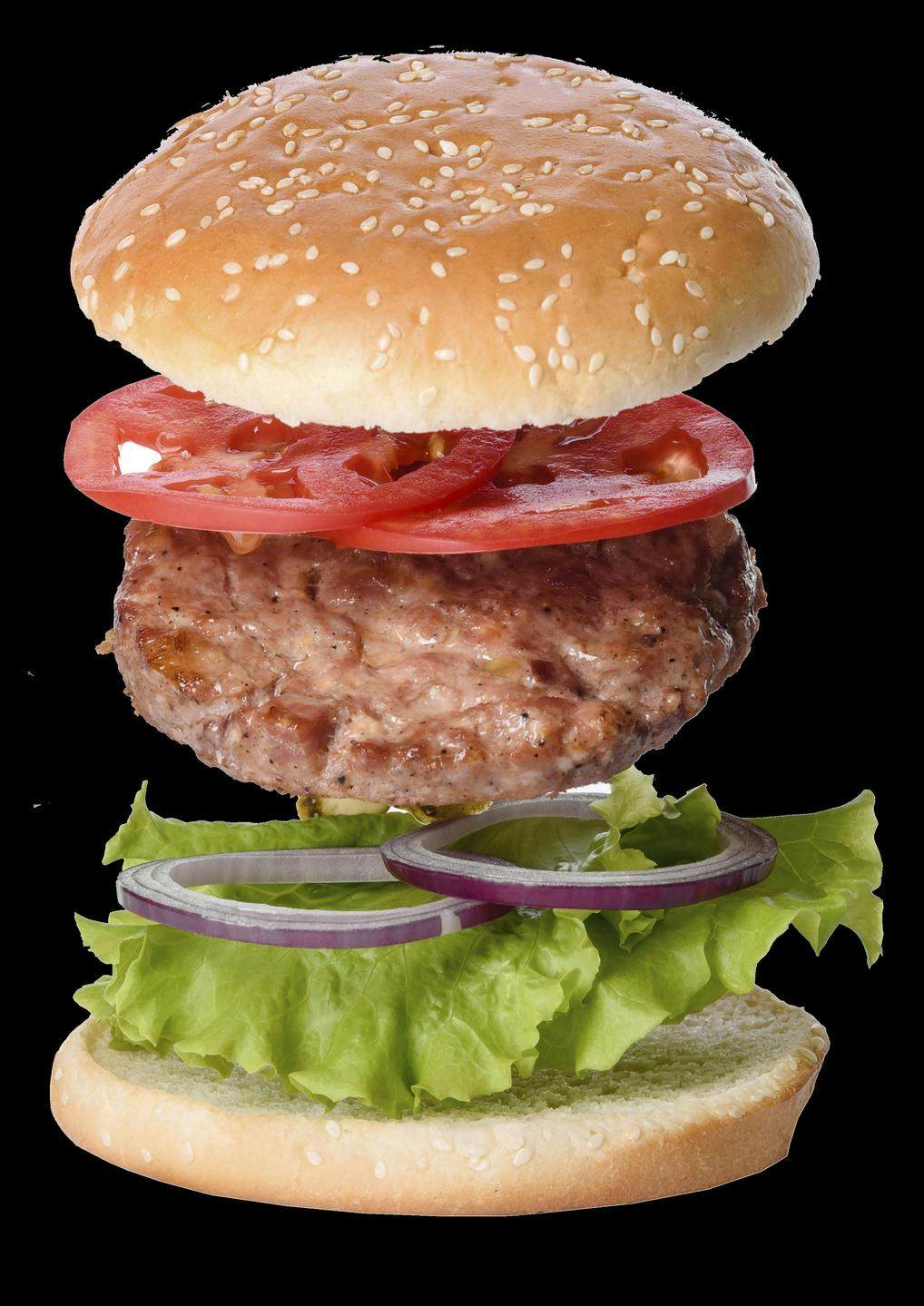
My late mentor in burgers, Bernie Bachrach — an eccentric historian of medieval warfare, who derided chivalry and played with toy soldiers but ate wisely — insisted that only a raw ring each of onion and tomato, with a leaf of hearty lettuce are fit to share a burger’s bun.
What should that bun be? Conventional soft baps are uninteresting unless there’s plenty of egg in the mixture, but a salt-crusted roll, made by rolling butter inside the dough and sprinkling the outside with coarsely ground salt, provides just the right amount of complementary crunch.