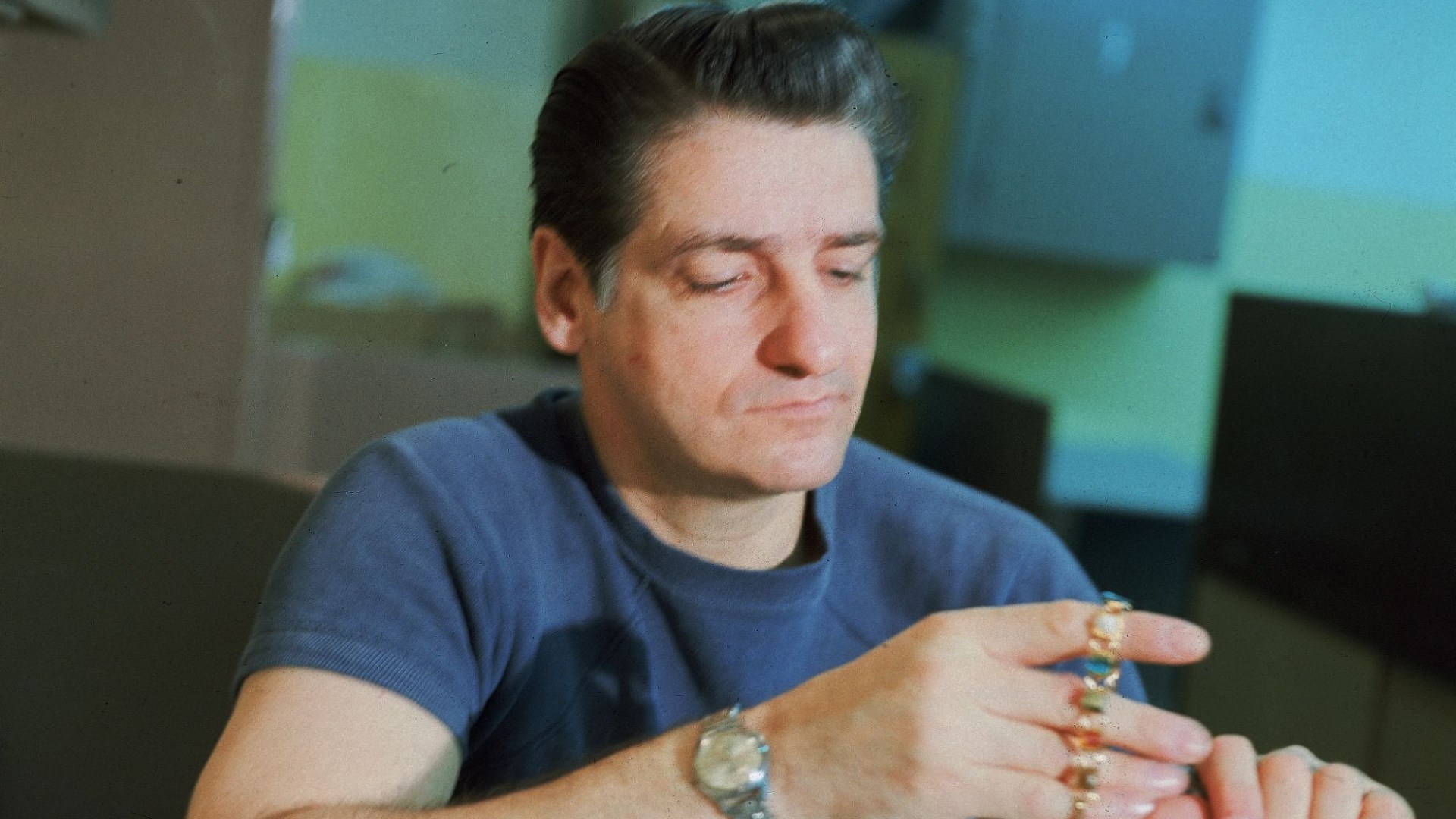
FOR decades Albert DeSalvo was believed to be the monstrous ‘American Jack the Ripper’ who raped and butchered more than a dozen women aged 19 to 85.
But now the nephew of the widely-assumed Boston Strangler’s last and youngest victim reveals damning evidence he believes proves police got the wrong guy.
Journalist Casey Sherman, 56, has investigated the infamous case – turned into a feature 2023 film starring Keira Knightley – for decades and now unveils the new evidence that will “blow the case open”.
He has uncovered DeSalvo’s long lost ‘confession tapes’, where the sexual predator and robber appears to be coached, corrected and even shown crime scene photos while admitting all.
Casey has tracked down another man, who he believes really did kill his aunt Mary Anne Sullivan, aged 19. The suspect allegedly failed a lie detector test, provided a false alibi and was a partial DNA match for DNA found in the victim’s body.
The findings left him feeling “sick to my stomach” and he believes it was a case of “making a suspect fit the crime” with DeSalvo – who was mysteriously stabbed to death two weeks before he vowed to “drop a bomb” and “clear my name”.
Casey speaks exclusively to The Sun ahead of a new documentary The Boston Strangler: Unheard Confession, which airs next weekend in the US.
“These are landmark discoveries and now I hope police do the right thing and solve the case once for all,” he says.
“There has never been any closure for any of the victims’ families in this, including my own.
“Murder has a ripple-on effect that’s multigenerational, even though it happened in the 1960s, the impact is still felt by us families in 2025.”
Casey has spent nearly 40 years probing his aunt’s death and the Boston Strangler investigation, making giant strides to uncovering the truth.
It led to the exhumations of both his aunt Mary, for a re-autopsy and to extract seminal fluid miraculously still present, and DeSalvo to see if there was a DNA match.
As part of the latter, Casey was able to hold the supposed Strangler’s skull in his hands, which he said was a “really surreal experience” and “Shakespearean”.
But his new findings, which he dubs “the holy grail in the Boston Strangler case”, are the interrogation tapes that were supposedly lost for decades.
Stolen interrogation tapes
Casey claims the 60 hours of recordings vanished, alongside other case files, because police stole them as “macabre mementos” believing they would make money from them.
“People were coming in and out of the case files constantly and stealing evidence because at that point it was the biggest murder case in both Boston and American history,” he says.
Casey spent months convincing the individual who stole them to allow him to listen and when he heard DeSalvo’s voice for the first time it was “completely chilling”.
“I’d never heard the voice of the self-confessed Boston Strangler, it was nasally and it was surreal hearing him talking about murdering my 19-year-old aunt and other victims,” Casey says.
However, there was something amiss about the confession, which Casey has long believed was due to DeSalvo believing he could make a fortune selling rights to book and film projects.
This was before the Son of Sam law came into place in 1977 to prevent criminals making money from their crimes.
Despite finding it “very emotional” to hear, Casey says DeSalvo’s story “didn’t match up” and he “was confessing to events that never happened”.
“The biggest lie for my aunt’s murder was claiming he strangled her using his thumbs against her Adam’s apple, which was not true. She was strangled with two scarves and a nylon stocking,” he says.
“It couldn’t be true because the re-autopsy performed in 2000 revealed her hyoid, a very fragile neck bone, wasn’t broken or fractured. In 99.9 per cent of manual strangulations that occurs.
I’d never heard the voice of the self-confessed Boston Strangler, it was surreal hearing him talking about murdering my 19-year-old aunt and other victims
Casey
“DeSalvo claimed to have raped and ejaculated inside her body but there was no DNA evidence of his semen.
“He also claimed to have murdered her in the late afternoon, when the re-autopsy concluded she was killed in the morning due to remnants of coffee in her stomach.”
The tapes also reveal he claimed to have stabbed Beverly Samans, 23, “a couple of times” and then chucked the knife in the Charles River.
“DeSalvo was obsessed with the case and had studied all of the newspaper reports from the very beginning but those details were wrongly reported in the articles,” Casey says.
“The truth was Beverly was stabbed more than a dozen times in the chest and stomach and the knife was found by the kitchen sink, after the killer unsuccessfully tried to clean it.”
Stage-managed confession
Casey claims the interrogator John Bottomly, who was head of the Strangler taskforce was “not even a criminal lawyer, he only studied real estate and this was his first police case”.
It was an unusual move not to have a police detective quiz DeSalvo, which Casey says was due to Bottomly being appointed by his long-time pal Edward Brooke, then a US Senator. Both are now deceased.
“Bottomly had never interrogated anyone in his career and here he is showing DeSalvo crime scene photos, which you do not do in an interrogation,” Casey says.
“He has no experience interviewing any criminal suspect yet here he is leading the largest murder case in American history, the largest since Jack the Ripper killed women in the 1800s.
“Bottomly leads DeSalvo into confessing and reminds him of things found at the crime scene that he later regurgitated. This is all being heard for the first time in the documentary.
“It was shoddy work and Bottomly was even correcting DeSalvo each and every time he went off script because he ‘couldn’t remember’ or blatantly gave false information.”
Bid for bumper payday
Casey calls Bottomly leading the interview a “complete anomaly” and when posed to other detectives they “raised their eyes, they couldn’t believe it was allowed to happen”.
DeSalvo, according to Casey, confessed to it all because of financial gain – in one letter written in 1972 he demanded “over $100,000 or no deal” for his book rights.
A year later, he wrote: “In time you’ll understand what I am saying or trying to say, as it will happen in about a month or so…I’m going to drop a bomb!!
“I’m sick and tired of people using me…they have did (sic) me wrong, and I haven’t gotten a penny from any of it.”
Two weeks later, he was found dead, stabbed “19 times in the heart”, in Walpole Prison Infirmary.
In time you’ll understand what I am saying or trying to say, as it will happen in about a month or so…I’m going to drop a bomb!!
DeSalvo
Casey claims security guards on shift that night told him a “well-known Boston underworld hitman” killed him and had managed to bypass security and sex checkpoints.
“He stabbed him 19 times in the heart and got out covered in blood and nobody saw a thing,” he says. “Prison guards turned their back on the murder and were paid off to do so.”
Mobster Robert Wilson, of the Winter Hill Gang – famed for gangsters like James ‘Whitey’ Bulger – was tried for the murder but the jury was hung.
Casey says DeSalvo, a robber and sexual predator, was due to spend a long time behind bars so admitted to the killings to “make money for his wife and two children”.
“He wanted to profit from his lies and was willing to take the rap,” he adds. “It tied the case into a nice, neat bow for law enforcement, who were happy because of the political pressure to solve the case urgently.”
Strangler fixation
Casey’s not alone in his suspicions. Psychiatrist Dr Ames Robey, who studied DeSalvo in state hospital, testified he couldn’t be the killer.
The medical professional, now deceased, diagnosed him as schizophrenic and said he was “a very clever, very smooth, compulsive confessor who desperately needs to be recognised”.
Casey claims Robey confided in him that DeSalvo said he was “fascinated by the case and often visited Boston Strangler crime scenes” while they were being investigated when no one was looking.
DeSalvo was fascinated by the Boston Strangler case, so it is possible that he could have left his ‘human stain’ at the crime scene while it was left unsecured by police
Casey
This could explain the one piece of evidence, semen on a blanket inside Mary’s apartment that matched DeSalvo’s DNA, which was discovered in 2013.
But Casey cautions: “These crime scenes were open, reporters could come and go from the apartments and members of the public could too, even as all the evidence was being pulled out.
“DeSalvo was fascinated by the Boston Strangler case, so it is possible that he could have left his ‘human stain’ at the crime scene while it was left unsecured by police.”
Multiple killers
Casey believes there wasn’t just one Boston Strangler but multiple men who committed sexual assaults, rapes and murders at the time and became bundled up into a tidy standalone ‘boogeyman’ figure.
And, he believes he knows who killed his aunt. Casey confronted the man he suspects at his workplace on a golf course in New England, after posing as someone wanting a lesson from him.
“As you can imagine, it was like the ghost of Christmas past coming back to haunt him,” he says. “He denied it all and gave me an alibi, which I later proved to be false.”
While talking to the now deceased suspect, he recognised a speech impediment described by one of Mary’s roommates after the killing.
“Two weeks after the murder, she received a call from a drunk, stuttering individual who threatened, ‘I’m going to do to you what I did to that Mary b****,” Casey says.
Casey claims the man knew Mary, that he was the boyfriend of one of her roommates and had stolen her key to snoop around the apartment.
“He was looking for evidence that she was having an affair, and she was. He didn’t know Mary was moving into the apartment that morning.
“She confronted him and it turned violent. He killed her and decorated the apartment to make it look like a Boston Strangler murder scene.”
When quizzed about Mary’s killing, the individual failed a polygraph test, which has an 80 to 90 per cent accuracy, according to Casey.
He also alleges witnesses saw this man inside the flat on the morning his aunt died and another explosive find – DNA evidence.
“I later surreptitiously obtained a piece of hair from him, which I sent to a forensic investigator to test against the semen found inside Mary’s body,” Casey says.
“It was a partial mitochondrial DNA match but because I did it without permission it couldn’t be used as evidence. I handed everything to the police but they never even questioned him.”
These are just a few of the damning and shocking claims to emerge during his new “landmark documentary”.
Floodgates opened
Casey hopes it will lead to a full and final reinvestigation with fresh eyes and modern technology so that families, including his, can finally get closure.
He suspects police were previously reluctant to speak out on the problems with the case against DeSalvo because it risks “opening them up to several lawsuits”.
“Frankly, if they had to admit they got the wrong guy in the Boston Strangler case, it risks opening the floodgates to legal cases.
“They could have got the wrong individuals for hundreds, if not thousands, of other murder cases because law enforcement made the suspect fit the crime.”
Casey believes his new discoveries could crack the case 60 years on and ease the pain felt by victims’ families which has “rippled through the generations”.
He adds: “The Boston Strangler case was America’s version of Jack the Ripper, that’s how big it was and it’s the shadow we still bear here in Boston because it was never officially solved.”

Boston Police Department did not respond to The Sun’s request for comment.
The Boston Strangler: Unheard Confession airs on US channel Oxygen True Crime on October 26 and is available to stream on Peacock.